
World
Turkey warns of Fethullah terrorist group in Nigeria

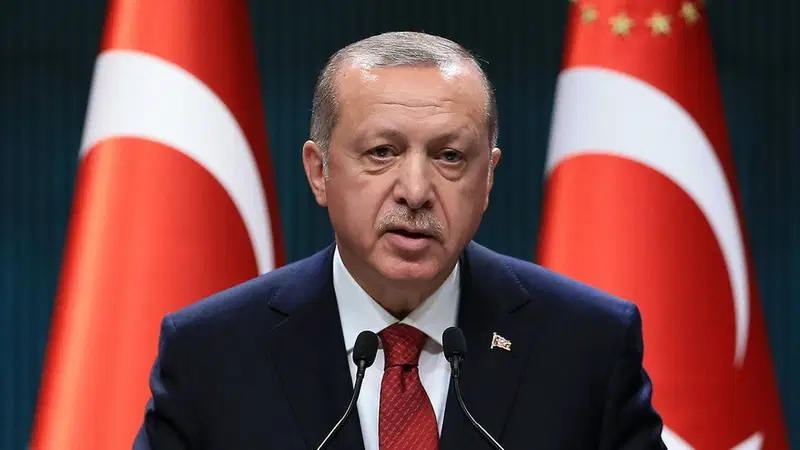
The Turkish government has warned that members of a terrorist group known as the Fethullah Terrorist Organization (FETO) exist in Nigeria and also operate in other countries around the world.
Mehmet Poroy, Turkish Ambassador-designate to Nigeria, disclosed this on Tuesday night in Abuja at a dinner organised by the Turkish Embassy to mark the country’s Democracy and National Unity Day.
Our correspondent reports that the ceremony is held annually to mark the July 15, 2016, failed coup in Türkiye, which was allegedly orchestrated by the so-called FETO terrorists.
The Turkish government said the coup was successfully quelled by the collective resistance of its patriotic forces and citizens, who resisted the mutiny against the government of President Recep Erdoğan.
According to Ambassador Poroy, members of the Gülen movement, which sponsored the coup, are still being captured and arrested globally, hence their presence in any country poses a serious national threat.
“They are still being captured and arrested today. The presence of such an organisation poses a threat to every country in which it operates.
“Unfortunately, the FETO terrorist organisation still maintains its activities in Nigeria, particularly in the fields of education and healthcare.
“We consistently inform our Nigerian friends about the nature and dangers of this organisation, and urge them to remain vigilant and cautious,” Poroy said.
The Turkish envoy said that, through international cooperation, Turkiye has been able to successfully disrupt many FETO cells and networks operating in allied countries around the world.
According to him, numerous institutions, especially schools that form part of FETO’s international network, have been taken over by Turkish institutions.
He, however, stressed that the group’s international structures have not been fully dismantled globally.
“The fact that new investigations and arrests into the organisation continue to be launched demonstrates the need for this struggle to be pursued with unwavering determination.
“In several countries, including Nigeria, FETO continues to pump its operations under the presence of humanitarian aid, education, healthcare, and interfaith dialogue.
“You must not forget that behind this humanitarian appearance lies an organisation that seeks to infiltrate the political and bureaucratic institutions of host countries,” Poroy warned.
Our correspondent reports that the Gülen movement (known as Hizmet or Service in Turk language) is purportedly a transnational, religious, educational, and social organisation, founded in late 1950.
Its founder, Fethullah Gülen, a Turkish Islamic scholar, died as a Turkish fugitive in Oct. 2024 at the age of 83, in Pennsylvania, United States.
The Turkish government accuses Gülen of masterminding the 2016 bloody coup, which claimed at least 251 lives, and has officially designated the group as a global terrorist organisation.
Nine years after the coup, Türkiye has continued its aggressive global campaign against the group, saying it still operates worldwide, although the group has denied the terrorism tag.
Türkiye has been engaged in a massive global crackdown on the group, seizing or freezing billions of dollars of Gülen-linked assets and institutions, including schools, universities, foundations, associations, and companies.
Our correspondent also reports that the Organisation of Islamic Cooperation (OIC); the Gulf Cooperation Council (GCC); alongside countries like Pakistan and Northern Cyprus have designated FETO as a terrorist organisation. (NAN)


Obi urges issue-based campaigns

Tinubu Is Disconnected From Nigerians – APM

Nigeria demands two permanent UN seats, veto powers for Africa

Peter Obi is clueless, overrated — Onanuga

2027: Imansuagbon urges South to back Atiku, says Nigeria needs unifier

Govt bans sales of unverified alcohol after ” Monkey Tail” kills 30
-

 Politics9 months ago
INEC Releases Timetable For 2027 Elections
-
 News9 months ago
FG–ASUU Agreement: Professors to get ₦140k monthly allowance - Education Minister
-

 News9 months ago
Abia leaders declare support for Otti’s second term, dismiss opposition.
-

 News6 months ago
EASTER: NKWONTA ENJOINS CONSTITUENTS AND NIGERIANS TO IMBIBE CHRIST-LIKE VIRTUES
-

 News9 months ago
Police Inspector shoots colleague dead, injures another
-

 News9 months ago
2 men machete each other to death over plantain
-

 Entertainment8 months ago
Am Alive, Pete Edochie Declares, debunks Death Rumours
-
 Politics8 months ago
LP crisis: Abure Adamant, rejects reconciliation move