Connect with us

World

Trump says ‘not a big fan’ of Pope Leo after his anti-war message

Published

on

Spread the love

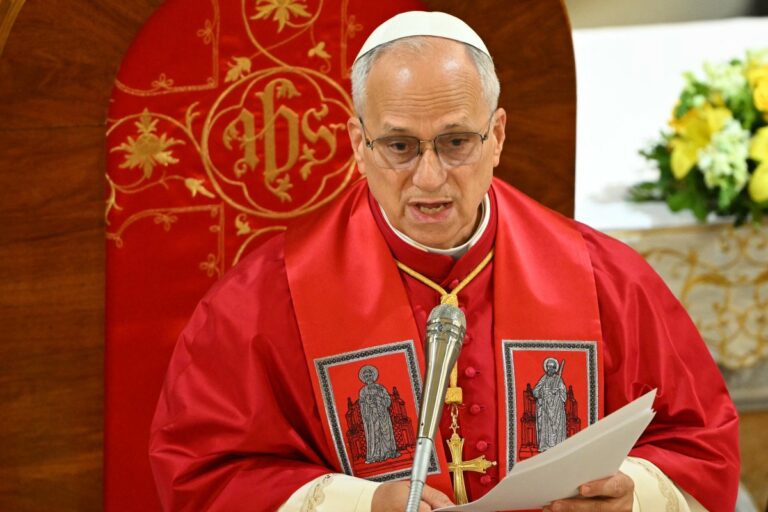
US President Donald Trump told reporters Sunday that he is “not a big fan” of Pope Leo XIV, after the global leader of Catholics made a plea for peace.

“I’m not a big fan of Pope Leo. He’s a very liberal person, and he’s a man that doesn’t believe in stopping crime,” Trump told reporters at Joint Base Andrews in Maryland.

He accused the pontiff of “toying with a country that wants a nuclear weapon.”

On Saturday, the 70-year-old American pope publicly implored leaders to end the violence, telling worshippers at St. Peter’s Basilica: “Enough of the idolatry of self and money! Enough of the display of power! Enough of war!”

US President Donald Trump told reporters Sunday that he is “not a big fan” of Pope Leo XIV, after the global leader of Catholics made a plea for peace.

“I’m not a big fan of Pope Leo. He’s a very liberal person, and he’s a man that doesn’t believe in stopping crime,” Trump told reporters at Joint Base Andrews in Maryland.

He accused the pontiff of “toying with a country that wants a nuclear weapon.”

On Saturday, the 70-year-old American pope publicly implored leaders to end the violence, telling worshippers at St. Peter’s Basilica: “Enough of the idolatry of self and money! Enough of the display of power! Enough of war!”

US President Donald Trump told reporters Sunday that he is “not a big fan” of Pope Leo XIV, after the global leader of Catholics made a plea for peace.

“I’m not a big fan of Pope Leo. He’s a very liberal person, and he’s a man that doesn’t believe in stopping crime,” Trump told reporters at Joint Base Andrews in Maryland.

He accused the pontiff of “toying with a country that wants a nuclear weapon.”

On Saturday, the 70-year-old American pope publicly implored leaders to end the violence, telling worshippers at St. Peter’s Basilica: “Enough of the idolatry of self and money! Enough of the display of power! Enough of war!”


Trump reiterated his comments to reporters with a post on Truth Social saying: “I don’t want a Pope who think it’s OK for Iran to have a Nuclear Weapon.”

Washington and the Vatican have recently denied reports of a rift.

On Friday, a Vatican official denied reports that a top Pentagon official gave the church’s envoy to the United States a “bitter lecture” over Pope Leo’s criticisms of the Trump administration.


The story in the Free Press — which the Pentagon had already dismissed as “distorted” — reported that Cardinal Christophe Pierre was summoned in January to the Pentagon, where he was given a dressing-down by US Under Secretary of Defence for Policy Elbridge Colby.

The military official reportedly told the cardinal that the United States “has the military power to do whatever it wants — and that the Church had better take its side.”

Vatican spokesman Matteo Bruni said in a statement, “The account presented by certain media outlets regarding this meeting does not correspond to the truth in any way.”

While both parties insist the meeting was cordial, the Holy See and the White House have openly been at odds over the Trump administration’s hardline mass deportation campaign — which the pope called “inhuman” — and the use of military force in the Middle East and Venezuela.

When Trump made genocidal threats against Iran on Tuesday, saying “A whole civilisation will die tonight, never to be brought back again” — the pontiff slammed the “truly unacceptable” statement and urged parties to “come back to the table” for negotiations.

Earlier this month, Pope Leo hailed the news of a ceasefire between the United States and Iran as a “sign of real hope.”

But peace talks between the United States and Iran, held in the Pakistani capital Islamabad, ended abruptly Saturday with US Vice President JD Vance telling reporters after a marathon session of talks that Washington has delivered its “final and best offer.”


Click to comment

Leave a Reply

Your email address will not be published. Required fields are marked *

World

South Africa police move foreigners seeking safety from anti-migrant threats

Published

on

Spread the love

Authorities removed Thursday scores of foreign nationals who had sought protection from anti-migrant groups at a church centre in Durban in a days-long standoff, highlighting xenophobic tensions in South Africa.

Campaigns by small citizen-led groups against undocumented migrants have picked up in recent months, but without reaching the level of violence seen in waves of anti-foreigner attacks over previous years.

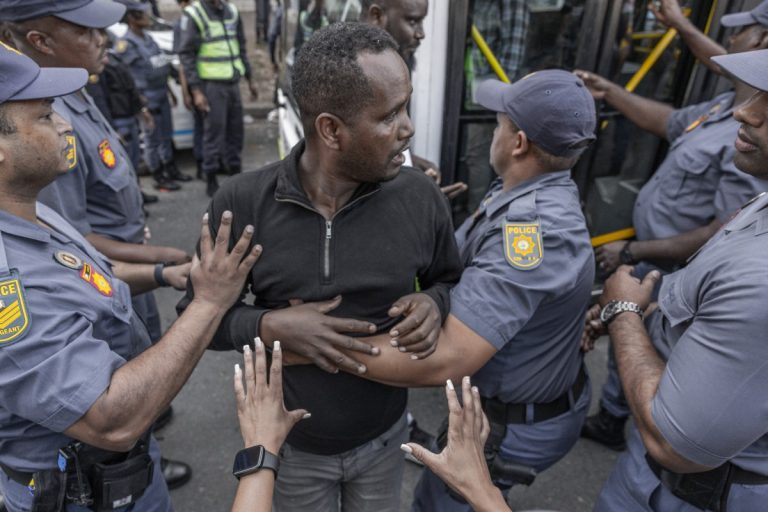
Police herded about 400 migrants from countries including the Democratic Republic of Congo, Ethiopia, Rwanda and Somalia onto buses and removed them from the complex in the east coast city where some had been camped for days.

Local anti-immigrant campaigners cheered and chanted “They must go!” as the foreign nationals — including women and children — were driven to a government refugee centre.

Some pressed identity documents to bus windows to show they had the proper papers to be in South Africa.

Several told AFP they had left their homes in fear after anti-immigrant locals went door-to-door to tell undocumented foreigners to leave by June 30.

Their ultimatum has no legal weight and is not backed by the authorities.


There were some scuffles during the evacuation, with one man breaking free and chased by locals before police intervened.

– Blame –

Anti-immigrant figurehead Jacinta Ngobese-Zuma told reporters that her group, March and March, opposed violence but wanted all undocumented foreign nationals to leave.

The group blames migrants for social ills such as high unemployment and crime, but analysts say this is scapegoating.

Meanwhile, Ghana said Thursday it planned to evacuate more than 800 of its citizens from South Africa after a viral video showing the alleged assault of a Ghanaian man triggered outrage.

South Africa has faced recurring waves of xenophobic violence since 2008, when dozens of migrants were killed and thousands displaced.

There were similar flare-ups in 2015 and 2021, often sparked by economic frustrations and political mobilisation around anti-immigrant rhetoric.

The latest spike comes as political parties seek support ahead of local government elections in six months.

One of the migrants at the Durban centre, Robert Ikobia, told AFP he had left the DRC when he was 12 years old to escape war.

“I have the papers to be here. But every time there has been a xenophobic upheaval, I have been a victim,” he said.

“In 2012, I was shot in the head and nearly died. A few years later, I was stabbed by a mob. I fled a war in my country, yet I cannot find peace in South Africa,” he said.


Continue Reading

World

Uganda’s 81-year-old president sworn in for seventh term

Published

on

Spread the love

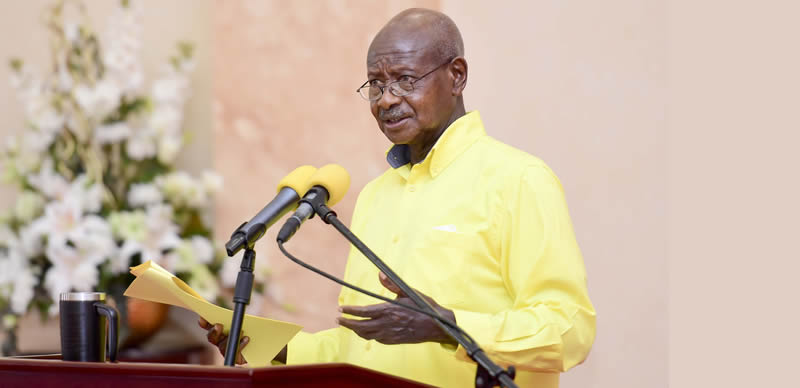
Yoweri Museveni has been sworn in for a seventh consecutive term as president of Uganda, extending his nearly four-decade rule after securing victory in the country’s disputed January elections.

The 81-year-old leader, who first took power as a rebel commander in 1986, was inaugurated at the Kololo Independence Grounds in the capital, Kampala, amid tight security and heavy deployment of armoured vehicles across the city on Tuesday, BBC reports.

According to election authorities, Museveni won more than 70 per cent of the votes cast, with his new tenure expected to run until 2031.

His main challenger, Bobi Wine, rejected the outcome, alleging widespread irregularities and ballot manipulation during the polls.

Wine, whose real name is Robert Kyagulanyi Ssentamu, described the election results as “fake” and accused the government of undermining democracy.

The 44-year-old opposition figure later fled the country, claiming he feared for his life.

“The regime wanted to eliminate me,” he reportedly said after leaving Uganda.

Election officials, however, dismissed allegations of fraud and maintained that the polls were free and fair.

Museveni, now among Africa’s longest-serving leaders, joins figures such as Denis Sassou Nguesso, Teodoro Obiang Nguema Mbasogo, and Paul Biya in remaining in power for more than four decades.

Several African leaders attended the inauguration ceremony, including Samia Suluhu Hassan, Félix Tshisekedi, Salva Kiir Mayardit, and Hassan Sheikh Mohamud.

Uganda has one of the youngest populations globally, with many citizens having known no other president besides Museveni.

Although the Ugandan leader has not publicly indicated when he plans to retire, political analysts have speculated that the current tenure could be his final term in office.

Attention has increasingly shifted toward his son, Muhoozi Kainerugaba, who has been widely viewed as a possible successor.

The military chief has, however, faced criticism over controversial social media posts targeting opposition figures, including Wine.

Meanwhile, rights groups have continued to raise concerns about Uganda’s human rights record and the treatment of opposition politicians following the elections.

Amnesty International recently alleged that at least 16 people were killed by security forces between January 15 and 18 during post-election unrest.

The organisation claimed the victims were unarmed and posed no immediate threat.

Another opposition politician, Kizza Besigye, remains in detention after being arrested in late 2024.

Besigye was charged in a military court over allegations relating to illegal weapons possession and attempts to procure arms abroad, accusations he has denied.

The Ugandan government has also faced criticism over a recently passed Sovereignty Bill, which criminalises activities considered to promote “the interests of a foreigner against those of Uganda” and labels recipients of foreign funding as “agents of foreigners.”

Continue Reading

World

Ivory Coast dissolves election body criticised by the opposition

Published

on

Spread the love

Ivory Coast on Wednesday dissolved the authority responsible for organising elections following sustained opposition criticism over its handling of polls, but did not say what would replace it.

The decision, taken at a cabinet meeting, comes after an October presidential election in which veteran leader Alassane Ouattara was re-elected for a contested fourth term and several heavyweight opposition figures were barred.

“In view of the reservations expressed about this institution (the Independent Electoral Commission, or CEI), as well as the criticism it has faced, the Council of Ministers has decided to dissolve it,” said government spokesman and Communications Minister Amadou Coulibaly.

“I cannot tell you at this stage what this new mechanism will be, which will certainly be discussed and put in place at the government level,” he said.

“The aim,” he said, was “to ensure, in a lasting way, the organisation of peaceful elections by creating greater trust and reassuring all Ivorians and the political class.”

Former prime minister Pascal Affi N’Guessan (2000-2003), one of those whose presidential candidacy was rejected last year, called on the government on his X account to “open a dialogue with political and civil society organisations to rebuild the electoral system, in the name of peace and stability”.

Contacted by AFP, the main opposition force, the Democratic Party of Ivory Coast (PDCI) of Tidjane Thiam, and the African Peoples’ Party-Ivory Coast (PPA-CI) of former president Laurent Gbagbo, did not comment.

Both Gbagbo and Thiam were prevented from taking part in the election over a criminal conviction and nationality issues, respectively.

The opposition has regularly and strongly denounced the lack of independence of the electoral commission, which is tasked with organising polls, ensuring the strict application of the electoral code and overseeing the electoral roll.


Continue Reading

Trending