
World
Trump gives Russia 50 days to make Ukraine deal

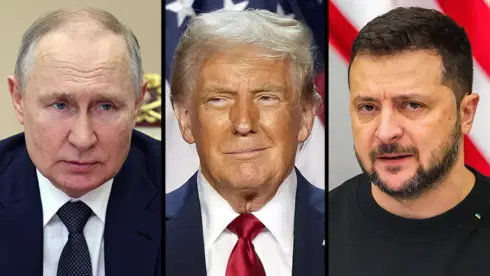
US President Donald Trump told Russia on Monday to end its war in Ukraine within 50 days or face massive new economic sanctions, as he laid out plans for infusions of weaponry for Kyiv via NATO.
Trump said he was “very, very unhappy” with Vladimir Putin, underlining his insistence that his patience had finally snapped with the Russian leader’s refusal to end the deadly conflict.
“We’re going to be doing very severe tariffs if we don’t have a deal in 50 days, tariffs at about 100 percent,” Trump said during an Oval Office meeting with NATO Secretary General Mark Rutte.
The Republican added that they would be “secondary tariffs” that target Russia’s remaining trade partners — seeking to impede Moscow’s ability to survive already sweeping Western sanctions.
Russia’s top trading partner last year was China, accounting for about 34 percent, followed distantly by India, Turkey and Belarus, according to the Russian Federal Customs Service.
Trump and Rutte also unveiled a deal under which the NATO military alliance would buy billions of dollars of arms from the United States — including Patriot anti-missile batteries — and send them to Ukraine.
“This is really big,” said Rutte, as he touted a deal aimed at easing Trump’s long-held complaints that the United States is paying more than European and NATO allies to aid Ukraine.
“This is really big,” said Rutte, as he touted a deal aimed at easing Trump’s long-held complaints that the United States is paying more than European and NATO allies to aid Ukraine.
Germany, Canada, Denmark, Finland, the Netherlands, Norway, Sweden and Britain were among the buyers helping Ukraine, added the NATO chief.
“If I was Vladimir Putin today and heard you speaking… I would reconsider that I should take negotiations about Ukraine more seriously,” said Rutte.
Ukraine’s President Volodymyr Zelensky said he had spoken with Trump and was “grateful” for the arms deal.
In a BBC interview published Tuesday, Trump expressed disappointment with Putin.
“I’m disappointed in him, but I’m not done with him,” the US president said.
When asked if he trusted the Russian leader, Trump replied: “I trust almost no one.”
– Growing frustration –
Trump attempted a rapprochement with Putin shortly after starting his second term, having campaigned on a pledge to end the Ukraine war within 24 hours.
His pivot towards Putin sparked fears in Kyiv that he was about to sell out Ukraine, especially after he and his team berated Zelensky in the Oval Office in February.
But in recent weeks, Trump has shown increasing frustration with Putin, as Russian has stepped up attacks rather than halting them.
Trump said his wife Melania had helped change his thinking about Putin.
“I go home, I tell the First Lady, ‘you know, I spoke to Vladimir today, we had a wonderful conversation,’” Trump said. “And she said, ‘Oh really? Another city was just hit.’”
He added of Putin: “I don’t want to say he’s an assassin, but he’s a tough guy.”
Washington has also U-turned on pausing some arms deliveries to Kyiv.
German Chancellor Friedrich Merz said Berlin would play a “decisive role” in the new weapons plan.
But EU foreign policy chief Kaja Kallas said Trump’s sanctions deadline was too far into the future. “Fifty days is a very long time if we see that they are killing innocent civilians every day,” she said.
Beijing opposed what it called attempts at “coercion”, including “all illegal unilateral sanctions and long-arm jurisdiction.”
“Coercion and pressure will not solve problems,” foreign ministry spokesman Lin Jian said on Tuesday.
– ‘Better late than never’ –
US Republican Senator Lindsey Graham and Democratic Senator Richard Blumenthal, who are pushing a bipartisan bill on Russia secondary sanctions, praised Trump’s “powerful” ultimatum to Russia.
Trump’s special envoy Keith Kellogg arrived in Kyiv on Monday for what Zelensky called a “productive meeting.”
One Ukrainian soldier deployed in the war-scarred east of the country, who identified himself by his call sign Grizzly, welcomed Trump’s promise of fresh air defense systems.
“Better late than never,” the 29-year-old told AFP.
Russian forces meanwhile said on Monday they had captured new territory in eastern Ukraine with the seizure of one village in the Donetsk region and another in the Zaporizhzhia region.
Its forces also killed at least three civilians in the eastern Kharkiv and Sumy regions on Monday, Ukrainian officials said.
In Kyiv, Zelensky also proposed a major political shake-up, recommending economy minister Yulia Svyrydenko take over as prime minister, and appointing incumbent Prime Minister Denys Shmygal as defense minister.
AFP

Obi urges issue-based campaigns

Tinubu Is Disconnected From Nigerians – APM

Nigeria demands two permanent UN seats, veto powers for Africa

Peter Obi is clueless, overrated — Onanuga

2027: Imansuagbon urges South to back Atiku, says Nigeria needs unifier

Govt bans sales of unverified alcohol after ” Monkey Tail” kills 30
-

 Politics9 months ago
INEC Releases Timetable For 2027 Elections
-
 News9 months ago
FG–ASUU Agreement: Professors to get ₦140k monthly allowance - Education Minister
-
 News9 months ago
Abia leaders declare support for Otti’s second term, dismiss opposition.
-
 News6 months ago
EASTER: NKWONTA ENJOINS CONSTITUENTS AND NIGERIANS TO IMBIBE CHRIST-LIKE VIRTUES
-
 News9 months ago
Police Inspector shoots colleague dead, injures another
-

 News9 months ago
2 men machete each other to death over plantain
-
 Entertainment8 months ago
Am Alive, Pete Edochie Declares, debunks Death Rumours
-
 Politics8 months ago
LP crisis: Abure Adamant, rejects reconciliation move