
World
Israel declares Gaza fighting pause amid deepening hunger crisis

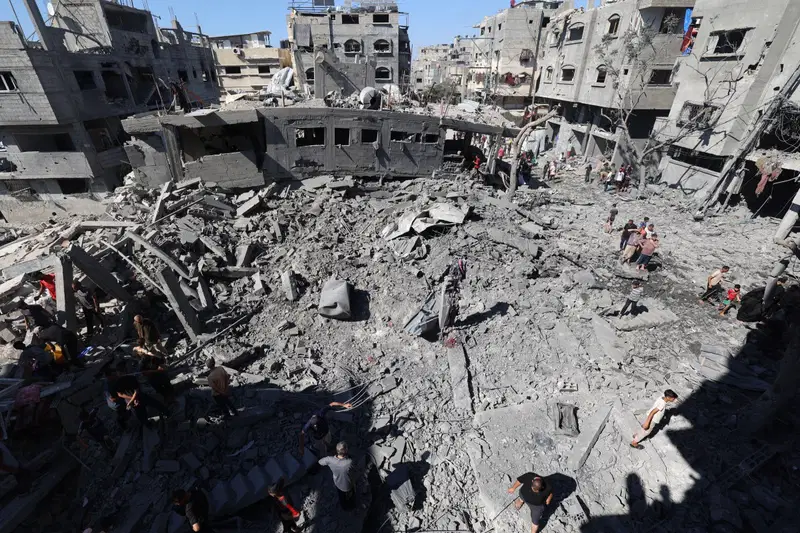
Israel declared a “tactical pause” in fighting in parts of Gaza on Sunday and said it would allow the UN and aid agencies to open secure land routes to tackle a deepening hunger crisis.
The military also said it had begun air-dropping food into the territory and angrily rejected allegations it was using starvation as a weapon against Palestinian civilians.
In a statement, the army said it coordinated its decisions with the UN and international organisations to “increase the scale of humanitarian aid entering the Gaza Strip”.
There was no immediate official response from the UN or non-governmental aid agencies operating in Gaza, and privately sceptical humanitarian sources said they were waiting to see the results on the ground of the Israeli announcement.
The pause in fighting would be limited to areas where the military says Israeli troops are not currently operating — Al-Mawasi, Deir el-Balah and Gaza City — and last from 10:00 am (0700 GMT) until 8:00 pm every day.
But the Israeli statement added that “designated secure routes” had been opened across all of Gaza to enable the safe passage of UN and humanitarian aid organisation convoys delivering and distributing food and medicine.
The Israeli military said these operations, alongside its ongoing campaign against Palestinian armed groups, should disprove “the false claim of deliberate starvation in the Gaza Strip”.
Israel imposed a total blockade on Gaza on March 2 after ceasefire talks broke down. In late May, it began allowing a small trickle of aid to resume, amid warnings of a wave of starvation.
– Activist boat seized –
Before Israel announced the airborne delivery of seven pallets of food, the United Arab Emirates had said it would restart aid drops and Britain said it would work with partners including Jordan to assist them.
On Saturday alone, the Palestinian civil defence agency said over 50 more Palestinians had been killed in Israeli strikes and shootings, some as they waited near aid distribution centres.
“We ask God and our Arab brothers to work harder to reach a ceasefire before we all die,” Gaza resident Hossam Sobh told AFP, adding that he had feared death as he recovered a bag of flour under the nose of an Israeli tank.
Also on Saturday, Israeli troops boarded a boat carrying activists from the Freedom Flotilla Coalition as it attempted to approach Gaza from the sea to challenge a naval blockade.
The humanitarian situation in the Palestinian territory has gravely deteriorated in recent days, with more than 100 NGOs warning this week that “mass starvation” was spreading in Gaza.
On Telegram, the Israeli military announced it “carried out an airdrop of humanitarian aid as part of the ongoing efforts to allow and facilitate the entry of aid into the Gaza Strip”.
Humanitarian chiefs are deeply sceptical that air drops can deliver enough food safely to tackle the deepening hunger crisis facing Gaza’s more than two million inhabitants.
But British Prime Minister Keir Starmer backed the idea, vowing to work with Jordan to restart air drops. The United Arab Emirates said it would resume air drops “immediately”.
– ‘Starving civilians’ –
A number of Western and Arab governments carried out air drops in Gaza in 2024, when aid deliveries by land also faced Israeli restrictions, but many in the humanitarian community consider them ineffective.
“Air drops will not reverse the deepening starvation,” said Philippe Lazzarini, head of the UN agency for Palestinian refugees, UNRWA. “They are expensive, inefficient and can even kill starving civilians.”
Israel’s military insists it does not limit the number of trucks going into Gaza, and alleges that UN agencies and relief groups are not collecting aid once it is inside the territory.
But humanitarian organisations accuse the army of imposing excessive restrictions, while tightly controlling road access within Gaza.
A separate aid operation is under way through the Israeli- and US-backed Gaza Humanitarian Foundation.
But it has faced fierce international criticism after Israeli fire killed hundreds of Palestinians near distribution points.
– Naval blockade –
On Saturday evening, the live feed on the Handala boat belonging to pro-Palestinian activist group Freedom Flotilla showed Israeli troops boarding the vessel.
The soldiers moved in as the boat approached Gaza and three video live feeds of the scene broadcasting online were cut minutes later.
Media restrictions in Gaza and difficulties in accessing many areas mean AFP is unable to independently verify tolls and details provided by the civil defence agency and other parties.
Israel launched its military campaign in Gaza after Hamas’s October 2023 attack resulted in the deaths of 1,219 people, most of them civilians, according to an AFP tally based on official figures.
The Israeli campaign has killed 59,733 Palestinians, mostly civilians, according to the health ministry in the Hamas-run territory.


Obi urges issue-based campaigns

Tinubu Is Disconnected From Nigerians – APM

Nigeria demands two permanent UN seats, veto powers for Africa

Peter Obi is clueless, overrated — Onanuga

2027: Imansuagbon urges South to back Atiku, says Nigeria needs unifier

Govt bans sales of unverified alcohol after ” Monkey Tail” kills 30
-

 Politics9 months ago
INEC Releases Timetable For 2027 Elections
-
 News9 months ago
FG–ASUU Agreement: Professors to get ₦140k monthly allowance - Education Minister
-

 News9 months ago
Abia leaders declare support for Otti’s second term, dismiss opposition.
-

 News6 months ago
EASTER: NKWONTA ENJOINS CONSTITUENTS AND NIGERIANS TO IMBIBE CHRIST-LIKE VIRTUES
-

 News9 months ago
Police Inspector shoots colleague dead, injures another
-

 News9 months ago
2 men machete each other to death over plantain
-

 Entertainment8 months ago
Am Alive, Pete Edochie Declares, debunks Death Rumours
-

 Politics8 months ago
LP crisis: Abure Adamant, rejects reconciliation move