
World
From U.S., more trouble for Nigeria’s businesses, tech innovators, students

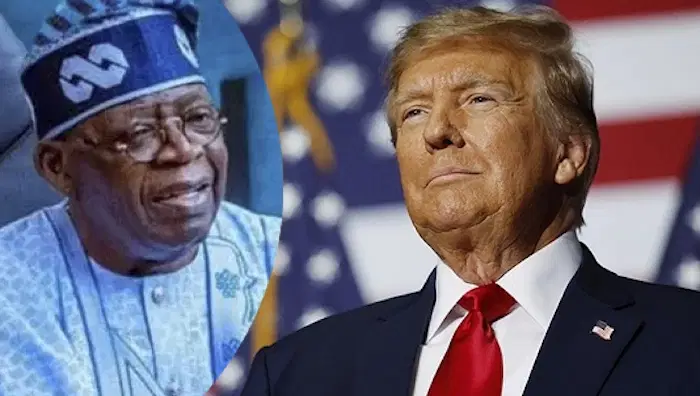
Ambassador Joe Keshi is Nigeria’s retired top career diplomat to the United States (US). In this interview, Keshi diagnoses the US reduction, last week, of the five-year visa validity for Nigerians to three months, effective July 8, 2025, stressing the urgent need for Nigeria to negotiate and build a cordial relationship with the US as this means more trouble for Nigeria’s businesses, tech innovators and students based on the cost of visa renewal every three months. Although the US Mission in Nigeria, which announced the new regime, initially gave reciprocity as the reason for the action, it later reversed itself, saying it was not a reciprocal action.
According to the embassy, the measure also has no connection with Nigeria’s stance on accepting deportees from Venezuela, the recent introduction of e-visa policies, or its affiliations with Brazil, Russia, India, China and South-Africa (BRICS), a group of five emerging economies which has expanded into 11 nations and which Nigeria is seeking to join. But rather, it is “a part of an ongoing global review of the use of US visas by other countries using technical and security benchmarks to safeguard US immigration systems.”
“We value our longstanding partnership with Nigeria and remain committed to working closely with the Nigerian public and government officials to help them meet those criteria and benchmarks, thereby ensuring safe, lawful, and mutually beneficial travel between our nations,” the embassy wrote in a Friday post on X.
The Federal Government faulted the US action, with officials suggesting different reasons but saying the US action was not justified. The Presidency issued a statement, noting that the claim of reciprocity as the reason for the visa policy did not accurately reflect the reality of Nigeria’s current visa policy toward US citizens.
The Minister of Foreign Affairs, Yusuf Tuggar, for his part, linked the new policy to the rejection of Venezuelan deportees from the US, a claim the country’s Nigerian Mission denied. The minister said the pressure on Nigeria to accept Venezuelan deportees is unfair as the country already has its own problems.
“It will be difficult for a country like Nigeria to accept Venezuelan prisoners into Nigeria. We have enough problems of our own”, he said during a live program on TV. “We cannot accept Venezuelan deportees to Nigeria for crying out loud. We already have 230 million people. You will be the same people that would castigate us if we acquiesce to accepting Venezuelans from US prisons to be brought in”. Meanwhile, the retired diplomat says: “The worst part is that this policy would increase the corruption in the process. No embassy, particularly in Nigeria, would tell you that there’s no corruption in visa issuance. There’s huge corruption. So Nigerians pay a lot, and with this new policy, we probably have to pay more”. Excerpts:
What impact do you foresee the new single-entry visa policy having on Nigerian travelers and businesses with frequent US visits?
Naturally, the policy is going to have lots of impact, and it’s going to create disruption, particularly for business people who are always on the move. When you consider the tedious process of applying for and getting a US visa, you can apply this month, and they will tell you that the interview is next year. So if you have an urgent meeting in Washington, United States, it simply means that you can’t go. This is why the development is very unfortunate. But one way or the other, it hurts both sides.
But it hurts Nigeria more than it hurts the US because, quite often, how many Americans come to Nigeria anyway? So Nigeria would bear the burden of this kind of policy. In terms of cost, it means that Nigerians would have to be paying so much every three months to travel to the United States. Already find out how much Nigerians pay to get visas from these advanced countries. It is so mind-boggling that these countries would turn around to lecture us on capital flight through their visa policies.
They are, actually. They are actually contributing to their capital flight both legally and illegally. The worst part is that this policy would increase the corruption in the process. No embassy, particularly in Nigeria, would tell you that there’s no corruption in visa issuance.
There’s huge corruption. So Nigerians pay a lot, and with this new policy, we probably have to pay more. I seriously hope that efforts being made by Minister of Interior Olubumi Ojo and the Minister of Foreign Affairs are fruitful and that the US would listen to our plea and go back to the old policy.
How can the Nigerian government navigate the global visa reciprocity process to secure more favourable visa terms with the US?
We have to be realistic about issues. In this game, Nigeria has no chance of winning. The bulk of people who visit Nigeria from the United States are Nigerians, or you could say Nigerian-Americans. Some have found the way to circumvent the ‘wahala’ by having Nigerian and American passports. But the truth is, for us to navigate, we have to reach an agreement with the United States because more Nigerians travel to the United States and more Americans are travelling to Nigeria.
90 per cent of Americans that come to Nigeria are Nigerian-Americans. While in service, I had been urging Nigeria to build a far more cordial relationship with the United States, but we pretend to deceive ourselves by saying we have a strategic relationship with the US. We never had any strategic relationship with them.
Can you compare Nigeria’s importance to the US to that of Egypt or Israel? No, you cannot. But building a far more cordial relationship makes more sense than deceiving ourselves with being more strategic. So the new policy gives us an opportunity to evaluate our relationship with the United States and begin to see how to build it up. We do not have American investments in Nigeria when compared to South Africa, which had 6, 000 American companies in South Africa. I don’t know how many American companies are in Nigeria. International investment should not be one-sided. Nigerians in the tech industry and students who want to go are now to be constrained by this policy, which is why every effort should be made to resolve the issue as quickly as possible.
How can Nigerian citizens adjust their travel plans to mitigate the effects of the new visa policy?
The best adjustment we can make is to negotiate. I gathered there was an agreement on a US five-year visa but that our implementation was poor. While the US began theirs immediately, it took us some time. I think there’s more to it.
Coming close to it is the BRICS meeting where US President Donald Trump vowed to punish those doing business without using the dollar. Also, as Americans are changing their policy, the UAE is doing the same thing. So you begin to ask yourself if we are not responsible for all this. We need to find out what our people are doing wrong that is warranting this staggering policy.
What role do you think security concerns play in the US’s decision to implement this new visa policy for Nigerian citizens?
I don’t think security concerns played a role. How many Americans come to Nigeria compared to the Indians?
Could the policy update affect Nigeria’s global reputation and relationships with other countries?
When I was serving in Atlanta many years ago, I said to a governor in the northern states that it is not only the misbehaviour of Nigerians that creates image problems for Nigeria; government-owned mistakes and behaviour create more image problems for Nigeria. I still maintain my position on that.
What we should advocate is that the Nigerian government should, as a matter of urgency and as a matter of policy, review all its visa relationships with a number of countries.
The government should first discuss with these countries, particularly countries like England, how to reduce the cost of visas. Have you ever done research on how much Nigerians pay to get visas to a number of these countries?
Calculate it: if about 20,000 Nigerians get a visa from an embassy, how much would an embassy be making in one year? That is how much Nigeria is losing to these countries through the visa review. The visa review of all the countries in Nigeria does not favour Nigerians. The annoying thing is these countries make a lot of money, both from the legal ones Nigerians pay as well as the illegal ones through middlemen.
Are there potential opportunities for Nigeria to diversify its international partnerships and reduce dependence on the US due to this policy change?
In international relations, who are your friends? If you build four blocks, who are those that would be in the first block? Who are those that would be in the second block? Who would be in the third block? Considering our economy, the first block would be filled by the Asian countries; there are over 200 Indian companies in Nigeria. Japanese companies are in Nigeria, Korean companies are in Nigeria.
Now, how many British companies do we have today in Nigeria? Maybe they provide services; where do you place the Americans? On the flipside, what is Nigeria itself doing in terms of production? What exactly are we exporting to these countries that would make us strategic partners in terms of trade beyond oil? Is it enough to make us strategic partners in terms of trade? It is when we become more productive that our currency is strengthened…otherwise all these we are doing are cosmetics.
In other words, we can strengthen our currency via production and our exports, not imports.
It is what makes China so rich today. The bulk of the taxes President Trump ordered were against Asian countries. It’s because they export lots of goods to the United States. They are the US’s largest trading partners, but Nigeria does not have that kind of advantage. The bottom line is production on all fronts.
Source : Vanguard.



Rep. Nkwonta Facilitates With Constituents, Nigerians On Easter

I Am Not Stepping Aside- Atiku

Police, Lawyer Trade Tackles Over Killing Of Peace Moses By Hit-And-Run Convoy

Am Alive, Pete Edochie Declares, debunks Death Rumours

LP crisis: Abure Adamant, rejects reconciliation move

Son Kills Father Over Land Dispute ln Abia
-
 Politics2 months ago
INEC Releases Timetable For 2027 Elections
-
 News3 months ago
FG–ASUU Agreement: Professors to get ₦140k monthly allowance - Education Minister
-
 News2 months ago
Abia leaders declare support for Otti’s second term, dismiss opposition.
-

 News2 months ago
2 men machete each other to death over plantain
-

 News2 months ago
Police Inspector shoots colleague dead, injures another
-
 Entertainment2 months ago
Am Alive, Pete Edochie Declares, debunks Death Rumours
-
 Politics2 months ago
LP crisis: Abure Adamant, rejects reconciliation move
-
 News2 months ago
Otti’s LP bloc seeks reconciliation as court sacks Abure