Connect with us

World

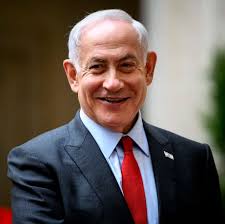
Israel ‘crushing’ Iran, Hezbollah — Netanyahu

Published

on

Spread the love

Israeli Prime Minister Benjamin Netanyahu said Thursday the joint US-Israeli campaign was “crushing” Iran and its Lebanese ally Hezbollah and called for Iranians to rise up and overthrow the Islamic republic.

Netanyahu spoke soon after the new Iranian ruler Mojtaba Khamenei’s first statement, in which he vowed to avenge the Iranians killed in the war so far.

“We are crushing Iran and Hezbollah,” Netanyahu said in a televised media briefing.


In wide-ranging comments on the war, Netanyahu said he was seeking to use the conflict to oust the clerical leadership in Tehran.

“I have added a third objective, which is to create, for the Iranian people, the conditions to bring down this regime,” Netanyahu said.

The other two goals remained preventing Iran from developing nuclear weapons and destroying its ballistic missile capabilities, he said.

The Israeli leader used his remarks to demand that Beirut rein in Lebanese militant group Hezbollah, which has joined Iran in launching missile strikes on Israel.

“I told the Lebanese government a few days ago — you are playing with fire if you continue allowing Hezbollah to operate, in violation of your commitment to disarm it,” he said.

“The time has come for you to do so. Now, if you do not do so, it is clear that we will do so,” he continued.

Hezbollah on Thursday said it carried out a number of attacks against Israel, including on an air defence system near the town of Caesarea, home to Netanyahu’s private residence.

Israel has threatened to target Lebanese government infrastructure if the attacks by Hezbollah persist.

Netanyahu had a personal message for Iran’s new leader, saying: “We eliminated the old tyrant, and the new tyrant, the puppet of the Revolutionary Guards, can’t show his face in public.”

Khamenei had earlier issued a first statement in his name that was read out by a TV presenter.

Click to comment

Leave a Reply

Your email address will not be published. Required fields are marked *

World

Uganda’s 81-year-old president sworn in for seventh term

Published

on

Spread the love

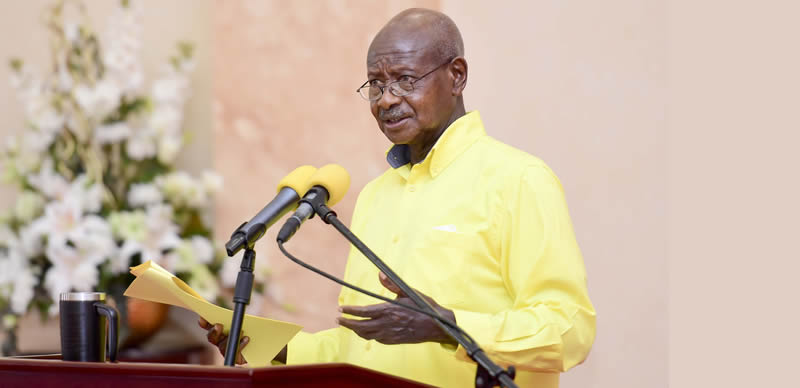
Yoweri Museveni has been sworn in for a seventh consecutive term as president of Uganda, extending his nearly four-decade rule after securing victory in the country’s disputed January elections.

The 81-year-old leader, who first took power as a rebel commander in 1986, was inaugurated at the Kololo Independence Grounds in the capital, Kampala, amid tight security and heavy deployment of armoured vehicles across the city on Tuesday, BBC reports.

According to election authorities, Museveni won more than 70 per cent of the votes cast, with his new tenure expected to run until 2031.

His main challenger, Bobi Wine, rejected the outcome, alleging widespread irregularities and ballot manipulation during the polls.

Wine, whose real name is Robert Kyagulanyi Ssentamu, described the election results as “fake” and accused the government of undermining democracy.

The 44-year-old opposition figure later fled the country, claiming he feared for his life.

“The regime wanted to eliminate me,” he reportedly said after leaving Uganda.

Election officials, however, dismissed allegations of fraud and maintained that the polls were free and fair.

Museveni, now among Africa’s longest-serving leaders, joins figures such as Denis Sassou Nguesso, Teodoro Obiang Nguema Mbasogo, and Paul Biya in remaining in power for more than four decades.

Several African leaders attended the inauguration ceremony, including Samia Suluhu Hassan, Félix Tshisekedi, Salva Kiir Mayardit, and Hassan Sheikh Mohamud.

Uganda has one of the youngest populations globally, with many citizens having known no other president besides Museveni.

Although the Ugandan leader has not publicly indicated when he plans to retire, political analysts have speculated that the current tenure could be his final term in office.

Attention has increasingly shifted toward his son, Muhoozi Kainerugaba, who has been widely viewed as a possible successor.

The military chief has, however, faced criticism over controversial social media posts targeting opposition figures, including Wine.

Meanwhile, rights groups have continued to raise concerns about Uganda’s human rights record and the treatment of opposition politicians following the elections.

Amnesty International recently alleged that at least 16 people were killed by security forces between January 15 and 18 during post-election unrest.

The organisation claimed the victims were unarmed and posed no immediate threat.

Another opposition politician, Kizza Besigye, remains in detention after being arrested in late 2024.

Besigye was charged in a military court over allegations relating to illegal weapons possession and attempts to procure arms abroad, accusations he has denied.

The Ugandan government has also faced criticism over a recently passed Sovereignty Bill, which criminalises activities considered to promote “the interests of a foreigner against those of Uganda” and labels recipients of foreign funding as “agents of foreigners.”

Continue Reading

World

Ivory Coast dissolves election body criticised by the opposition

Published

on

Spread the love

Ivory Coast on Wednesday dissolved the authority responsible for organising elections following sustained opposition criticism over its handling of polls, but did not say what would replace it.

The decision, taken at a cabinet meeting, comes after an October presidential election in which veteran leader Alassane Ouattara was re-elected for a contested fourth term and several heavyweight opposition figures were barred.

“In view of the reservations expressed about this institution (the Independent Electoral Commission, or CEI), as well as the criticism it has faced, the Council of Ministers has decided to dissolve it,” said government spokesman and Communications Minister Amadou Coulibaly.

“I cannot tell you at this stage what this new mechanism will be, which will certainly be discussed and put in place at the government level,” he said.

“The aim,” he said, was “to ensure, in a lasting way, the organisation of peaceful elections by creating greater trust and reassuring all Ivorians and the political class.”

Former prime minister Pascal Affi N’Guessan (2000-2003), one of those whose presidential candidacy was rejected last year, called on the government on his X account to “open a dialogue with political and civil society organisations to rebuild the electoral system, in the name of peace and stability”.

Contacted by AFP, the main opposition force, the Democratic Party of Ivory Coast (PDCI) of Tidjane Thiam, and the African Peoples’ Party-Ivory Coast (PPA-CI) of former president Laurent Gbagbo, did not comment.

Both Gbagbo and Thiam were prevented from taking part in the election over a criminal conviction and nationality issues, respectively.

The opposition has regularly and strongly denounced the lack of independence of the electoral commission, which is tasked with organising polls, ensuring the strict application of the electoral code and overseeing the electoral roll.


Continue Reading

World

Iran reports 3,468 dead in war with US, Israel

Published

on

Spread the love

Iran’s state-run Foundation of Martyrs and Veterans Affairs said on Saturday that the war with the United States and Israel had killed more than 3,400 people in the Islamic republic.

The announcement comes in the midst of a two-week ceasefire in the conflict, which erupted in late February with US-Israeli strikes on Tehran.

Foundation head Ahmad Mousavi was quoted by the ISNA news agency as saying that 3,468 “martyrs… fell during the recent conflict”.

A previous toll from the head of the Iranian Legal Medicine Organization issued on April 12 said 3,375 people in Iran had been killed in the war.

The US-based Human Rights Activists News Agency (HRANA) said on April 7 that at least 3,636 people had been killed, including 1,701 civilians — among them at least 254 children — as well as 1,221 military personnel and 714 people whose status had not been classified.

Due to reporting restrictions, AFP is not able to access the sites of strikes nor to independently verify tolls in Iran.

Continue Reading

Trending