Connect with us

News

Otti’s LP bloc seeks reconciliation as court sacks Abure

Published

on

Spread the love

The Labour Party faction loyal to Abia State Governor, Alex Otti, has called for reconciliation and unity in the party following Wednesday’s judgment of the Federal High Court in Abuja, which ordered the Independent National Electoral Commission  to recognise the Senator Nenadi Usman-led caretaker committee and effectively sacked Julius Abure as national chairman.

The Interim National Chairman of the faction, Senator Nenadi Usman, made the appeal in a statement issued by her Senior Special Adviser on Media, Ken Asogwa, describing the ruling as a critical opportunity to heal deep-seated divisions within the party rather than worsen the leadership crisis.

“We received with profound joy and relief the judgment of the Federal High Court, which ordered INEC to immediately recognise Senator Nenadi Usman’s leadership as the only valid, authentic and legitimate leadership of the Labour Party,” the statement said.

“Although the journey to this point was protracted, difficult and at times turbulent, the Labour Party urges its members and supporters not to celebrate with triumphalism. Rather, this moment should be embraced as a solemn opportunity for genuine reconciliation.”

According to Usman, the judgment should mark a turning point for the party.

“For us, it is a no victor, no vanquished moment. Let it be clearly stated that there is only one united and indivisible Labour Party in Nigeria. This judgment must mark a new beginning anchored on unity, healing and collective progress,” she said.

However, in a swift statement on Wednesday, Abure rejected the judgment, vowing to challenge it on appeal.

In a statement issued by the party’s National Publicity Secretary, Obiora Ifoh, Abure insisted that the judgment contradicted the April 2025 verdict of the Supreme Court on the party’s leadership dispute.

He described Justice Lifu’s verdict as a misinterpretation of the apex court’s decision and an unwarranted intrusion into the internal affairs of the party.

“Although we are yet to see the Certified True Copy of the judgment to fully make detailed comments, it is clear from the brief available to us that the party will appeal,” Ifoh said.

Earlier on Wednesday, Justice Peter Lifu of the Federal High Court held that Abure’s tenure as national chairman had elapsed and consequently ordered INEC to recognise the caretaker committee headed by Usman pending the conduct of the party’s national convention.

Reacting to the judgment, the Otti-backed faction urged all tendencies within the party, including those dissatisfied with the ruling, to embrace dialogue in the interest of rebuilding the party.

“Accordingly, the Labour Party calls on all members who may feel aggrieved by the current state of affairs – including those against whom today’s judgment was delivered – to sheathe their swords and embrace dialogue in the supreme interest of the party,” Usman said.

“We sue for peace, plead for dialogue, and seek sincere reconciliation. There is enormous work ahead in rebuilding the Labour Party into a strong, credible and virile opposition platform in Nigeria, a task that can only be accomplished in an atmosphere of unity, cohesion and mutual respect.”

As part of efforts to restore internal harmony, Usman announced plans to constitute a reconciliation mechanism.

“In furtherance of this commitment to peace and reconciliation, the party shall immediately constitute a Truce and Reconciliation Committee mandated to engage all aggrieved members and restore lasting harmony within the party,” she said.

The faction also called on INEC to fully comply with the judgment.

“As a law-abiding institution and a major stakeholder in Nigeria’s democratic process, the Labour Party calls on INEC to end all unnecessary distractions by fully complying with today’s judgment and according Senator Nenadi Usman’s leadership the formal recognition clearly and unambiguously directed by the court,” the statement added.

On its part, the Abure-led faction alleged procedural irregularities in the handling of the case, claiming it was denied fair hearing and that warning signs emerged even before judgment was delivered.

“Before today’s judgment, we had suspected it might go this way because of the body language around the court. When the matter was first filed, it was assigned to Justice Omotosho, but suddenly there was a somersault, as another similar matter was filed, the first was withdrawn and the case was reassigned to Justice Peter Lifu. That was a red flag for us,” the statement said.

The faction further alleged that the court refused to allow it respond to issues raised in a counter-affidavit before adjourning for judgment.

“The court refused us the opportunity to respond to issues raised in the counter-affidavit filed by other parties and quickly adjourned for judgment. That was the second red flag,” Ifoh said.

Abure’s camp also questioned the substance of the ruling, arguing that it contradicted established judicial precedents.

“Nigerians should remember that the Court of Appeal had pronounced Julius Abure’s National Working Committee as the authentic leadership of the party. That was what Nenadi Usman took to the Supreme Court, arguing that the courts lacked the power to determine party leadership.

“Ironically, today a Federal High Court has gone ahead to pronounce someone as caretaker national chairman of a party. So what is the judiciary turning into?” the statement queried.

The faction insisted that the Supreme Court had clearly ruled that courts lacked jurisdiction to appoint leaders for political parties and maintained that no leadership vacuum existed in the Labour Party.

“Even the Supreme Court never said our tenure had expired. It simply declined jurisdiction, holding that leadership matters are internal affairs of the party,” the statement said.

It further defended the March 2024 national convention, insisting that the tenure of the party’s executive was still subsisting at the time the convention was held.

“So for the court to say that the tenure had expired and that a vacuum existed is laughable. It is also curious how the court arrived at that conclusion without interrogating the validity and legality of the national convention held on March 27, 2024,” the statement added.

Despite the legal battle, the Abure faction urged party members to remain calm, insisting it would exhaust all legal avenues to reclaim its position.

“The party is not for sale, and no amount of financial power will make us abdicate our leadership position,” it warned.

The leadership crisis in the Labour Party followed an expanded stakeholders’ meeting held in Umuahia, Abia State, where the National Executive Committee resolved to remove Abure as national chairman and constituted a 29-member caretaker committee headed by Usman.

The meeting was hosted by Governor Otti and chaired by the party’s 2023 presidential candidate, Peter Obi.

In April 2025, the Supreme Court set aside an earlier judgment of the Court of Appeal that had recognised Abure as national chairman, holding that appellate courts lacked jurisdiction to determine the leadership of a political party.

Justice Lifu, relying on the subsisting position of the Supreme Court, ruled that the caretaker committee constituted by the NEC remained the only valid authority to act for and represent the Labour Party pending the conduct of a national convention.

Source: Punch.
Click to comment

Leave a Reply

Your email address will not be published. Required fields are marked *

News

I’m a die-hard democrat – Tinubu

Published

on

Spread the love

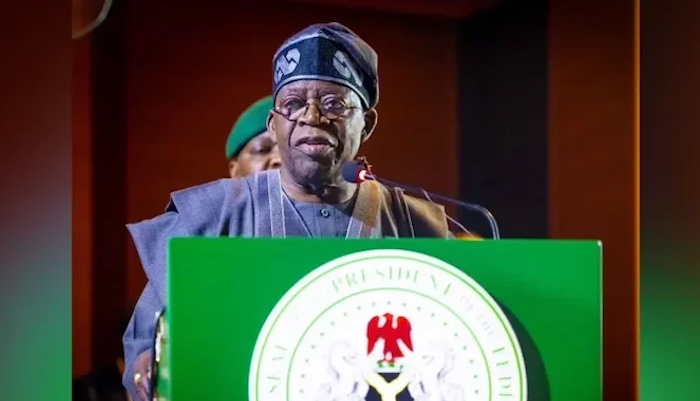
PRESIDENT Bola Tinubu on Wednesday branded himself a “die-hard democrat,” urging Nigerian politicians across party lines to embrace true democratic principles and submit to the rule of law—no matter the personal or political cost.

Speaking at an interfaith breakfast hosted for All Progressives Congress (APC) executives, National Working Committee (NWC) members, and the Inter-Party Advisory Council (IPAC) at the State House, Tinubu highlighted his decades-long democratic credentials, from detention and exile to co-founding the National Democratic Coalition (NADECO).

“We are all democrats and we all subscribed to this democracy voluntarily, willingly, and we’ve been at it selflessly in the last 26 years. Some of us have the bruises from it, struggling for it. We went to detention, we protested… We went on exile and all of that. We formed NADECO. We got here,” Tinubu told the gathering.

He framed his commitment as a lifelong philosophy tied to national unity. “I followed the leadership destiny that God has done and chosen for me, there’s no doubt about that. I’m a die-hard democrat, and I follow that belief wholeheartedly, committedly, to a united country; Nigeria. That principle and that philosophy will live and die with me” he stated.

Addressing IPAC National Chairman Yusuf Dantalle directly, Tinubu insisted party affiliation remains voluntary, even under pressure.

“We are all democrats, voluntarily, party alliances, party ideologies or no ideology, party boat, party platform, in whichever form, it’s voluntary. Be persecuted for it. So no threat from any democrat,” he said.

The remarks come amid backlash over the Electoral Act amendments, which Tinubu signed into law on February 18 following overwhelming National Assembly approval.

Critics from opposition parties and civil society highlight provisions like optional electronic result transmission, new party membership register rules, direct or consensus primaries (abolishing delegate voting), a 21-day pre-primary submission deadline for digital registers, and limits on court interventions in electoral processes.

Tinubu defended the rule of law as democracy’s core. “The Rule of Law must prevail in any democracy. Yes, Rule of Law. Majority will have their say and their way, and minority will have their say and might not have their way. That is the sweetness, the essence of democracy,” he asserted.

He called for intellectual debate over confrontation: “Argue it, debate it intellectually, interrogate each other, honestly and sincerely, but we are committed to the same thing, peace and stability of the country, and we adhere to it.”

On signing the Act, Tinubu addressed IPAC concerns head-on. “That I signed the Electoral Act, I have no choice. I don’t want to throw the country into turmoil of argument… there is an overwhelming majority by the National Assembly that passed the law. If I had serious question or reservation about it, I would have raised it. But I have none, I submitted myself to the principle of Rule of Law, democracy. I signed, the rest is history. We’ll meet at the polls,” he stated flatly.

Recalling his opposition days, he added restraint was key—except against military rule. “I’m a registered voter. I’m on the same platform with you, or not, I’m going to stick to my platform. When it was against me years past, I toed the line.”

Earlier, Dantalle hailed Tinubu as a “listening father and an inclusive president” but flagged Act flaws.

He noted IPAC’s quiet work with INEC to avert 2023 election chaos and appealed for tweaks: easing the 21-day membership register deadline with National Identification Numbers (to avoid disenfranchisement), restoring indirect primaries for smaller parties, and reinstating government subventions for party administration.

“We are not saying give us money to go and spend, no, but prudently what we can use to take care of administration of our political parties. You are a product of multi-party democracy, Your Excellency,” Dantalle pleaded.

He also sought federal help to relocate IPAC from its rented space, citing buried crises to aid governance.

Tinubu closed on a firm yet conciliatory note. “The game is sweet only when you are winning. It’s alright we must accommodate one another, we must help one another. We must strengthen the platform. But democracy is it? Yes, there must be peace, stability and commitment to Rule of Law,” he observed.


Continue Reading

News

Protesters storm Body of Benchers, express outrage over inaction on deputy speaker’s case

Published

on

Spread the love

The integrity of Nigeria’s legal regulatory framework came under intense scrutiny on Wednesday as protesters under the aegis of the Civil Society Groups for Good Governance CSGGG formally passed a vote of no confidence in the Legal Practitioners Disciplinary Committee LPDC.

The group’s decision followed what it described as a “continued failure, refusal and neglect” by the committee to act on a petition involving the Deputy Speaker of the House of Representatives, Rt. Hon. Benjamin Okezie Kalu.

The controversy centres on petition BB/LPDC/1948/2026, filed on January 20, 2026, by John Aikpokpo Martins, Esq., where he alleged significant inconsistencies regarding Kalu’s National Youth Service Corps NYSC service year and his period of enrollment at the Nigerian Law School’s Enugu Campus.

Members of the coalition who stormed the premises of the Body of Benchers in Abuja, wielded placards with various inscriptions such as “Integrity First; Verify Before You Lead”, “Show Your Certificate, Benjamin Kalu”; “No More Foolery, Submit Your Certificate”; “Transparency Now, Show Your Certificate”; and, “The Law Applies to Everyone Including You”, among others.

CSGGG maintained that these allegations strike at the very root of the Deputy Speaker’s professional standing and the integrity of his admission to the Nigerian Bar.

In a strongly worded letter addressed to the LPDC Chairman, convener of the CSOs, Chief Dominic Ogakwu argued that the committee’s silence suggests that certain individuals may be considered “beyond scrutiny.”

“The Legal Practitioners Disciplinary Committee exists precisely to safeguard the integrity and credibility of the legal profession. Its responsibilities are not discretionary exercises to be undertaken only when convenient; they are statutory duties imposed by law”, he stated.

The group expressed concern that the lack of transparency in handling a matter involving a high-ranking public official is rapidly eroding public trust in the nation’s disciplinary institutions.

The CSOs warned that continued inaction would force the public to pursue alternative lawful measures, including sustained civic engagement and intensified public advocacy; judicial proceedings to compel the committee to discharge its legal obligations; and, a formal review of the committee’s continued relevance if it is perceived to have outlived its usefulness.


Continue Reading

News

India, others reject Tinubu’s envoys over tenure policy

Published

on

Spread the love

India and other yet-to-be disclosed countries have declined to accept some of President Bola Tinubu’s recently posted ambassadors-designate due to diplomatic policies that discourage receiving envoys from administrations with less than two years remaining in office, our correspondent  has gathered.

High-ranking officials in the Presidency and the foreign service disclosed on Tuesday that India, where career diplomat Ambassador Muhammad Dahiru has been designated to serve, maintains a standing policy against accepting ambassadors from governments with tenures of less than two years remaining.

Our correspondent gathered that the Asian giant is exercising its discretionary powers to turn down the Ministry of Foreign Affairs’ request to accept Dahiru’s posting.

The development confirms an earlier exclusive report  in February 2026, in which sources revealed that storms were brewing for many of Tinubu’s ambassador-designates who faced the prospect of rejection by host countries due to time constraints on their tenure.

Three separate sources familiar with the matter, who spoke on condition of anonymity due to the sensitive nature of diplomatic negotiations, said the Federal Government was already receiving signals from New Delhi and possibly other capitals about their reluctance to grant agrément.

Agrément is the formal approval given by a receiving country to accept a diplomat designated by the sending country, and it is a prerequisite before an ambassador can assume duty.

“They don’t accept an ambassador from an administration that has less than two years in office. So they are giving us that body language already,” a Presidency official told our correspondent.

The source continued, “Some countries are reluctant to accept some people, not because of the individuals but because of time. They are already seeing the Tinubu government as an outgoing government.

“So their concern is that he has just one year left, so what if he doesn’t win the election? Another government may come and remove them. We also understand that some countries have this policy. Any ambassador from an administration that has less than a year or two in office will not get accepted. And one of such countries is India.”

A second source, a senior foreign service official, confirmed India’s position but expressed hope that Nigeria could leverage its relationship with New Delhi to secure an exception.

“I know India has that policy. If you are less than two years to the end of the tenure, there will be difficulties accepting an ambassador. Maybe we can leverage our relationship with them to scale through that.

“Of course, there are those among them who gauge political tides, and some may see that this government can win the next election. Perhaps they may see that the election may not be so competitive because virtually everybody has moved towards the APC. They may say the chances for APC’s victory are high. That is one of the arguments the government will push forward,” the official said.

The source emphasised that while India is the only country with a confirmed policy against short-tenure ambassadors, other nations may follow similar conventions.

“India is the only one I can confirm to you for now. The others will be based on their conventions and practices. But the one I know for sure now is India. We will have to do a lot of convincing because they have a standing rule,” the official stated.

A third official disclosed that while the Ministry of Foreign Affairs had secured funding for the mandatory induction course for ambassadors-designate, the timeline remains uncertain.

“On the training, we don’t know when for now. But the Foreign Ministry has the funds already to undertake the induction course,” the source said.

President Tinubu, on Friday, March 6, approved the postings of 65 ambassadors-designate and high commissioners to various countries and the United Nations, with Ambassador Dahiru assigned to serve in New Delhi.

Among the 65 nominees are former Aviation Minister Femi Fani-Kayode (Germany), presidential aide Reno Omokri (Mexico), former Katsina State Governor Lt Gen Abdulrahman Dambazzau (China), and Senator Jimoh Ibrahim (UN Permanent Representative).

The Ministry of Foreign Affairs has so far only received agrément from the United Kingdom for High Commissioner-designate Aminu Dalhatu and from France for Amb Ayodele Oke, leaving the fate of the remaining 63 envoys uncertain.

The Independent National Electoral Commission has scheduled the next presidential election for January 16, 2027. Tinubu’s first tenure is set to conclude in May that year.

A highly-placed foreign service official had then disclosed, “The problem we have, which we are trying at the moment to see what we can do about, is that most countries, like India, will tell you that if an ambassador has less than one year or two, they may have issues.

“Usually, one year counts to the end of any current administration. So, that is where there might be a challenge. By the time they get the agrément, some of these ambassadors will have just a few months left.”

The official noted that some ambassadors may not commence their tours of duty until August 2026, which would leave them with barely nine months before the next election.

“Some people may not go before August because some countries will take their time to do background checks. When you send the name, sometimes they will respond, ‘Send someone else.’ And when you insist on asking why, they will give you their own report of their background checks. Or they may just ignore you for six months,” the official disclosed.

Under Article 4 of the 1961 Vienna Convention on Diplomatic Relations, receiving states must grant consent before any ambassador can be accredited.

In an interview with our correspondent, Nigeria’s former envoy to Singapore, Amb Ogbole Amedu-Ode, said receiving states were only being pragmatic by considering Nigeria’s political calendar before accepting an envoy.

“The underlying word here is pragmatism. Those receiving states are just being pragmatic if they take that view because the next round of general elections is in a year from now, in February and March.

“The question is now about an envoy from a president who is facing an election in a year. Elections, no matter how we think we understand them, can go either way.

“So, why receive letters of credence from a principal envoy from a President who has just one year and some months remaining for his first term in office? So, they may dilly-dally in issuing an agrément,” Amedu-Ode said.

He described the administration’s delay in nominating ambassadors as a mistake.

“The mistake has been made by the current administration already because they shouldn’t have waited two to three years into their term before nomination, screening, and deployment of heads of missions.”

However, Nigeria’s former envoy to Algeria, Mohammed Mabdul, had noted that friendly nations were unlikely to reject Nigerian nominees outright but drew a distinction between career and political appointees.

“The political appointees are the problem. Once received and accredited, they are usually expected to remain for two to three years. But with the next election in just a year now, there is the possibility that they may start returning to participate in campaigns. So, they may not make any serious impact with their posting,” Mabdul stated.

The diplomatic impasse may further delay Tinubu’s last-ditch efforts to restore full ambassadorial representation abroad 27 months after he recalled all 83 career and non-career ambassadors in September 2023 and left the country’s 109 missions without substantive heads.

Since assuming office, the Tinubu administration has strengthened ties with India.

The President visited India in September 2023 to attend the G20 Summit in New Delhi as a guest nation, where he met with Indian Prime Minister Narendra Modi to discuss bilateral cooperation in defence, agriculture, trade, and investment.

Just over a year later, in November 2024, Modi made his first visit to Nigeria in 17 years, the first by an Indian prime minister since 2007.

During the two-day visit, the leaders signed Memoranda of Understanding on cultural exchange, customs cooperation, and survey cooperation, and discussed expanding the India-Nigeria Strategic Partnership established in 2007.

Tinubu bestowed upon Modi Nigeria’s second-highest national honour, the Grand Commander of the Order of the Niger, making him only the second foreign dignitary after Queen Elizabeth II to receive the award.

Continue Reading

Trending