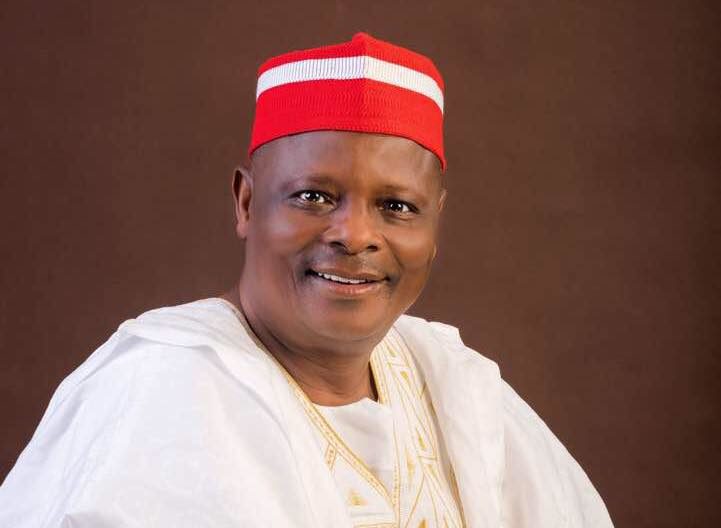
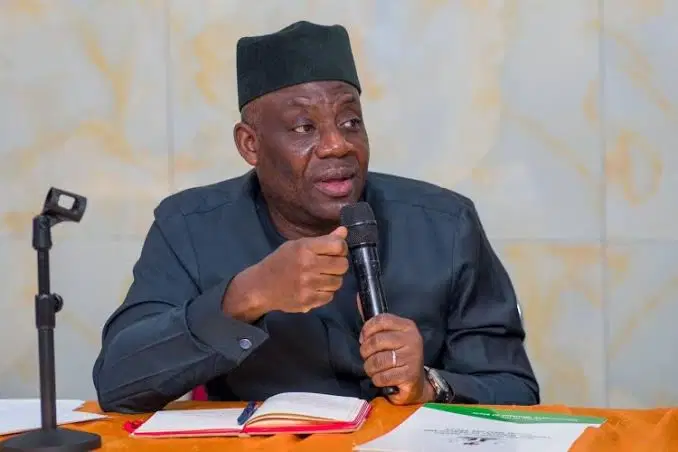
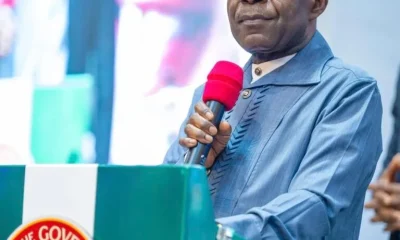
The National Leader of the New Nigeria Peoples Party, Rabiu Kwankwaso, will on Monday (tomorrow) join the African Democratic Congress, our correspondent can authoritatively report.
Credible sources in the ADC and NNPP confided in our correspondent that Kwankwaso would make a formal declaration for his new party in Kano.
According to a principal official of the ADC who spoke with our correspondent on condition of anonymity on Saturday, the National Chairman and Secretary of the party, David Mark and Ogbeni Rauf Aregbesola, respectively, will welcome the former Kano State governor into the party.
Our correspondent gathered that Kwankwaso was likely to join the ADC alongside the immediate past Deputy Governor of Kano State, Aminu Gwarzo.
Gwarzo resigned from his position on Friday, as confirmed by his media aide, Ibrahim Shuaibu.
The ADC had been courting Kwankwaso for more than three months, with the former governor reportedly demanding the vice-presidential slot of the party to contest the 2027 presidential election.
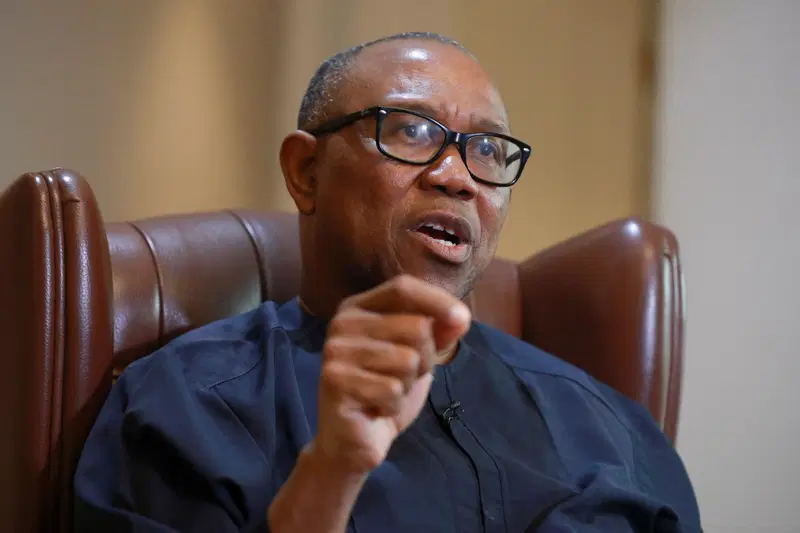
Kwankwaso had eyed a joint ticket with the 2023 presidential candidate of the Labour Party, Peter Obi.
Both Obi and Kwankwaso’s camps had confirmed the move, with former President Olusegun Obasanjo said to be the brains behind the alliance.
The ADC had also intensified its discussions with Kwankwaso following the defection of his political son and the Kano State Governor, Abba Yusuf, from the NNPP to the All Progressives Congress.
Yusuf joined the APC on January 26 with members of the state House of Assembly and his cabinet.
Findings revealed that Kwankwaso finally concluded plans to join the ADC on Thursday after a meeting with Aregbesola at his residence in Abuja.
Reliable insiders disclosed to our correspondent that Kwankwaso had earlier agreed to join the ADC and picked last Tuesday, March 24, for his declaration until he made a U-turn, insisting that he would not join the party until he was promised the vice-presidential slot.
“We have been talking to Kwankwaso, and he has agreed to join the ADC. He was supposed to declare for the party last Tuesday in Kano in the presence of our national officials. But he made a sudden U-turn, insisting that we must promise him the vice-presidential slot; failing that, he would no longer join the party.
“The National Chairman of the ADC, David Mark, said he was not in a position to make that kind of commitment; that was how Kwankwaso refused to make the declaration,” an official of the party disclosed to our correspondent .
After the rejection, Aregbesola held a private meeting with Kwankwaso on Thursday, the aftermath of which was the NNPP leader’s readiness to join the ADC.
Apart from Aregbesola, Kano State officials of the ADC also held a meeting with Kwankwaso, but it was not clear whether their meeting preceded that of the former interior minister.
A picture of the former Kano State governor and Aregbesola taken after the meeting was shared on social media by Kwankwaso’s media aide, Saifullahi Hassan.
Planned Monday defection
Providing an update on the meeting, the credible ADC official said Kwankwaso had agreed to join the party and would make a declaration in Kano on Monday.
“He (Kwankwaso) has agreed to join without preconditions,” the ADC chieftain said in a terse message to our correspondent on Friday.
This is as a leader of the NNPP, who also spoke on condition of anonymity, disclosed that Kwankwaso would depart Abuja for Kano on Sunday (today) in preparation for the ADC declaration.
The NNPP official said, “The leader (Kwankwaso) will be in Kano on Sunday and some NNPP officials have been informed about his decision to join the ADC. I think the declaration will be done on Monday.”
Another national leader of the NNPP confirmed Kwankwaso’s declaration move.
He said, “It is true. We’re going to join ADC on Monday. We will be in Kano. You can expect a large number of people at the declaration. Kwankwaso owns Kano, and he will demonstrate his strength on Monday.”
However, the spokesperson for the ADC, Bolaji Abdullahi, said he was not available to comment on the matter when contacted on Saturday.
He said, “I will call you back; I may not be able to respond to your enquiry right now.”
Similarly, the National Publicity Secretary of the NNPP, Ladipo Johnson, said he was not aware of the planned declaration.
“I am not aware; I have not been available for a while,” he said.
Calls and messages sent to Hassan for official confirmation of Kwankwaso’s defection were not answered.
The development came a week after Obi, Makinde, and former Bayelsa State governor, Seriake Dickson, met Kwankwaso at his residence on Miller Road in Kano on Sunday, March 22.
Kwankwaso described the gathering as a moment of unity and joyous celebration.
ADC extends alliance to NDC
Meanwhile, sources in the ADC told our correspondent that the party had also extended its alliance move to the Nigeria Democratic Congress, with ongoing discussions with Dickson and other leaders of the party.
An insider said some leaders of the Tanimu Turaki-led PDP faction would join the ADC “very soon,” a move he described as a strategy to revitalise the party as a formidable opposition platform.
Another ADC leader, who also spoke on condition of anonymity on Thursday, said, “We have established that Makinde and Dickson are not working for President Bola Tinubu. Some other PDP leaders with Makinde will also move to the NDC. That will make the party a strong opposition platform, and they will use it to negotiate with the ADC as a bloc instead of as individuals.
“As a matter of fact, that is the reason Bala (Bauchi State Governor, Bala Mohammed) is hesitating in his defection to the APC. He is with them (Kwankwaso, Makinde and Dickson). All of them are key politicians, and they are our allies.
“Our collective objective is to bring an end to Tinubu’s administration, which has pushed millions of Nigerians below the poverty line with its bad policies. Whatever it takes, we must work together and accommodate one another’s interests.”
He’s no threat to Tinubu – APC
Reacting to the planned move, the APC downplayed Kwankwaso’s defection to the ADC, saying he does not pose a threat to President Bola Tinubu’s re-election.
The National Secretary of the party, Ajibola Basiru, told our correspondent that the former governor lacked the political structure to challenge Tinubu.
He said, “Kwankwaso is free to move to any party he wants. That is the beauty of democracy. But he is not a threat to us, nor to President Tinubu’s second term. How can he be a threat? How many governors does he have? How many members of the Houses of Assembly? Let him go. Democracy is about contest; he is free to go anywhere. Even in the 2023 election, when he contested, he won in only one state. For us, we are focused on our own development. We are not concerned about whether anybody decamps or doesn’t want to decamp.”