Connect with us

News

Alleged Christian Genocide in Nigeria: US lawmakers disagree with FG

Published

on

Spread the love

United States House Appropriators and Foreign Affairs leaders convened a rare joint briefing yesterday as part of a broader congressional investigation into what lawmakers and experts describe as escalating and targeted violence against Christians in Nigeria.

The session, led by House Appropriations Vice Chair and National Security Subcommittee Chairman Mario Díaz-Balart, R-Fla., is feeding into a comprehensive report ordered by President Donald Trump on recent massacres of Nigerian Christians and potential policy steps the U.S. could take to pressure Abuja to respond.

Trump directed Congress, led by Reps. Riley Moore, R-W.Va., and Appropriations Chairman Tom Cole, R-Okla., to probe Christian persecution in Nigeria and produce a report for the White House to review.
He has floated the idea of taking direct military action against Islamists who kill.

Vicky Hartzler, chair of the U.S. Commission on International Religious Freedom, told lawmakers that “religious freedom [is] under siege,” citing the abduction of more than 300 children and attacks in which “radical Muslims kill entire Christian villages [and] burn churches.”

Rampant violations

She said violations were “rampant,” “violent,” and disproportionately affect Christians who, she argued, were targeted “at a 2.2 to 1 rate”, compared with Muslims.

Hartzler said Nigeria had taken some initial corrective steps, including reassigning about 100,000 police officers from VIP protection details but warned the country was entering a “coordinated and deeply troubling period of escalated violence.”

Targeted sanctions

She recommended targeted sanctions on Nigerian officials “who have demonstrated complicity,” visa restrictions, blocking U.S.-based assets, and conditioning foreign and humanitarian aid on measurable accountability.

She also urged Congress to direct the Government Accountability Office to conduct a review of past U.S. assistance, adding that Abuja should retake villages seized from Christian farming communities, so widows and children could return home.

Dr. Ebenezer Obadare of the Council on Foreign Relations offered the sharpest challenge to the Nigerian government’s claim that the violence was not religiously motivated.

He said the idea Boko Haram and other militant groups target Christians and Muslims equally is a “myth,” arguing the groups “act for one reason and one reason only: religion.”

Any higher Muslim casualty count, he said, reflected geography, not equal targeting.

Obadare described Boko Haram as fundamentally opposed to democracy and said the Nigerian military was “too corrupt and incompetent” to dismantle jihadist networks without strong external pressure.

He urged the U.S. to press the Nigerian government to disband armed groups enforcing Islamic law, confront corruption inside the security forces, and demonstrate genuine intent to curb religious violence.

He added that Washington should insist Nigerian officials respond immediately to early warnings of impending attacks.

Deadliest country

Sean Nelson of Alliance Defending Freedom International added that Nigeria was “the deadliest country in the world for Christians,” claiming more Christians were killed there than in all other countries combined and at a rate “five times” higher than Muslims when adjusted for population.

He said extremists also target Muslims who refuse to embrace their extreme ideology which, he argued, further undercut Abuja’s narrative that the crisis was driven mainly by criminality or local disputes.

With a population of more than 230 million, Nigeria’s vibrant and often turbulent cities and villages are home to people of strikingly diverse backgrounds.

The nation’s roughly 120 million-strong Muslim population dominates the north, while some 90 million Christians are centered in the southern half of the country.

Nelson urged tighter U.S. oversight of assistance to Nigeria, including routing some aid through faith-based organizations to avoid corruption.

Greater transparency

He called for greater transparency in how Abuja handles mass kidnappings and ransom payments, adding that sustained U.S. and international pressure was essential because “without transparency and outside pressure, nothing changes.”

Díaz-Balart criticised the Biden administration for reversing the Trump administration’s designation of Nigeria as a “country of particular concern” in 2021, arguing that the change had had “clearly deadly consequences.”

Lawmakers on the Appropriations, Foreign Affairs and Financial Services committees signalled additional oversight actions in the months ahead as they prepare the Trump-directed report to Congress.

Hartzler noted that Nigeria had recently begun taking several steps that could signal a shift toward confronting the crisis more directly.

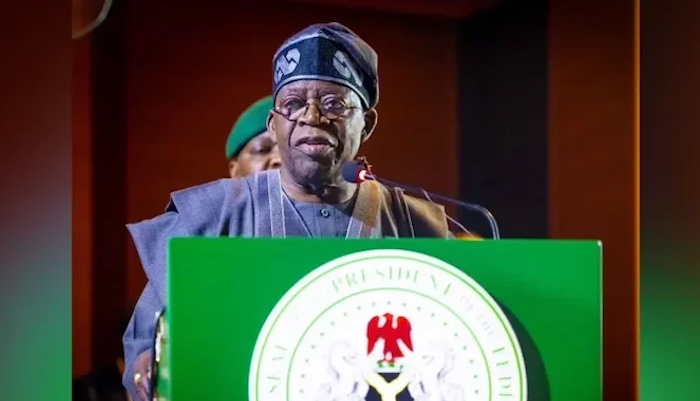
She pointed to President Bola Tinubu’s decision to pull about 100,000 police officers from VIP bodyguard assignments and redistribute them across the country, calling it “a promising start after years of neglect.”

She said the move reflected growing recognition inside Nigeria’s political leadership that the violence had reached an intolerable level.

She also highlighted comments last week from Nigeria’s speaker of the House, who acknowledged the country was facing a “coordinated and deeply troubling period of escalated violence.”

Hartzler said that acknowledgment, coupled with a push from the Nigerian House majority leader for more intensive legislative oversight, suggested the government might finally be admitting the scale and severity of the attacks. Even with these developments, Hartzler warned that the measures were far from sufficient.

She emphasised that the Nigerian government must show clear intent to “quell injustice,” act quickly when early warning signs of attacks appear, and commit to transparency and accountability if the recent steps would amount to meaningful progress.

The Nigerian Embassy did not immediately respond to a request for comment.
Click to comment

Leave a Reply

Your email address will not be published. Required fields are marked *

News

No law says I must operate from govt house, Otti replies predecessors

Published

on

Spread the love

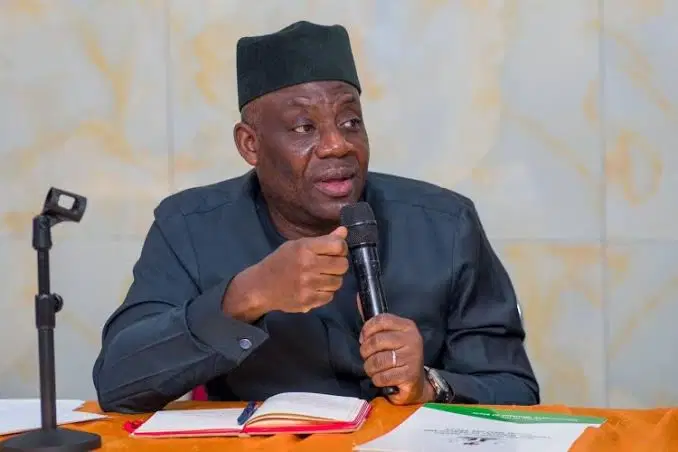
Governor Alex Otti of Abia State has said that no law mandates that a governor operate from anywhere other than the Government House.

This is as he declared that he is still in the Labour Party “for now”.


The governor, who stated this while responding to questions during a media parley in Umuahia, dared his predecessors who threatened to sue him for operating from his private residence at Nvosi instead of the Government House in Umuahia, to proceed to the court as quickly as they could.

Otti said his lawyers were fully prepared for any legal confrontation on the matter.

“I am waiting to be sued. My lawyers are ready. I have looked at the Constitution and there is nowhere it says I must live in a particular place,” the governor said.

Otti, who is currently rebuilding the Governor’s Lodge as well as a brand new office inside the Government House, said the facility was left in a deplorable condition by past administrations.

“The state in which they left the Government House speaks for itself. I don’t owe anybody an explanation,” he added.

Recall that some of his predecessors – Sen. Orji Uzor Kalu, Sen. Theodore Orji, and Dr Okezie Ikpeazu – and their loyalists, recently threatened to sue Otti and compel him to relocate to Government House Umuahia.

Meanwhile, the governor announced the extension of the state’s free electric bus service by one month.

He explained that the 20 electric buses, which commenced operations in late December 2025 and were originally scheduled to end free services in January, would now continue to operate free of charge until the end of February 2026.

On the leadership crisis rocking the Labour Party (LP), and speculations about his possible defection ahead of the next election, Otti said he remains a member of the party for now.

“I am still in the Labour Party today. Tomorrow is another matter,” he said.

The governor noted that the Senator Nenadi Usman-led National Working Committee of the LP had been affirmed by a recent court judgment as the authentic leadership of the party.

“So, the Court judgment confirmed actually that his tenure has expired and advised people to obey court decisions to save the courts from unnecessary troubles.

“We are not in election period. If election comes, we will still run under the Labour Party, but nobody knows tomorrow. But today, I am still in the Labour Party.”

He said the Certified True Copy (CTC) of the judgment had already been transmitted to the Independent National Electoral Commission (INEC), expressing optimism that the electoral umpire would comply accordingly.

Otti urged the former National Chairman of the party, Julius Abure, to respect and obey the court ruling.

“We are on the right side of the law. The court affirmed that Abure’s tenure has expired. People must obey court judgments to avoid unnecessary stress on the judiciary,” he said.

“We are not in an election season yet. When elections come, we will still run under the Labour Party. But today, I am a bona fide member of the Labour Party.”

Earlier in his remarks, the governor highlighted key achievements of his administration, particularly in education, infrastructure, and revenue generation.

He said the introduction of free education had led to a significant increase in student enrollment across public schools in the state.

Otti also disclosed that the iconic Omenuko Bridge at the Abam section of the Bende–Ohafia federal road had been completed and was ready for inauguration.

He added that several road projects across the state were progressing steadily, while the contractor handling the Ohafia–Arochukwu Road had been directed to return to the site.

The governor further announced that the expansion of the Lokpanta Cattle Market into a multi-sector commercial hub would soon commence following the State Executive Council’s approval of the project design.

He also revealed plans to digitise the collection of levies from hotels and other hospitality businesses to boost internally generated revenue.

“In the next few months, hotels will be assessed using verified criteria, and with the click of a button, they will receive their rates,” Otti said.

Reaffirming his commitment to good governance, the governor assured Abians of increased infrastructural development, stressing that his overriding goal is to leave the state better than he found it.

Source.  Vanguard


Continue Reading

News

Days After Governor Yusuf’s Defection To APC, Federal Government Approves N1trn Rail Project For Kano

Published

on

Spread the love

The Federal Government has approved the construction of a ₦1 trillion Metropolitan Rail Service for Kano State, aimed at transforming urban transportation and easing traffic congestion across the metropolitan area.

Governor Abba Kabir Yusuf announced the approval while addressing the State’s contingent that participated in the 2025 National Qur’anic Recitation Competition in Borno State.

In a statement released on Thursday by the governor’s spokesperson, Sunusi Bature Dawakin Tofa, the Governor yusuf said the project would “provide a modern, efficient, and affordable mass transit system that will connect key districts within the metropolis, enhance mobility for residents, and stimulate trade and investment.”

Yusuf explained that the decision of his administration to realign with the Federal Government under the All Progressives Congress (APC) was “driven by the need to attract critical development projects to Kano State.”

Our correspondent  reports that Governor Yusuf had a couple of days ago formally joined the APC after defecting from the New Nigeria Peoples Party (NNPP).

Describing the rail service as “a landmark intervention,” the governor said it would “significantly improve the quality of life of the people and reposition Kano as a major transportation hub in Northern Nigeria.” He assured that the state government would “work closely with relevant federal agencies to ensure smooth implementation of the project, transparency, and maximum benefits for the people of the state.”

Governor Yusuf also expressed appreciation to the Federal Government for approving the project and reaffirmed his administration’s commitment “to complement federal efforts through supportive policies and infrastructure development.”


Continue Reading

News

Lawyers, Others Storm Finance Ministry Over N4 Trillion Debt

Published

on

Spread the love

Legal practitioners numbering over 500 acting under the aegis of Concerned Lawyers for Probity and Justice, stormed the Federal Ministry of Finance, Abuja, to join the protest by indigenous contractors demanding the payment of an estimated N4 trillion for completed capital projects.

The legal practitioners, who were also joined by other civil society groups such as The Enough is Enough Movement and the All Indigenous Contractors Association of Nigeria, AICAN, accused the ministry of favouritism in its dealings with contractors.

The protesters equally demanded the resignation of Minister of State for Finance, Dr. Doris Uzoka-Anite over her alledged mismanagement of the crisis.

Several protesters were sighted along with several police patrol vehicles as well as armed policemen blocking the main entrance of the Ministry’s building at 12:48 p.m., yesterday.

Some of the contractors who spoke on condition of anonymity for fear of victimisation claimed that despite partial disbursements in December 2025, the majority of verified debts remain unsettled, exacerbating their financial hardship.

In a statement signed by Precious Okoh, which was read during the peaceful protest, contractors highlighted cases where individuals who borrowed at high interest rates to fund projects now face asset seizures by banks.

Okoh said: “Contractors who borrowed from banks at high interest rates to fund these projects now face relentless loan defaults, with banks seizing homes, vehicles, and other assets.

“Wives and children watch their breadwinners sink into despair, some pushed to the brink of mental breakdown or worse.

“Entire households have been uprooted, dreams shattered, and futures stolen—all because payments promised and earned have not been made.

“Beyond individual suffering, the ripple effects cripple our national economy. These contractors employ thousands of workers—masons, engineers, labourers—who depend on steady contracts for survival.

“When payments stall, jobs vanish, purchasing power drops, local markets suffer, and economic growth grinds to a halt. A nation that starves its own builders starves itself of progress.”


Continue Reading

Trending