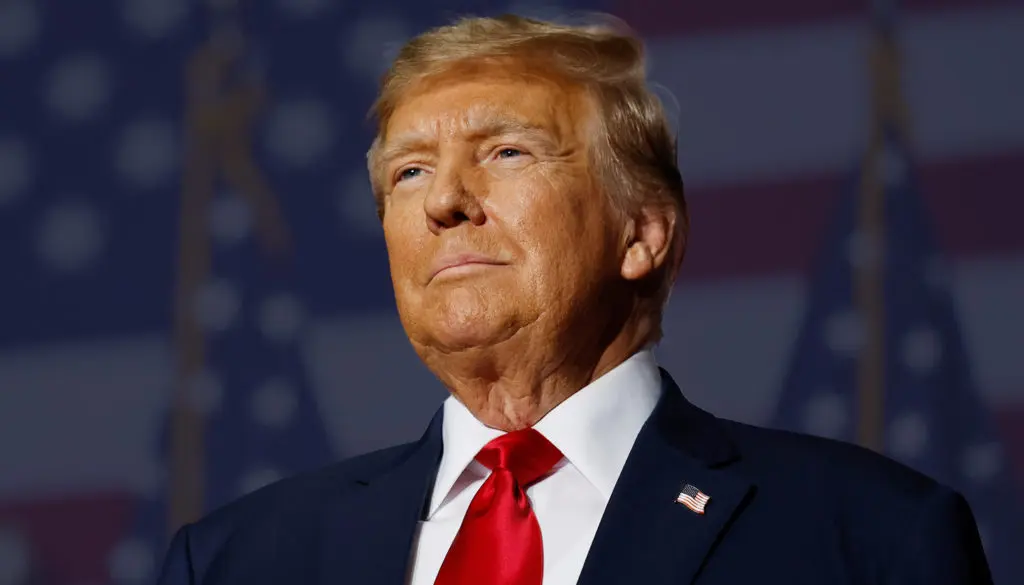
Thirty-one members of the United States Congress have commended President Donald Trump for reinstating Nigeria’s designation as a “Country of Particular Concern” (CPC), a status assigned to nations accused of severe violations of religious freedom.
The lawmakers described Trump’s decision as a “bold and moral step” to confront what they termed a growing Christian genocide in Africa’s most populous nation.
The commendation was contained in a joint statement issued on Tuesday by Rep. Robert Aderholt, Chairman of the House Values Action Team, and made available to journalists on Thursday.
In the statement, Aderholt said the move rekindled hope among Nigeria’s Christian population and reaffirmed America’s global commitment to defending freedom of worship.
“President Trump’s commitment to ending the Christian genocide in Nigeria and his decision to redesignate Nigeria as a Country of Particular Concern gives hope to the people of Nigeria,” he stated.
He added that terrorist groups in Nigeria had killed thousands of Christians annually, stressing that the United States “must lead the charge” in confronting such violence and protecting vulnerable religious communities.
House Majority Whip Tom Emmer hailed Trump’s stance, describing him as “a leader unafraid to defend people of faith.”
“God bless President Trump for standing up and protecting Christians around the globe. The United States finally has a leader unafraid to do what’s right,” Emmer said.
Republican Party Chair Lisa McClain also described the situation in Nigeria as “a moral outrage and a crime against humanity,” while Representatives Josh Brecheen, Mary Miller, and Mark Alford expressed support for tougher sanctions and increased U.S. pressure on those behind religious attacks.
Chairman of the House Foreign Affairs Subcommittee on Africa, Rep. Chris Smith, said the move restored a 2020 designation that was “wrongly lifted by the Biden administration.”
“This action is a powerful step in holding the Nigerian government accountable for its complicity in the unchecked murder, rape, and torture of Christians,” Smith said.
Other lawmakers, including Don Bacon, Andy Biggs, Gus Bilirakis, and Tim Walberg, echoed similar sentiments, urging the White House to deploy “every diplomatic and strategic tool” to protect Nigerian Christians and ensure accountability.
Last Friday, President Trump announced the CPC redesignation on his Truth Social platform, saying that Christianity faced an “existential threat” in Nigeria.
“Thousands of Christians are being killed. Radical Islamists are responsible for this mass slaughter. I am hereby making Nigeria a ‘Country of Particular Concern,’” Trump wrote.
He warned that Washington would not “stand by while such atrocities are happening” and vowed that his administration would “stand ready, willing, and able to defend Christian populations around the world.”
Rep. Riley Moore, one of the lawmakers who first raised the issue in Congress, said Trump’s decision reflected “true leadership and moral clarity.”
“We can no longer turn a blind eye to the bloodshed of our brothers and sisters in Christ. This horrible persecution will end thanks to President Trump,” Moore added.
The Federal Government of Nigeria has consistently rejected Washington’s claims of religious persecution, insisting that religion is not a factor in the country’s security challenges.
Recall that Minister of Information and National Orientation, Mohammed Idris, said during a press briefing in Abuja on Wednesday that the U.S. position stemmed from “misrepresentation and misinformation” about Nigeria’s internal security dynamics.
“Our security issues are driven by banditry, insurgency, and socio-economic factors, not religion,” Idris clarified.
President Bola Tinubu had earlier reaffirmed Nigeria’s commitment to religious freedom, stating that the country remains a constitutional democracy guided by guarantees of liberty and equality for all faiths.
“Nigeria stands firmly as a democracy governed by constitutional guarantees of religious liberty. Since 2023, our administration has maintained open engagement with both Christian and Muslim leaders while tackling security challenges that affect citizens across faiths and regions.”
He added that portraying Nigeria as religiously intolerant “does not reflect our national reality,” stating that tolerance and peaceful coexistence “remain central to the Nigerian identity
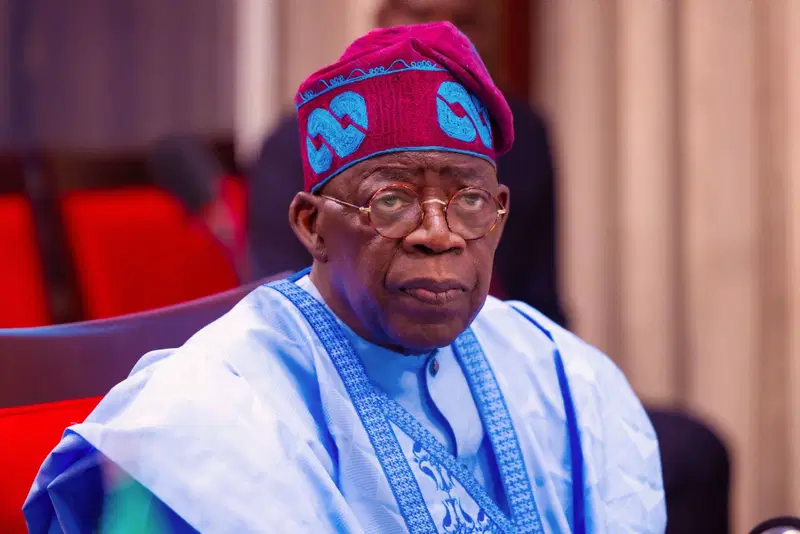
Nigeria has demanded at least two permanent seats for Africa on the UN Security Council, with veto powers for as long as the privilege exists.
Vice-President Kashim Shettima made the demand while delivering President Bola Tinubu’s national statement at the 81st UN General Assembly in New York.
He also demanded five non-permanent seats for Africa, in line with the continent’s longstanding common position on reforming the Security Council.
Shettima said the Council’s present configuration no longer reflected contemporary geopolitical realities and weakened the legitimacy of global decision-making.
“The world of 2026 cannot remain captive to the distribution of power in 1945,” he said.
He said Africa could no longer remain outside permanent membership while issues concerning the continent continued to occupy substantial attention of the Council.
According to him, Nigeria’s position is consistent with the Ezulwini Consensus and Sirte Declaration, adopted as the Common African Position.
Under the position, Africa seeks at least two permanent seats with all existing privileges, alongside five non-permanent seats on the Council.
The African Union reaffirmed the demand in May, saying Africa’s exclusion from permanent representation constituted a historical imbalance requiring correction.
Shettima argued that institutions claiming authority to act for humanity must adequately reflect the people on whose behalf decisions are taken.
He linked Security Council reform to efforts to restore confidence in multilateralism amid widening geopolitical divisions.
The Vice-President also reaffirmed Nigeria’s commitment to the UN Charter and international cooperation.
He said Nigeria supported an international system where diplomacy takes precedence over coercion and international law guides relations among states.
Shettima recalled Nigeria’s contributions to international and regional peace operations in Liberia, Sierra Leone, Darfur, Mali and The Gambia.
He said Nigeria also continues to work through ECOWAS, the African Union and Gulf of Guinea mechanisms.
According to him, these efforts cover mediation, counter-terrorism, democratic governance and maritime security.
Shettima said persistent conflicts across different regions underscored the need to return to dialogue, collective responsibility and peaceful settlement of disputes.
He identified the conflict in Sudan and other theatres as requiring urgent diplomacy because of their humanitarian, economic and geopolitical consequences.
The Vice-President also warned against a global environment where propaganda blurred distinctions between victims and aggressors and complicated accountability.
He maintained that an inclusive and effective UN remained indispensable to global peace and sustainable development
Nigeria’s demand comes amid renewed calls by African leaders for reforms to an institution whose permanent membership remains unchanged since its creation.
The Security Council has five permanent members: China, France, Russia, the UK and the US, each possessing veto power.
Africa currently has no permanent representative on the Council..
The African Union’s preferred reform model provides for at least two permanent African seats, including veto privileges while existing members retain them.
The reform model also seeks five non-permanent seats for Africa.
Shettima said Nigeria remained committed to a multilateral order capable of responding more credibly to 21st-century realities.
According to him, differences among nations must not obscure their common humanity or responsibility to preserve peace for future generations. (NAN)
A forex trading facility is expected to open in Abia State in October, following the 2025 Abia Forex Expo, which organisers said attracted more than 1,500 participants.
The facility is being established by entrepreneur and financial markets personality, Sam Keys, as a platform for financial education, market analysis, trading activities and networking.
According to the organisers, the project followed increased interest in forex trading and other financial market activities among youths and business communities in the state.
The proposed facility will provide a physical location where traders, aspiring investors and other participants can access financial market information, take part in educational activities and interact with others in the sector.
Keys had previously organised the 2025 Abia Forex Expo, which brought together participants interested in forex trading, investment and financial markets.
The new facility is expected to complement such events by providing a permanent location for activities relating to financial market education and trading.
The October opening is expected to attract traders, investors and other individuals interested in learning about the financial markets.
Abia State Government has debunked reports that akara sellers and other petty traders in the state are being compelled to pay N50,000 as tax, describing the claim as misinformation.
The government also said it had approved the designation of some historical and natural sites as State Monuments and State Natural Monuments, while declaring Aba a Creative and Innovative City.
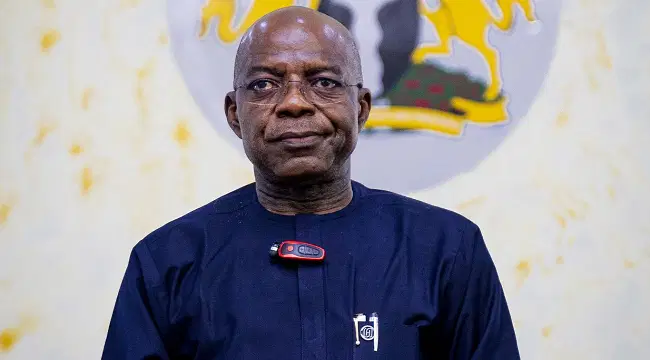
Commissioner for Information, Prince Okey Kanu, disclosed this on Monday while briefing journalists on the outcome of the State Executive Council meeting presided over by Governor Alex Otti.
Kanu said the historical sites approved as State Monuments include the National War Museum, Umuahia; Ojukwu Bunker, Umuahia; and Government College, Umuahia.
Those designated State Natural Monuments are Ibom Waterfall in Arochukwu and Ulochukwu Cave in Alayi, Bende Local Government Area.
According to him, the designations would strengthen the government’s efforts to preserve the state’s cultural and natural heritage, promote tourism and open up new economic opportunities.
“These sites have been elevated to heritage sites that enhance the state’s tourism potential. With this approval, they are primed to attract recognition as UNESCO Heritage Sites,” Kanu said.
He further disclosed that Aba had been designated a Creative and Innovative City in recognition of its longstanding commercial, industrial and creative significance.
The commissioner said the retrofitting of the Ojukwu Bunker and National War Museum had reached about 80 per cent completion and was expected to be concluded before the end of 2026.
He said the projects would improve the preservation of the sites, enhance visitors’ experience and strengthen their tourism potential.
Kanu also disclosed that the Ministry of Arts, Culture and Creative Economy had received approval to develop the Ibom Waterfall Tourism Corridor in Arochukwu.
He said work had commenced, including grading of access roads to the waterfall, with completion expected before the end of the year.
The commissioner added that the state government had commenced the erection of monuments at strategic locations to preserve Abia’s heritage, honour its heroes and heroines and promote the state’s cultural identity.
He cited a monument being dedicated to the heroines of the 1929 Aba Women’s Riot as one of such initiatives, saying it would celebrate their courage, resilience, resistance and leadership.
No N50,000 tax on akara sellers
On the controversy over alleged excessive taxation, Kanu said there had been no fresh increase in tax rates by the Abia State Board of Internal Revenue, noting that most of the rates being circulated were contained in tax laws enacted in 2020 under the previous administration.
He stressed that the Board could not unilaterally increase tax rates without enabling legislation.
“For starters, these rates are not new. Most of the rates are 2020 tax rates that were introduced by the previous government.
“Let me reiterate that the Board of Internal Revenue cannot raise tax rates without the backing of enabling laws. And no such increases have been introduced by the Abia State Government,” he said.
Kanu explained that demand notices issued by the BIR were provided for under the law, urging taxpayers to comply with relevant tax provisions while assuring that legitimate concerns would be addressed by the appropriate officials.
On the specific claim that akara sellers were being made to pay N50,000, he said: “This is pure fallacy. Nothing can be further from the truth. Akara sellers don’t pay tax or levies. They pay daily tolls. And none can pay N50,000.”
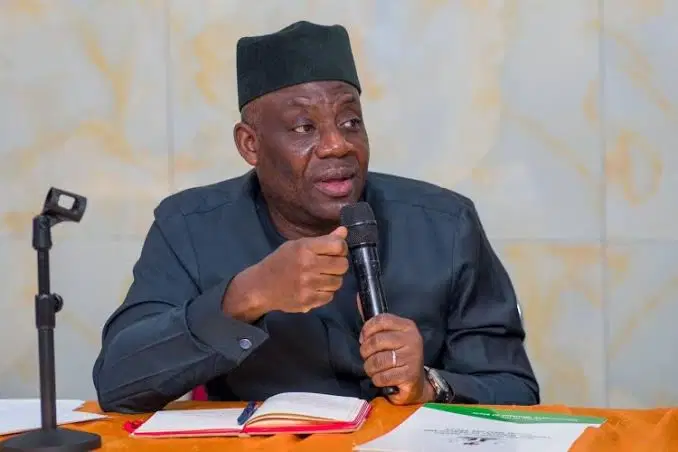
The Chairman of the Abia State Board of Internal Revenue, Mr Uche Elekwachi, corroborated the clarification, saying there was no revenue window under the state’s tax laws requiring akara sellers to pay such an amount.
Elekwachi said the Abia Internally Generated Revenue Service Law establishing the applicable framework was enacted in 2020, before the present administration came into office.
“This whole thing has always been in existence. The Abia Internally Generated Revenue Service Law was enacted in 2020 long before this government came onboard, so we need to make that clarification,” he said.
Gratuity: 2011–2025 retirees next.
On outstanding gratuities owed retired workers, Kanu disclosed that the government had completed payments covering 2001 to 2010 and was preparing for the next batch covering 2011 to 2025.
He said the next payments would commence after the completion of ongoing internal verification and other necessary processes.
The commissioner dismissed claims that the government had only commenced gratuity payments because of pressure from the opposition, explaining that the huge financial commitment involved made payment in batches necessary.
“The payments will be in batches. The funds involved are huge for one balloon payment,” he said.
Kanu also clarified reports suggesting that gratuity payments would continue only until 2031, explaining that such reports are incorrect.
He explained that the State Gratuity Committee had recommended the inclusion of gratuity provisions in the state’s 2026–2031 Medium-Term Expenditure Framework and subsequent annual budgets to ensure that gratuity obligations were systematically provided for and prevent the accumulation of fresh arrears.
“That does not translate to payments being terminated in 2031. As the internal processes and verification of beneficiaries of these payments continue, due payments would still be made in batches,” he said.
He added that the government remained committed to clearing the outstanding liabilities and expressed optimism that the process could be completed earlier than anticipated.
“The conclusion of payment of outstanding gratuities may happen earlier than we ever imagined. Let us therefore wait and see how the next batch of payments will unfold,” Kanu said.
The Commissioner for Arts, Culture and Creative Economy, Mr Matthew Ekwuribe, and the Special Adviser to the Governor on Internally Generated Revenue, Dr Emmanuel Okpechi, were also present at the briefing.