Connect with us

News

From ‘lazy youths’ to Twitter ban: Buhari’s most talked-about online controversies

Published

on

Spread the love

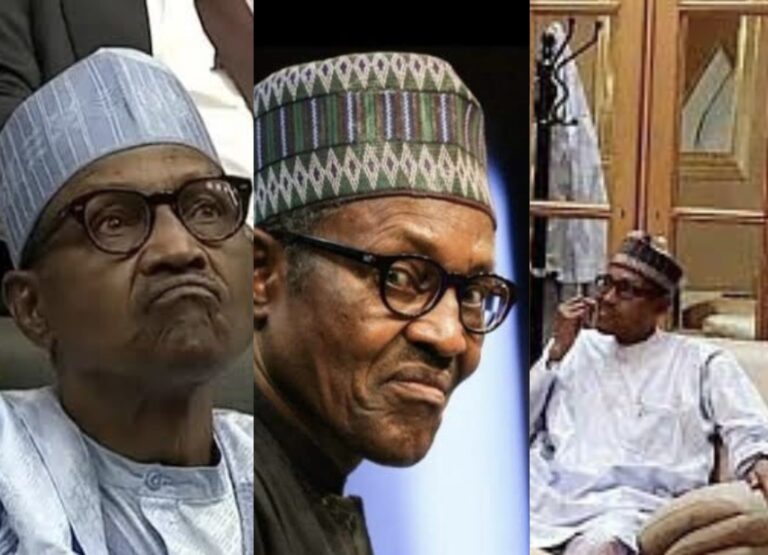
The late Muhammadu Buhari, who passed away on Sunday at 82, left an indelible mark on Nigeria’s political and digital consciousness.

His eight years at the helm were not just about policy pronouncements and economic reforms; they were also a fertile ground for viral moments, intense digital outrage, and sustained, often humorous, online criticism.

As the nation mourns his passing, these are 10 of the most talked-about and controversial Buhari moments that dominated social media discourse and will forever define a significant era in Nigerian public life

1. ‘Lazy Nigerian Youths’ Trend (2018)

In 2018, during a high-profile engagement at the Commonwealth Business Forum in London, then-President Buhari delivered a statement that would reverberate across Nigeria’s digital space for years.

He suggested that many young Nigerians were content to “do nothing” despite growing up in an oil-rich country, implying a sense of entitlement.

Though he didn’t use the exact phrase “lazy Nigerian youths,” that loaded interpretation is precisely how it exploded and trended online.

The backlash was immediate and massive, with #LazyNigerianYouths flooding timelines for weeks, becoming both a hashtag of protest and a symbol of perceived governmental disconnect from the struggles of young Nigerians.

2. The ‘Jubril of Sudan’ Rumour

Following President Buhari’s prolonged medical trip in London in 2017, the rumour mill went into overdrive. Bizarre conspiracy theories primarily propagated online, emerged claiming that he had died and had been secretly replaced by a clone named “Jubril” from Sudan.

Despite its absurdity, the theory gained surprising momentum on social media, becoming a persistent talking point until Buhari himself publicly debunked it in 2018.

Addressing Nigerians in Poland, he stated, with a rare chuckle: “It’s the real me, I assure you.”

Yet, even his direct denial only seemed to fuel more memes, jokes, and wilder speculation.

3. The Twitter Ban (2021)

Perhaps one of the most drastic and globally condemned actions of his presidency was the suspension of Twitter’s operations in Nigeria in June 2021.

The move came swiftly after Twitter deleted one of Buhari’s tweets referencing the civil war, which the platform deemed in violation of its rules against abusive behaviour.

The ban, which lasted seven months, sparked widespread global criticism from human rights organisations and international bodies, who decried it as an infringement on fundamental freedoms.

Domestically, it led to a massive surge in Virtual Private Network usage among Nigerian users, who found alternative ways to access the platform, underscoring the resilience of digital engagement in the face of state censorship.

4. Border Closure Policy (2019–2020)

In August 2019, President Buhari’s administration took the drastic step of unilaterally shutting Nigeria’s land borders, primarily to curb smuggling and stimulate local agricultural production.

While some proponents lauded the move as a necessary step for national self-sufficiency, social media was quickly flooded with a torrent of complaints.

Nigerians vented their frustrations over soaring food inflation, the collapse of cross-border trade, and the worsening economic hardship for countless small businesses and ordinary citizens.

The policy’s perceived failures became a constant target of online lament.

5. #EndSARS and Delayed National Address (2020)

The nationwide #EndSARS protests against police brutality and bad governance in October 2020 represented one of the most significant challenges to Buhari’s authority.

A defining moment of that period was the President’s prolonged silence for days as the protests escalated, culminating in the tragic Lekki Toll Gate shooting.

His eventual national address, when it finally came, was widely criticised for its perceived lack of empathy and failure to directly address the Lekki incident.

The hashtag #WhereIsBuhari trended heavily, reflecting public frustration over his apparent detachment during a critical national crisis.

6. Cashless Policy Chaos (2023)

In the twilight of his administration, Buhari’s government, through the Central Bank of Nigeria, introduced a controversial cashless policy alongside a radical redesign of the naira currency notes.

The implementation of this policy led to severe cash scarcity across the nation, triggering widespread public frustration, economic disruption, and even violent protests in some areas.

Angry Nigerians, unable to access their funds for daily transactions, incessantly vented their fury online and offline, creating another potent wave of criticism that followed his government to its final days.

7. “My Wife Belongs to the Kitchen…” (2016)

In October 2016, during a joint press conference with German Chancellor Angela Merkel in Berlin, President Buhari responded to public criticism from his wife, Aisha, about his administration.

His now-infamous retort quickly went viral globally

“I don’t know which party my wife belongs to, but she belongs to my kitchen, my living room, and the other room.”

The statement sparked immediate and widespread criticism from feminists, human rights advocates, and international observers, drawing global condemnation for its perceived patriarchal and dismissive tone.

It trended heavily with feminist hashtags and became a defining moment in the discourse around gender roles in Nigerian leadership.

8. “I Belong to Everybody and to Nobody” (2015)

This eloquent line, delivered as the opener of his inaugural speech in 2015, earned resounding applause and was initially seen as a powerful commitment to impartiality and national unity.

However, as his tenure unfolded and critics pointed to perceived ethnic or partisan favouritism in appointments and policies, many Nigerians began to use this quote sarcastically online.

It became a punchline, subtly expressing disillusionment with what some saw as a deviation from his initial, inclusive promise.

9. Medical Trips to London

Throughout his two terms, President Buhari’s frequent and often prolonged medical trips to London became a consistent source of national debate and social media commentary.

Hashtags like #LondonIsCalling and #FixOurHospitals regularly trended during his absences, reflecting public frustration with the state of Nigeria’s healthcare system and concerns over the cost and duration of his foreign medical care.

Memes depicting an “absentee president” or a leader out of touch with the country’s realities frequently accompanied these discussions.

10. “Bubu” and Meme Culture

Affectionately, or sometimes derisively, nicknamed “Bubu” by Nigerians online, President Buhari, despite his known detachment from social media, inadvertently became a central and recurring figure in the nation’s vibrant meme culture.

Images and videos of him napping at public events, fumbling speeches, or remaining silent during critical national crises were routinely captured, repurposed, and transformed into viral content.

His stoic expressions, often combined with trending topics, ensured that Buhari, whether by design or accident, was one of the most discussed, and certainly one of the most memeified Nigerian presidents on the internet.

Source : Punch
Click to comment

Leave a Reply

Your email address will not be published. Required fields are marked *

News

Malami, son face new terrorism-linked firearms charges

Published

on

Spread the love

Former Attorney-General of the Federation and Minister of Justice, Abubakar Malami (SAN), and his son, Abdulaziz Malami, on Wednesday pleaded not guilty to a five-count amended charge bordering on alleged illegal possession of firearms, filed against them by the Federal Government.

The Department of State Services had, on February 3, 2026, arraigned the defendants on a five-count charge bordering on alleged terrorism financing, aiding terrorism, and illegal possession of firearms.

Malami was also accused of failing to prosecute suspected terrorism financiers while in office, in addition to alleged unlawful possession of a Sturm Magnum 17-0101 firearm and ammunition.

They had earlier pleaded not guilty to the charges and were granted bail by the court.

However, at the resumed hearing on Tuesday, prosecution counsel, Akinlolu Kehinde (SAN), informed the court of an amended charge dated April 14, 2026, which he said had been served on the defendants.

Kehinde urged the court to substitute the earlier charge dated February 2, 2026, with the amended one to enable the defendants to take a fresh plea.

Responding, defence counsel, Shaibu Arua (SAN), confirmed receipt of the amended charge.

Consequently, the trial judge, Justice Joyce Abdulmalik, struck out the earlier charge and discharged the defendants in respect of it.

The court thereafter ordered that the amended five-count charge be read to the defendants.

In the amended charge, the defendants were accused of preparing to engage in acts of terrorism by allegedly possessing firearms without a licence, including a Sturm Magnum 17-0101 firearm, 16 Redstar AAA 5’20 live cartridges, and 27 expended cartridges.

The offences are said to be contrary to provisions of the Terrorism (Prevention and Prohibition) Act, 2022, and the Firearms Act, Cap F28, Laws of the Federation of Nigeria, 2004.

After the charge was read, the defendants pleaded not guilty to all counts.

Following the plea, Kehinde urged the court to fix a date for trial.

However, the defence counsel prayed the court to allow the defendants to continue on the bail earlier granted to them.

The prosecution did not oppose the application.

In her ruling, Justice Abdulmalik granted the request and fixed May 26 and June 16, 2026, for trial.

The amended charges read: “That you, Abubakar Malami, Adult, Male, and Abdulaziz Abubakar Malami, Adult, Male, sometime in December, 2025, at Geeze Phase II Area, Birnin Kebbi LGA, Kebbi State, within the jurisdiction of this Honourable Court, did engage in preparation to commit acts of terrorism by having in your possession and without license, a Sturm Magnum 17 – 0101 firearm, Sixteen (16) Redstar AAA 5’20 live rounds of Cartridges and Twenty-Seven (27) expended Redstar and thereby committed an offence contrary to and punishable under Section 29 of the Terrorism (Prevention and Prohibition) Act, 2022.

“That you, Abubakar Malami, Adult, Male, and Abdulaziz Abubakar Malami, Adult, Male, sometime in December, 2025, at Geeze Phase II Area, Birnin Kebbi LGA, Kebbi State, within the jurisdiction of this Honourable Court did conspire amongst yourselves in preparation to commit acts of terrorism by having in your possession and without a license a Sturm Magnum 17 – 0101 firearm, Sixteen (16) Redstar AAA 5’20 live rounds of Cartridges and Twenty-Seven (27) expended Redstar, contrary to Section 26 (1) of the Terrorism (Prevention and Prohibition Act) 2022 and punishable under Section 26 (3) (a) and (b) of the Terrorism (Prevention and Prohibition Act) 2022.

2022 and punishable under Section 26 (3) (a) and (b) of the Terrorism (Prevention and Prohibition Act) 2022.

“That you, Abubakar Malami, Adult, Male, and Abdulaziz Abubakar Malami, Adult, Male, sometime in December, 2025, at Geeze Phase II Area, Birnin Kebbi LGA, Kebbi State within the jurisdiction of this Honourable Court, without a license, did have in your possession a Sturm Magnum 17 – 0101 firearm and thereby committed an offence contrary to Section 3 of the Firearms Act, CAP F28, Laws of the Federation of Nigeria, 2004 and punishable under Section 27 (1) (a) (i) of the Firearms Act, CAP F28, Laws of the Federation of Nigeria, 2004.

“That you, Abubakar Malami, Adult, Male, and Abdulaziz Abubakar Malami, Adult, Male, sometime in December, 2025, at Geeze Phase II Area, Birnin Kebbi LGA, Kebbi State within the jurisdiction of this Honourable Court, without a license, did have in your possession Sixteen (16) Redstar AAA 5’20 live rounds of Cartridges and thereby committed an offence contrary to Section 8 (1) (b) (ii) of the Firearms Act, CAP F28, Laws of the Federation of Nigeria, 2004 and punishable under Section 27 (1) (a) (i) of the Firearms Act, CAP F28, Laws of the Federation of Nigeria, 2004.

“That you, Abubakar Malami, Adult, Male, and Abdulaziz Abubakar Malami, Adult, Male, sometime in December, 2025, at Geeze Phase II Area, Birnin Kebbi LGA, Kebbi State within the jurisdiction of this Honourable Court, without a license, did have in your possession Twenty-Seven (27) expended Redstar AAA 5’20 live rounds of cartridges and thereby committed an offence contrary to Section 8 (1) (b) (ii) of the Firearms Act, CAP F28, Laws of the Federation of Nigeria, 2004 and punishable under Section 27 (1) (a) (i) of the Firearms Act, CAP F28, Laws of the Federation of Nigeria, 2004.”


Continue Reading

News

UNICAL first female SUG president graduates with First Class

Published

on

Spread the love

A former President of the Students’ Union Government of the University of Calabar, Blessing Alims, has called on Nigerian youths to embrace discipline and the spirit of resilience as essential tools for success.

Alims, who gained admission in 2020, said she funded her studies through menial jobs, including shoemaking and fashion designing at the Cross River Garment Factory, while volunteering with the Girls’ Power Initiative in Calabar.

She graduated as one of the best graduating student recently at the university’s 38th convocation.

Speaking on Tuesday in Calabar, Alims stressed that while the country presents numerous challenges, young people must resist the temptation to solely blame external factors for their setbacks.

According to her, discipline remains the defining factor that separates successful individuals from those who remain stagnant despite having opportunities.

She added, “You must be consistent and focus. In my 300 level, I broke barriers as the first female SUG President, leading over 45,000 students. During my tenure, I improved campus transportation with five mini buses, awarded N1,000,000 to the best graduating student, sponsored 50 students through the SUG President scholarship scheme, secured a solar-powered borehole to improve hostel water access and championed advocacy that led to the university’s first gender policy”.

The union leader also highlighted the importance of education, skill acquisition, and entrepreneurship, urging young Nigerians to invest in personal growth and development.

She further encouraged students and graduates to be intentional on discipline and make productive use of digital platforms, describing the internet as a powerful tool for learning, networking, and economic empowerment.

“Discipline is not just about avoiding distractions; it is about making the right choices daily, even when it is inconvenient. The internet is a powerful tool for learning, networking, and economic empowerment. Utilize it effectively.”

“In 2020, I got admitted; in 2024, I made history as the first female SUG President in UNICAL since 1975. In 2026, I graduated with a First Class. Let my story inspire you.

“Today, I am the number six overall best graduating students  at the University of Calabar 38th Convocation and the overall best from my faculty, department  and LGA”, she said.

Continue Reading

News

Katsina Prepares 1000 Couples Ahead Of Massive April Wedding

Published

on

Spread the love

The Katsina State Government, in collaboration with an NGO, Al-Usra Marital Support Foundation, on Thursday organised an intensive pre-marital counselling and training for about 1,000 intending couples.

The exercise, held in Katsina, Daura and Funtua zones, was part of preparations for a mass wedding, ‘Auren Gata’, an initiative of the state government, scheduled for April 25.

The chairperson of the foundation, Dr Murjanatu Ibrahim-Duwan, said that the training was aimed at strengthening family values and reducing divorce in the society.

She said the foundation was partnering with relevant authorities to prepare couples, representing 2,000 individuals, for the planned mass wedding.

Ibrahim-Duwan added that the initiative was designed to equip the intending couples with the knowledge and skills required to build stable and successful marriages.

She said the couples were earlier screened by the state Ministry of Women Affairs to ensure they are fit and ready for marriage.

She said the training exercise had been divided into three zones, Malumfashi, Daura and Katsina, to allow participants from different locations conveniently attend the sessions.

“The training is to prepare the couples for a successful married life by educating them on their responsibilities to one another and the importance of mutual understanding in marriage,” she said.

Ibrahim-Duwan added that the sessions also provided guidance on Islamic perspectives on marriage, conflict resolution and ways to maintain harmony in the home.

She noted that participants would receive certificates, which would serve as a requirement for participation in the mass wedding.

The chairperson further explained that the ministry of women affairs compiled and verified the list of screened couples after conducting medical tests and other necessary evaluations.

She expressed optimism that the initiative would contribute significantly to reducing marital disputes and strengthening family institutions in the state.

Earlier, the Hisbah Commander in the state, Dr Aminu Usman (Abu Ammar), said the initiative, the first in the state, would help in reducing immorality.

He said the state government would also provide the couples with all the necessary support needed for marriage, and also a capital for the groom to start a business.

Usman said after the wedding, the board would continue to monitor the couples, to ensure a true and peaceful marriage.

The Commissioner for Women Affairs, Aisha Aminu-Malumfashi, said the initiative was to prevent the beneficiaries, especially women, from falling into immorality.

Represented by Amina Sada-Mashi, the Spokesperson of the ministry, the commissioner said the beneficiaries were made to undergo a thorough screening, such as genotype, HIV and other health issues.


Continue Reading

Trending