Politics
Final constitutional amendment draft ready before year end — Deputy Senate president
Published
8 months agoon

The Deputy Senate President and Chairman Senate Committee on the review of the 1999 constitution, Jibrin Barawu, on Saturday, said that the final draft of the ongoing constitutional amendment would be sent to the state House of Assembly for ratification before the end of the year.
Barawu, represented by the Senate leader, Michael Opeyemi Bamidele, disclosed this while speaking with journalists at the end of the two-day southwest Zonal bublic hearing on 1999 Constitution Amendment held in Lagos.
He disclosed that the dominant requests of the people of the Southwest during the public hearing include state creation, state police, local government creation, judicial reforms, electoral reforms, special seats for women both at the national and state House of assembly, among others.
The Deputy Senate President also stated that the public hearing should not be considered as a jamboree but an integral constitutional requirement to ensure that the people have a say in the preparation of a document that governs them.
He explained that the ongoing constitutional review should also not be taken to be a routine, as something meaningful that will further redefine good governance and strengthen the country’s democracy will definitely come out of the amendment.
Barawu disclosed that, for instance, based on the constitutional amendment as done by the 9th National assembly and the state House of Assembly, there were lot achievements recorded in the area of devolution of powers such that some issues which were hitherto in exclusive list were taken to concurrent list for the state government to oversee.
The Deputy Senate President said that the gains of the past constitutional amendment could also be seen with some electoral reforms that have begun to make Nigerians’ votes count.
Barawu revealed that “The essence of what we have done within these two days is to give Nigerians the chance to participate so that their elected representatives will not sit in Abuja and begin to tamper with the constitution.
“And our founding fathers who wrote the constitution have made it so difficult for anyone to just wake up and begin to tamper with the constitution, that’s why we are going through all these processes.
“And even after the national assembly would have done its job, we still need the support of 2/3 of the state House of Assembly before it could become an amendment.”
He continued, “The whole essence is to ensure that the constitution which is our ground norms is not changed without the popular consensus of Nigerians, that is what we have done, it is not just a jamboree, it is not just a routine and I want to assure you that something meaningful will also come out of this just like it has been in the past.
“We are looking to address lots of issues raised by the youth, the women, the traditional rulers, the professionals, and other stakeholders for good governance and a better Nigeria. We have heard Nigerian very loud and clear, and we are going to Abuja to file our report and conclude this process.
“Part of our timetable is that before the end of the year, a final notification as a proposal will be sent to the State House of Assembly so that we can round up the process without further delay.”
Barawu, however, urged stakeholders and those demanding one constitutional amendment or the order to also carry along the elected representatives so as to be on the same page and not be working at cross purposes.
He thanked the state lawmakers for being on the same page with their counterparts at the national assembly and urged them to also do the due diligence and ensure the success of the constitutional review.
Meanwhile, the Southwest Conference of Speakers of the State Legislature has said that the lawmakers are in support of all the requests coming from the region and also stand on the same page with the national assembly members from the Southwest as far as the ongoing constitutional amendment is concerned.
The lawmakers pledged that they will do all that is within their power to lobby their counterparts from the other five geopolitical zones to get the required two-thirds support of the state House of Assembly to ensure that the request of the Southwest people makes it into the constitution amendment.
The Speaker of Ogun State House of Assembly, Daisi Elemide, who spoke on behalf of his colleagues, explained that “we stand by all that our national assembly members from the Southwest are doing on the amendment of the 1999 constitution, we are on this same page with you.
“We stand by autonomy for the Legislature that is even already in the constitution but the implementation is where we have the problem, and the main challenge here our the governors, we shall continue to engage them to let them see reasons why they should allow the Legislature to enjoy the autonomy as enshrined in the constitution. We also stand by full autonomy for the local government, and we stand in support of the state police, too. We believe that having state police will help a lot to combat the various insecurity challenges that are confronting us.
“We are also of the strong belief that roles for our traditional rulers, which will be enshrined in the constitution, should also make it into this ongoing constitutional amendment. This is what they used to have before it was removed, so giving our traditional rulers constitutional roles is what we shall equally work upon with the support of lawmakers from the other five geopolitical zones.
“On the reserved seats for the women, the House of Assembly in the Southwest is also standing by our women, ours is ‘He for She’ and we shall do all that is within our powers to support their aspirations”.
Making a presentation on behalf of the workers in the Southwest, the Chairperson of Nigeria Labour Congress, Lagos State, Agness Funmi Sesse, warned against the removal of labour issues from the exclusive list to the current list, saying that the country’s workforce will fight this with their last breath.
Sesse said that removing the labour issues from the exclusive list to the concurrent list means that issues of national minimum wage determination, among others, labour matters will now be made under the purview of the state government.
She added that it is a way to further impoverish and enslave the workers, as many states have even refused to implement the new minimum wage passed into law by the federal government last October.
Sesse warned that, “The removal of Labour provision from the exclusive to the concurrent will allow many state governments who are already violating many labour laws, such as proscription of trade unions even when these are in the exclusive list.
“We can then begin to imagine if the labour provisions are now made to be part of the concurrent list. Nigeria workers are, however, prepared to resist this internal colonialism with the last drop of our blood”.
Speaking on behalf of the Nigerian Bar Association, Dr Babatunde Olatunji, SAN, called for the overhaul of the judicial appointment process.
Olatunji said that the new constitution of the country should contain stipulated guidelines that must be strictly followed for the appointment of judges.
He said that the current guidelines, which stated that a lawyer who had spent 10 years after his or her call to bar could be made a judge, are too weak and subject to manipulation once such a lawyer is close to governors and the powers that be.
Olatunji said that if the process for the appointment of judicial officers is not right, the Judiciary will also not be able to perform up to expectations.
There were also presentations for the creation of Oke Ogun State from Oyo with Agunrege as the capital by Dr Bimpe Aderohunmu, creation of New Oyo State from Oyo with Ogbomosho as the capital read by Rear Admiral Jacob Ajani (retd.), among several others from youth, the women and other stakeholders and professionals.
You may like
Politics
E-transmission of poll results can’t replace manual — Tinubu
Published
3 days agoon
February 19, 2026
President Bola Tinubu has signed into law the Electoral Act Amendment) 2026, saying in Nigeria, electronic transmission of election results is merely supportive and not a replacement for manual transmission.
This came on a day former Cross River State Resident Electoral Commissioner, REC, Mr. Mike Igini, blamed the Judiciary for recurring challenges in the electoral system.
He also faulted the National Assembly’s decision to retain manual collation as a backup to electronic transmission of election results in the amended Electoral Act.
Signing of the amended Act came days after the Independent National Electoral Commission, INEC, released the time-table for the 2027 general elections.
The signing ceremony took place at the Presidential Villa, Abuja, around 5:00pm, with principal officers of the National Assembly in attendance.
Recall that the National Assembly had on Tuesday, passed the Electoral Act 2026 (Amendment) Bill into law.
The amendment came amid intense public debate over electronic transmission of election results in real-time.
Last week, protests rocked the National Assembly complex as civil society organisations and some opposition figures mounted sustained pressure on the National Assembly to mandate live transmission of results from polling units directly to INEC’s central server.
They argued that it will reduce result manipulation and enhance credibility of the electoral process.
However, the All Progressives Congress and some stakeholders expressed concerns over the technical feasibility of real-time transmission in areas with poor telecommunications infrastructure, making a case for a phased or hybrid approach that allows manual collation where electronic systems fail.
During the 2023 elections, the failure of INEC’s Results Viewing Portal on election day triggered widespread allegations of rigging.
The 2027 general elections are scheduled to hold on February 20 for Presidential and National Assembly elections and March 6 for Governorship & State Houses of Assembly Elections.
Speaking shortly after assenting to the bill, President Tinubu commended the National Assembly for what he described as a rigorous and patriotic process, stressing that the objective of the reforms was to safeguard democratic stability and prevent voter disenfranchisement.
“I followed keenly what you were doing. The essence of democracy is to have very solid brainstorming discussions committed to national development and nation-building and the stability of the nation.
“What is crucial is that you manage the process to the extent that there will be no confusion and no disenfranchisement of Nigerians, and we are all going to see democracy flourish,’’ Tinubu said.
The President emphasised that while technology remains important, elections ultimately depend on human management and public trust.
According to him, the manual voting and counting process remains central to Nigeria’s electoral system, with electronic transmission serving as a support mechanism, rather than a replacement.
He stated: “No matter how good a system is, it is managed by people, promoted by people and finalised by people. You are not going to be talking to a computer; you are going to be talking to human beings who announce the results.
“Essentially, what we are looking at is the transmission of manual results, and we must avoid glitches. Nigeria will flourish and continue to nurture this democracy for prosperity and stability.”
Amended Act will ensure every vote counts — Akpabio
Also speaking after the signing ceremony, Senate President, Godswill Akpabio, declared that the Electoral Act 2026 (Amendment) will ensure that every Nigerian vote counted.
Akpabio said the new piece of legislation eliminated the perennial problem of result manipulation between polling units and collation centres, adding it addressed the core concerns raised by Nigerians over integrity of the electoral process and introduced provisions that will make future elections more transparent and secure.
“At the end, Nigerians will benefit a lot from future elections. Every vote will now count,” the Senate President said.
He noted that the amendment represented the first time since independence in 1960 that Nigeria’s electoral laws will recognise electronic transmission of results.
Akpabio explained that the amended Act mandates the electronic transmission of polling unit results to the INEC Result Viewing Portal, a key demand by civil society organisations, opposition parties, and election observers following widespread allegations of result manipulation during the 2023 general elections.
However, he said the law also took into account areas with poor telecommunications infrastructure, ensuring that the primary source of results remained the EC8A forms signed by presiding officers, party agents, and security personnel at polling units.
“We took cognisance of areas where there may not be any network, where there may not be communication capacities and availability.
“We said, since the polling unit result comes in form EC8A, which is signed by the presiding officer, signed by the agents, and signed in the presence of security agents, copies are given to all.
“Then we can use that as the primary source of collation at that unit. And then, of course, we transmit it. Even if there is no network at that time, once we step out of there, maybe towards the ward centre or the local government centre, it will drop into the iREV and people will still be able to view.”
Akpabio said the implication was that Nigerians will now be able to compare results uploaded to the portal with what was eventually collated at ward, local government, and state levels, making it impossible for results to be tampered with after leaving polling units.
“The implication of that is that if what is eventually collated at the next centre is different from what is in the iREV, Nigerians will be able to compare whether the election result had been tampered with.
“For us, that had always been the problem in the country, that once election results leave a polling unit, they will be tampered with or mutilated. That has been eliminated today,” he said.
The Senate President dismissed suggestions that the National Assembly had bowed to political pressure, insisting that the final provisions of the amendment were the product of thorough consultations and deliberations at plenary of both chambers.
“We are satisfied that we have met the aspiration of Nigerians, not those who are politically motivated,” he said, adding that the Senate had even sacrificed its holiday break to conclude work on the amendment.
He said the amendment also addressed scenarios where election winners were disqualified by courts, noting that instead of declaring the runner-up as the winner, the law now mandated fresh elections to ensure that Nigerians truly elect their leaders.
“We don’t want a situation where, in an election, you have five people contesting, one person out of 300,000 votes, scores 290,000 votes , and then, for one reason or the other, he’s disqualified by the court, and then the person who scored 1,000, who is not popularly elected, will now be declared winner.
“All those things are eliminated. We have now recommended that, where such a case happens, they should call for another election,” he said.
On his part, Speaker of the House of Representatives, Abbas Tajudeen, who also addressed journalists, drew attention to the reduction of the election notice period from 360 days to 300 days.
“This will inadvertently translate to holding the presidential and National Assembly elections in January 2027, and that will technically avoid conducting elections during the month of Ramadan of 2027.
“I think this is another piece of ingenuity that the National Assembly has introduced to avoid voter apathy in the next general election,” the speaker said.
Judiciary must stand tall to save democracy – Igini
Meanwhile, former Cross River State Resident Electoral Commissioner, REC, and lawyer, Mr. Mike Igini, has blamed the Judiciary for recurring challenges in the electoral system, and faulted the National Assembly’s decision to retain manual collation as a backup to electronic transmission of election results in the amended Electoral Bill.
He described the Electoral Act Amendment Bill as a recipe for chaos.
The National Assembly approved electronic transmission of results but retained manual collation as a fallback. The Senate’s decision followed a tense plenary in which 15 lawmakers opposed the controversial Clause 60 of the Electoral Act (Amendment) Bill 2026.
In the House of Representatives, lawmakers reversed their earlier position supporting mandatory real-time electronic transmission to align with the Senate.
Speaking on an interview with Arise Television, yesteday, Igini warned that the amendment could endanger presiding officers and undermine electoral credibility ahead of the 2027 general elections.
Message to Tinubu
He appealed directly to President Tinubu, recalling his history in the pro-democracy struggle.
“You were a senior man in the struggle when democracy was uncertain. What will be presented before you is a recipe for chaos. Be a man of history. What is put before you, please take it back. Don’t sign it.”
History of judicial resistance to electoral reforms
Recalling how the Judicary undemined democracy, Igini traced resistance to electronic reforms to successive electoral cycles.
He recalled that under former INEC chairman, Professor Maurice Iwu, efforts were made to deploy technology for result transmission, but they were sabotaged.
Under Professor Attahiru Jega, biometric voter registration, Permanent Voter Cards, PVCs, and smart card readers were introduced to curb fraud.
However, he noted that in 2015, the Supreme Court ruled that the smart card reader, though innovative, lacked explicit backing in the Electoral Act.
“That debate has held this country down,” he said, blaming judicial interpretations for weakening reforms.
On the IReV portal, Igini criticised the Supreme Court’s position that it is merely a “viewing centre.”
“Regulations and guidelines made pursuant to constitutional powers have the force of law. They are subsidiary legislation,” he argued.
Igini insisted that the judiciary remains central to restoring electoral integrity but lamented what he described as its failure in critical moments.
“Democracy is in danger when the judiciary shows signs of weakness, collapse or irrelevance,” he said.
He argued that electoral disputes should not determine leadership through court pronouncements but reflect the will expressed at polling units.
“Who becomes what must be determined at the polling unit, not in court,” he stressed.
According to him, reforms should prioritise swift adjudication of electoral cases before inauguration and establish long-delayed Electoral Offences Tribunals.
On IReV and Supreme Court
Asked whether results uploaded to the IReV portal would remain justiciable, Igini disagreed with the apex court’s interpretation limiting its legal weight.
“The decision that IReV is merely a viewing centre is contrary to established authorities. Regulations made under constitutional powers have the force of law,” he argued.
He maintained that electronic transmission enhances trust, safety and efficiency.
“Everything we developed was to ensure that who becomes what is determined at the polling unit. The court should not determine governors or legislators,” he said.
Why I broke my silence
On whether lawmakers had heeded his earlier warning that many of them might not return in 2027 without credible electronic transmission, Igini said his intervention was driven by patriotism, not politics.
He lamented that after over a decade of reforms aimed at strengthening electoral integrity, the country appeared to be “back to where we started.”
“For over 30 years of my life, including 10 practical years in INEC, together with other Nigerians, we worked to remove the history of our elections from the poetry of frustration and pain,” he said.
“To now find that all that we did is in vain is painful. But I do not regret serving my country.”
Igini disclosed he turned down consultancy offers after leaving office in 2022 to avoid ethical conflicts.
“It would have been wrong of me to take appointments after being part of the process. On television, I was never paid a dime. It was service to the country,” he said.
‘Incident Form’ all over again
Pressed on likely loopholes in the amended electoral law, Igini warned that retaining manual backup could reintroduce the notorious “incident form” abuse.
“The consequence and danger of what has been passed is that we are bringing back another version of the incident form,” he said.
“When a presiding officer says there is no network, even when people can see network on their phones, you are putting that officer’s life in danger.”
He warned that ad hoc staff, mostly youth corps members, would face pressure and possible violence at polling units, while political elites remain insulated.
“The children of political elites will not be at the polling units. It is youth corps members who will face the danger,” he said.
Igini also alleged past collusion involving the duplication of EC8A result sheets with identical serial numbers.
“In 2015 and 2019, there were cases where serial numbers were duplicated. Which one will you pick when two results with identical features are produced?” he queried.
He recounted instances where courts upheld results disputed by INEC, despite the commission distancing itself from such documents.
On turnover in the National Assembly
Responding to suggestions that high turnover in the National Assembly is inconsequential, Igini disagreed. “We have had brilliant legislators who showed integrity but did not return because governors determine who gets tickets,” he said.
He maintained that credible processes protect both voters and lawmakers.
“All you need to do is compare the list of those elected in 2019 with those in 2023. The figures are there,” he said.
Security, collusion and network manipulation
The former REC warned that provisions allowing discretion over network availability could be abused.
“The capacity to connive and ensure there is no network exists. It has happened before,” he alleged.
He cited past elections where communication systems were allegedly jammed during governorship polls.
He also raised concerns about ad hoc staff recruitment, noting that once directives leave INEC headquarters, thousands of temporary staff execute elections at ward and polling unit levels.
“In Akwa Ibom alone, I deployed over 28,000 ad hoc staff. These are the people who conduct elections. If you give them omnibus discretion, it can be abused,” he warned.
Way forward
Despite his criticism, Igini urged Nigerians not to despair, saying ,”the greatest option we have is the judiciary, which must stand tall in defence of democracy and rule of law.”
He called for reforms that shift the burden of proof of credible elections to the electoral management body and ensure disputes are resolved before winners are sworn in.
He also emphasised the roles of security agencies, media and civil society in safeguarding the vote.
“Democracy is not self-executing. Every arm of government and every stakeholder must act responsibly,” he said.
Democracy at a crossroads
Igini noted that Nigeria stands at a critical juncture.
“In the absence of swift and courageous interpretation of the law, democracy will suffer,” he warned.
He insisted that electoral provisions were designed to cure specific mischief and should not be diluted through elite compromise.
“That is the only way we can build a society where there is opportunity for all and responsibility for all,” he said.
Politics
Abure-led Faction Accuses Abia Deputy Governor, Usman, Others Of Forcefully Taking Over Labour Party Office
Published
2 weeks agoon
February 10, 2026
The Barr Julius Abure-led faction of the Labour Party has accused the Abia State deputy Governor, Ikechukwu Emetu, and members of the Sen Nenadi Usman-led party executives of forcefully breaking into and occupying the party’s national secretariat on Tuesday.
National publicity secretary of the Abure-led Labour Party, Obiora Ifoh, who described the action as an invasion, recounted that security personnel at the Secretariat said that hoodlums invaded the Secretariat around 1am early on Tuesday to pull down party’s billboards and replaced them with that of the Nenadi Usman.
Earlier on the same Tuesday, Usman-led exco, accompanied by the Abia State deputy governor, resumed office at the party’s national secretariat which was hitherto occupied by the Abure-led exco.
Both camps have been locked in a tussle. However, the court and Independent National Electoral Commission (INEC) recently recognized the Usman-led Exco as the legitimate party leadership.
But Ifoh, in a statement, said the invasion aided by eight Truck-load of Policemen, refused entrance officers and staff of the party and ensured only names of members of Nenadi Interim leadership were given access into the Secretariat.
“The Abure led leadership is dumbfounded by the invasion of its secretariat by Nenadi camp aided by Police in the early hours of Tuesday. Accompanied by the Abia state deputy Governor, Ikechukwu Emetu, Senator Nenadi ordered his hoodlums to break into all the offices, and carted files and other materials alongside.
“When some of our senior officials came to office in the morning, we were prevented by the Police. We refused to confront them to avoid clashes and confrontations, choosing peaceful approach.
“It is on record that a Federal High Court in FCT gave a judgement which recognized Senator Usman as the Interim Chairman of the Labour Party. However, the party leadership has obtained a Stay of Execution and has since appealed the judgement. It is therefore inappropriate and needless for any group to resort to self-help by illegally breaking into the National Secretariat.
“We are by this statement calling on the Police, Department of State Security, office of the National Security Adviser and other relevant agencies to take note of the unlawful invasion of our party Secretariat. If this anomaly is not checked, it is a pointer that our democracy and its institutions are being threatened. We are also calling on our party faithfuls to remain vigilant as the party leadership is doing everything within the law to ensure that justice is not denied the party,” Ifoh said in the statement
Politics
APC recalls ‘retired’ Abdullahi Adamu for 2026 convention c’ttee despite ADC defection rumour
Published
3 weeks agoon
February 3, 2026
The ruling All Progressives Congress APC has officially set its sights on the 2026 National Convention with the unveiling of a 73-member Central Coordination Committee, which features the controversial return of its former National Chairman, Senator Abdullahi Adamu.
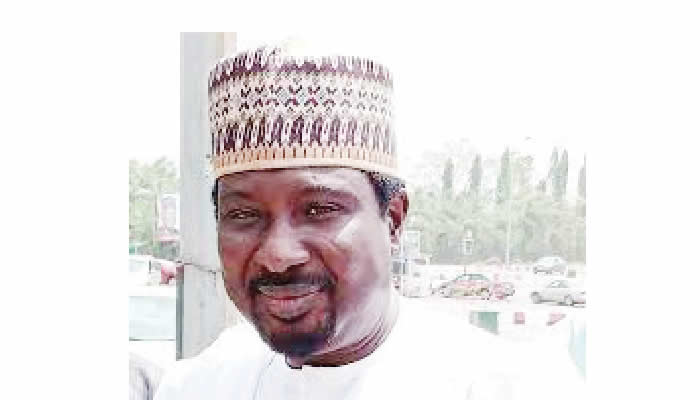
The inclusion of Adamu is particularly striking given his 2023 announcement that he was quitting partisan politics due to a self-described “allergy” to political activities, followed by recent viral reports suggesting he had dumped the ruling party for the African Democratic Congress ADC.
APC leadership appears to have made a strategic move to suppress rumours of internal fracture by placing the former chairman at number 32 on the committee list.
The Nasarawa State chapter of the APC had last month issued a formal rebuttal against claims of Adamu’s defection, insisting that a widely circulated photo of him was not an ADC reception but rather his participation in the APC’s nationwide e-membership registration exercise.
The convention committee is chaired by the Governor of Imo State and Chairman of the Progressive Governors’ Forum, Hope Uzodimma, who will be supported by Kwara State Governor AbdulRahman AbdulRazaq as Vice Chairman and Yobe State Governor Mai Mala Buni as Secretary.
The list reinforces the influence of state governors over the party’s transitional machinery as they prepare for the national gathering scheduled for March 2026.
Beyond the Adamu saga, the committee reflects a “big tent” strategy by the National Working Committee NWC, incorporating a mix of traditional heavyweights and notable new entrants.
The list includes Senate President Godswill Akpabio and Speaker Tajudeen Abbas, alongside recent high-profile defectors such as Rivers State governor, Siminalayi Fubara; Kano State Governor Abba Kabir Yusuf and Plateau State Governor Caleb Mutfwang, all of whom officially joined the APC recently.
ICPC Confirms Arrest And Detention Of El-Rufai
E-transmission of poll results can’t replace manual — Tinubu
50 Kaduna Christians set for pilgrimage after 11-year
INEC Releases Timetable For 2027 Elections
2 men machete each other to death over plantain
Abia leaders declare support for Otti’s second term, dismiss opposition.
Trending
-
Politics1 month agoINEC Releases Timetable For 2027 Elections
-
News1 month ago2 men machete each other to death over plantain
-
News1 month agoAbia leaders declare support for Otti’s second term, dismiss opposition.
-
News1 month agoPolice Inspector shoots colleague dead, injures another
-
News1 month agoOtti’s LP bloc seeks reconciliation as court sacks Abure
-
News4 weeks agoCoup: 16 indicted officers to face court-martial — DHQ
-
News3 weeks agoNo law says I must operate from govt house, Otti replies predecessors
-
Politics3 weeks agoLP crisis: Abure Adamant, rejects reconciliation move