Connect with us

News

EFCC marks Malami’s Abuja property for forfeiture

Published

on

Spread the love

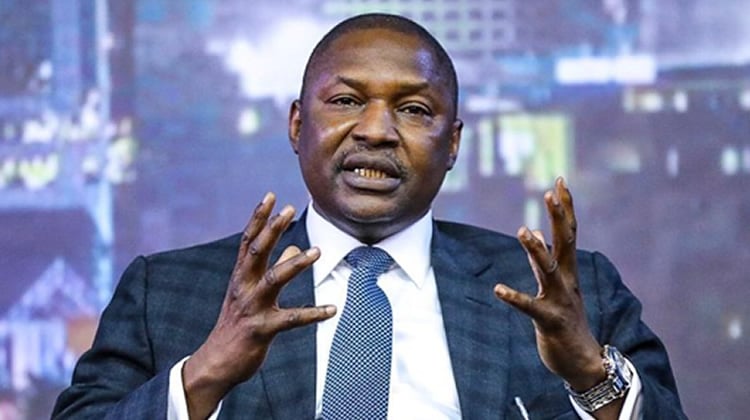
The Economic and Financial Crimes Commission has marked an Abuja property linked to former Attorney-General of the Federation, Abubakar Malami (SAN), saying the action followed a valid interim forfeiture order granted by a court.

The commission’s spokesman, Dele Oyewale, stated this in an interview with our correspondent on Monday, noting that the action was a normal law enforcement procedure.

Oyewale said the marking of the property was meant to notify members of the public about its status following a forfeiture order.

The statement followed a viral video of altercations between the former minister and operatives of the EFCC, which generated reactions online.

“There is nothing illegal in the matter. The attachment or marking of property that is on a forfeiture order is a normal law enforcement action when the court has granted an interim forfeiture,” Oyewale said.

He explained that once a forfeiture order is issued, the agency has the right to attach or mark the property to caution the public.

“What I mean by attachment of property is the normal marking of the property to caution members of the public that the property so marked is a forfeited property, whether in interim or final forfeiture.

“So when there is a forfeiture order by the court, the enforcement agency can go ahead and make markings,” he added.

The EFCC spokesman also dismissed claims that operatives raided the property, insisting that the commission only carried out enforcement of a court order.

“The commission did not go there to raid anywhere. We are not involved in any such act. So there is nothing illegal about what we have done,” Oyewale said.

In a two-minute video obtained by our correspondent, which earlier went viral, Malami was seen questioning the operatives over the legality of the action and demanding to see the court order authorising the marking of his house.

The former minister argued that the order presented was not specific to his property and claimed the matter was still pending in court.

He accused the commission of attempting to embarrass him, saying, “Where is your court order? The order here is not specific. It didn’t give you a clear directive to come and mark my property… You want to move nationwide to embarrass me? Go ahead, we will meet in court.”

An EFCC operative in the video maintained that once a property is under forfeiture, the commission has the right to mark it.

The development came a few hours after former Vice President Atiku Abubakar led a delegation on a solidarity visit to Malami.

Atiku, who recently returned from Umrah in Saudi Arabia, also called on authorities to release former Kaduna State Governor Nasir El-Rufai and other detainees.

He said no one should be held for holding a different political ideology from the government.

In a post on his X (formerly Twitter) handle, he said, “Following my return to the country on Saturday night from Umrah (lesser Hajj), I led a delegation on a solidarity visit to the former Minister of Justice and Attorney General of the Federation, Abubakar Malami, SAN.

“I wish to serve notice to the authorities detaining former Governor of Kaduna State, Mallam Nasir El-Rufai, @elrufai, and all other political detainees to release them henceforth.

“No one should be detained simply because they do not share the same ideology or political platform with the government of the day. -AA”

Speaking on the clampdown on Malami’s properties, Atiku declared it as clear evidence of alleged state-sponsored intimidation and abuse of power by the President Bola Tinubu administration.

In a statement through his media office on Monday, Atiku alleged that Tinubu was actively dismantling democracy and pushing Nigeria toward full-blown authoritarian rule, with dangerous implications for the entire West African subregion.

Atiku characterised the action by the EFCC as unlawful, driven by vendetta, and politically motivated.

“This is not governance. This is intimidation. This is a regime weaponising state power to silence dissent,” Atiku declared.

He claimed that under Tinubu, Nigeria was undergoing a rapid deterioration of democratic norms, with state institutions increasingly deployed as tools for political persecution.

“What we are seeing is the naked abuse of power—security agencies deployed not for national security, but for settling political scores. This is how democracies die.

“Let it be said clearly: this government is terrified of competition. That is why it is resorting to brute force—harassing, intimidating, and attempting to break opposition leaders into submission,” he stated.

He further alleged that the sustained targeting of figures like El-Rufai and Malami is part of a broader strategy to coerce them into abandoning opposition politics and falling in line with the ruling APC.

“This is political extortion at the highest level—join us or be destroyed. That is the message being sent,” he said.

The statement continued, “When opposition is criminalised, and dissent is punished, elections become a mere formality. If Tinubu wants to run unopposed, then let INEC stop wasting public funds on a sham election.

“We have seen this script before. It ended in national disgrace. What is happening now is a dangerous replay—one that Nigerians must resist.

“Governors and political leaders are being railroaded into the APC under threat of persecution. This is not politics—it is state capture.”In January, a Federal High Court in Abuja ordered the interim forfeiture of 57 properties suspected to be proceeds of unlawful activities allegedly linked to Malami and two of his sons, Abdulaziz Malami and Abiru Rahman Malami.

The court also directed the EFCC to publish the interim forfeiture order in a national daily, inviting any individual or organisation with an interest in the assets to appear before it within 14 days to show cause why the properties should not be finally forfeited to the Federal Government.

In February, Malami filed an application challenging the interim forfeiture of the properties linked to him.

The EFCC had also arraigned Malami, his wife and son over allegations bordering on money laundering amounting to N8,713,923,759.49.

On July 2, 2025, Malami announced his defection to the African Democratic Congress.

He was appointed as AGF in 2015 by the late President Muhammadu Buhari and was in the administration until its end in 2023.

Click to comment

Leave a Reply

Your email address will not be published. Required fields are marked *

News

Nigeria will pay heavy price if Iran war doesn’t end – Dangote

Published

on

Spread the love

Foremost industrialist, Alhaji Aliko Dangote, has warned that Middle-East tensions driving global oil volatility could have far-reaching consequences for Nigeria and African economies.

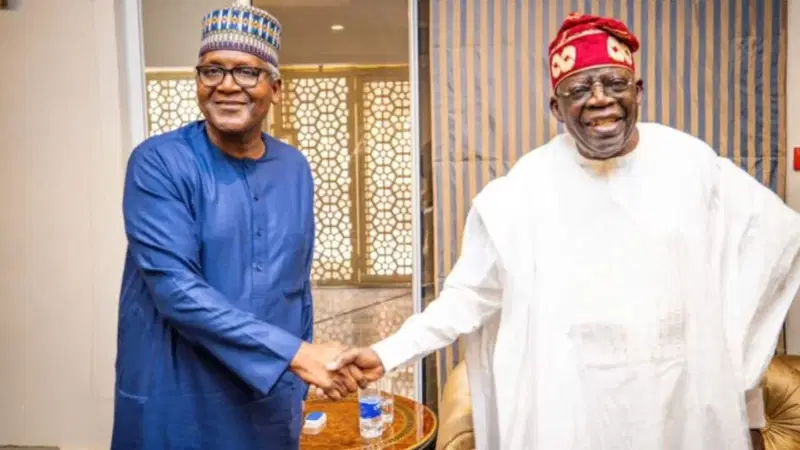
Dangote spoke on Monday in Lagos after a courtesy visit and Eid-el-Fitr homage to President Bola Tinubu.

He said the visit was to extend Sallah greetings, reconnect with the president after some time, and reaffirm respect and continued support for the administration’s policies.

Dangote noted Nigeria had no direct role in the crisis but would still feel the impact because of deep global economic interdependence.

“We are part of a global village, and unfortunately, developments like this will affect us even if we are not directly involved,” he said.

He warned that prolonged tensions could trigger higher fuel prices, rising transport costs, inflationary pressures, and widespread hardship across African economies.

“If the situation does not de-escalate, we will end up paying a heavy price, especially given existing economic challenges,” Dangote said.

He explained that governments could face mounting fiscal strain as subsidies rise and revenues fluctuate under unstable global oil market conditions.

Dangote added that Africa’s rising debt burden could worsen under prolonged instability, further limiting fiscal space and weakening economic resilience.

“Africa is already grappling with debt, and additional shocks will only compound hardship for governments and the people,” he said.

He said escalating energy costs would disrupt nearly every sector, including small enterprises, manufacturing chains, logistics operations and household consumption patterns.

“Energy affects everything. From small businesses like barbers to industries running generators, everyone will feel the impact if costs continue to rise,” he said.

Dangote noted that some countries were already adopting coping strategies such as reduced workdays, energy rationing and remote working arrangements.

He said such measures, while necessary, could reduce productivity, slow economic output and affect livelihoods, particularly among vulnerable populations.

Dangote urged global leaders to prioritise de-escalation, stressing that many Africans rely on daily earnings and remain highly exposed to economic shocks.

“In Africa, in Nigeria, many people depend on daily earnings. If they don’t work, they don’t eat. So we must pray this situation comes down quickly,” he said.

On Tinubu’s recent visit to the United Kingdom, Dangote said the trip had opened new economic opportunities and strengthened Nigeria’s investment outlook.

“I believe the visit has opened many doors. Diplomacy without economic outcomes is incomplete, and this has created opportunities for Nigeria,” he said.

He said agreements reached during the visit, especially in infrastructure and financing, signalled growing international confidence in Nigeria’s reform agenda.

“It is not just about the money committed, but the confidence it shows in Nigeria and the reforms being implemented,” he said.

Dangote said planned investments in critical sectors such as ports would significantly improve trade efficiency and support medium-term economic expansion.

“These investments will help improve our infrastructure, especially in key areas like ports, and complement ongoing government efforts,” Dangote said.

He expressed optimism that other countries, including Germany, would follow with investments as confidence in Nigeria’s economy strengthens.

“Once confidence is established, other countries will come in. It is a signal that Nigeria is ready for business,” he said.

Dangote said the agreements would enable Nigerian private sector players to access international financing and technical support for large-scale projects.

“For Nigerian investors, this shows we can approach these agencies to access funding. It means they are now open to supporting our projects,” Dangote said.

He described the development as a breakthrough, noting that such credit facilities had historically remained underutilised by Nigerian businesses.

“We have not really utilised these resources before, but now there is clear capacity and willingness to fund viable Nigerian projects,” he said.

Dangote reaffirmed his support for the administration, expressing confidence that reforms, partnerships and investor confidence would drive sustainable economic growth in Nigeria.

(NAN)

Continue Reading

News

King Charles Draws Praise For Using Nigerian Street Phrase At Banquet For Tinubu

Published

on

Spread the love

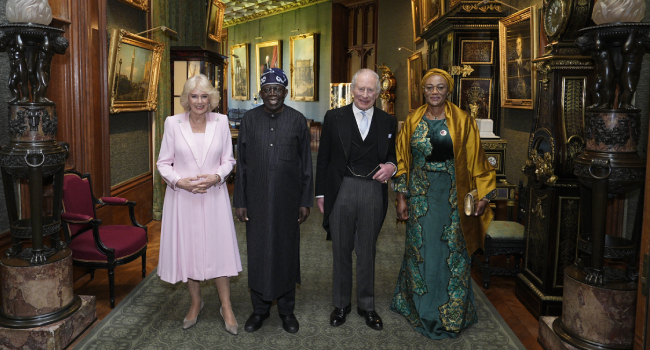
King Charles III, stunned his audience/guests at a state banquet for President Bola Tinubu by code switching to Nigerian languages, especially the popular pidgin English, when he declared “Naija No Dey Carry Last.”

The banquet, held at Windsor Castle, brought together senior officials, business leaders and cultural figures from both countries, underscoring deepening diplomatic and economic ties.

The King began his opening remarks in Yoruba, saying, “Ẹ káàbọ, sé dáadáa ni” (Welcome, how are you?), drawing laughter and applause from the audience.

King Charles also made reference to a Yoruba proverb on unity, an Igbo saying about knowledge, and a Hausa idiom highlighting change, showcasing Nigeria’s rich cultural diversity.

The monarch referenced the Hausa saying which goes, “when the music changes, so does the dance” and cited the Igbo saying which reads, “Knowledge is never complete, two heads are better than one”

He further code switched to the Pidgin English, a popular variety spoken in the West African country when he declared, “Naija No Dey Carry Last!”

In his address, King Charles III further praised Nigeria’s global influence, describing it as a major economic and cultural force, while acknowledging the long-standing historical ties between both countries.

He described the relationship between both nations as built on mutual respect and shared progress.

“Britain and the former British colony have a deep bond and a partnership of equals that has brought us both enormous benefits.

“Nigeria is an economic powerhouse. It has not merely changed, it has arrived,” he said, adding that “Nigeria is investing in Britain’s future as much as Britain is investing in Nigeria’s.”

In his response, Tinubu said:“our

people remain the strongest bridge between our two countries,” he said, pointing to their impact in healthcare, sports, and beyond.

“Our two nations share a vision of progress based on mutual respect and common values,” President Tinubu added, noting he was the first Nigerian leader to speak at Windsor Castle.

Continue Reading

News

$11m fraud: US moves to revoke Nigerian’s citizenship

Published

on

Spread the love

The United States Department of Justice says it has filed a lawsuit seeking to revoke the citizenship of a Nigerian, Emmanuel Oluwatosin Kazeem, who was jailed in 2018 over an $11m fraud.

Our correspondent  learnt from a statement obtained on the DoJ website on Thursday that Kazeem was convicted on 19 counts bordering on wire fraud, aggravated identity theft, and conspiracy to commit wire and mail fraud.

According to the statement, in May 2013, a victim in Medford, Oregon, notified the Internal Revenue Service that false federal and Oregon state tax returns had been filed electronically using her and her husband’s personal identifying information, including Social Security numbers and dates of birth.

The statement noted that an IRS investigation led to the execution of search warrants at residences in Illinois, Maryland, and Georgia, as well as multiple email and instant messaging accounts used by Kazeem and other co-conspirators.

It continued, “At a Chicago residence, agents seized approximately 150 prepaid debit cards and $50,000 in money orders. In Maryland and Georgia, agents seized more than 50 electronic devices, 40 money orders exceeding $29,000, $14,000 in cash, and numerous prepaid debit cards containing over $12,000 in fraudulent tax refunds.

The search warrants helped agents identify Kazeem as the leader and mastermind of the scheme.

“The scheme resulted in the conspirators possessing stolen personal identifying information of more than 259,000 victims. Kazeem purchased more than 91,000 identities from a Vietnamese hacker who originated from an Oregon company’s private database.

“The company provided pre-employment and volunteer background checks for thousands of clients. Kazeem divided the identities into batches and shared them with other co-conspirators, which were then used them to file fraudulent tax returns between 2012 and 2015.”

The statement added that investigations revealed that Kazeem trained and directed other co-conspirators, including his younger brother, Michael Oluwasegun Kazeem, to use stolen identities to obtain thousands of electronic filing PINs to bypass IRS authentication procedures.

It added that Kazeem and his accomplices acquired over 19,500 E-File PINs during the conspiracy and used taxpayers’ identities to gain unauthorised access to IRS transcripts, while stolen prepaid debit cards were used to receive tax refunds.

It further stated, “In total, Kazeem was linked to 10,139 fraudulent federal tax returns attempting to obtain over $91m in refunds and successfully receiving over $11.6m.

“Refunds were withdrawn from the debit cards, and at least 2,000 wire transfers totalling over $2.1m were sent to Nigeria. Over 700 of those transfers, amounting to more than $690,000, were directly linked to Kazeem.

“Kazeem used the proceeds to make a nearly $200,000 down payment on a newly constructed house and to purchase a $175,000 townhouse, both in Maryland. His average monthly credit card payment between 2012 and 2015 exceeded $8,300. He also attempted to use the funds to develop a $6m four-star hotel in Lagos.”

The statement added that in May 2015, Kazeem transferred the townhouse to his sister in Nigeria for $10 and also added her to the deed of his Maryland residence for the same amount before his arrest the following day.

The DoJ said Kazeem was sentenced to 15 years’ imprisonment in 2018 and ordered to pay more than $12m in restitution, but his sentence was later commuted and he was released from prison by former US President, Joe Biden.

In the fresh suit, the department alleged that Kazeem’s actions disqualified him from lawful naturalisation.

“The complaint alleges that Kazeem’s fraud scheme, committed before and after his naturalisation, along with the concealment of his crimes, precluded him from obtaining citizenship lawfully.

“It also alleges that Kazeem engaged in a sham marriage to obtain permanent resident status and later married a second woman, further disqualifying him from naturalisation,” the statement added.

The move comes amid renewed immigration enforcement under the administration of Donald Trump, which has reiterated its stance against criminal migrants through crackdowns and deportations

Continue Reading

Trending