Connect with us

World

US will ‘bitterly regret’ sinking ship, Iran FM says

Published

on

Spread the love

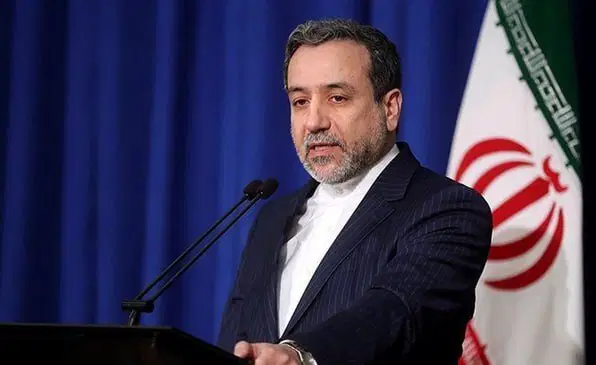
Iranian Foreign Minister Abas Araghchi accused the United States of committing an atrocity by sinking an Iranian navy ship off Sri Lanka and warned it would “bitterly regret” the precedent set.

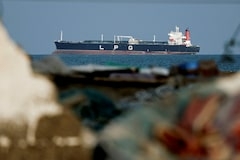
“The US has perpetrated an atrocity at sea, 2,000 miles away from Iran’s shores. Frigate Dena, a guest of India’s Navy carrying almost 130 sailors, was struck in international waters without warning,” he posted on X.

“Mark my words: The US will come to bitterly regret precedent it has set”, he added.


Click to comment

Leave a Reply

Your email address will not be published. Required fields are marked *

World

Iran postpones state funeral for Khamenei — Report

Published

on

Spread the love

Iran announced that a state funeral for Supreme Leader Ayatollah Ali Khamenei, which had been planned for Wednesday evening in Tehran, was postponed “in anticipation of unprecedented turnout,” state television reported.

“The farewell ceremony for the martyred Imam has been postponed. The new date will be announced later,” Iranian television reported on Wednesday after Khamenei was killed at 86 in US-Israeli strikes over the weekend.

On Wednesday morning, authorities had said a tribute would take place that same evening in Tehran before Khamenei’s body was buried in the holy city of Mashhad, where he was from.

Strikes have pummelled Tehran since Saturday, with missiles targeting military and government infrastructure.

Authorities did not link the postponement to the security situation.

It was partly down to “the expected participation of millions of people and the need to provide the proper infrastructure” for such a crowd, Mohsen Mahmoudi, head of Tehran’s Islamic Development Coordination Council, the body organising the event, told state TV.

Continue Reading

World

US lawmaker alleges illegal Chinese mining financing terror groups in Nigeria

Published

on

Spread the love

A United States lawmaker, Riley Moore, has alleged that illegal rare earth mineral mining operations linked to China are fueling terrorist activities in Nigeria, worsening attacks on Christian communities in parts of the country.


Moore made the allegation during a live interview on Fox News, following the submission of his report earlier this week to Donald Trump. In the report, he detailed concerns about insecurity in Nigeria, particularly attacks targeting Christian communities.

According to Moore, while much of the international coverage has focused on religious violence, a critical economic dimension of the crisis has been largely overlooked.

“One key point that has been missing from much of the coverage is that the Chinese are running illegal rare earth mineral mining operations in Nigeria,” Moore stated.

He further alleged that proceeds from the illegal mining activities are being used to bankroll extremist groups operating in the region.

“They are paying protection money to radical Islamic terrorists who use that money to finance their operations to persecute and kill our brothers and sisters in Christ. This cannot continue,” he added.

Rare earth minerals are strategic resources used in the production of high-tech equipment, including defence systems, electronics and renewable energy technologies. Nigeria is believed to possess commercially viable deposits of such minerals, a development that has attracted increasing foreign interest in recent years.

Moore’s claims, if substantiated, could have far-reaching geopolitical and security implications, particularly amid intensifying global competition over critical mineral resources and rising concerns about insurgency and banditry in parts of northern Nigeria.


Continue Reading

Opinion

Peter Obi Calls Out ECOWAS for Alleged Double Standards in Handling Guinea-Bissau ‘Coup Glitch’

Published

on

Spread the love

Peter Obi has expressed strong concern over the political situation in Guinea-Bissau, citing comments made by former President Goodluck Jonathan, who served as an election observer in the country.

“I listened closely to Dr. Goodluck Jonathan’s briefing. As a former President who was on ground as an election monitor, he noted that the so-called coup appeared suspicious,” Obi said. He added that Jonathan had described the incident as unusual, pointing out that “it was the president himself who announced the coup and relayed the details to the international community.”

‘ECOWAS was quick on Guinea-Bissau, silent elsewhere’

Obi noted that reports from Guinea-Bissau indicated the election process was peaceful, with only the formal announcement of results pending before events took a strange turn.

“ECOWAS was swift to sanction Guinea-Bissau, but what does ECOWAS do when democracy is subverted — not by soldiers, but by technology?” he asked.

‘Do we condemn only coups with guns?’

The former Anambra governor questioned whether the regional bloc would apply the same standards to countries where election outcomes are disrupted by conveniently timed ‘glitches.’

“Do we only condemn coups that are visible with guns and ignore those executed through deliberate technological failure?” he queried.

Obi warned that both technological manipulation and political interference pose serious threats to electoral integrity. “Whether technical or political, these issues can undermine democracy, stall progress, and deny African citizens their right to freely choose their leaders,” he said.

A call for transparency across West Africa

Obi stressed that democracy can only thrive when transparency, accountability, and the will of the people are upheld.

“By confronting these challenges honestly, we can move towards a New Nigeria and a more stable, democratic West Africa. Our goal must be to ensure that the people’s will prevails and our elections reflect the true desires of our citizens.”

He added that the Guinea-Bissau incident mirrors a broader regional crisis.

“The episodes in Guinea-Bissau highlight two faces of the same problem: one where ballots are overturned by force, and another where ballots are obstructed by convenient technical excuses,” he said.

“In both situations, the citizens lose, democracy is weakened, and the region sinks deeper into instability. The result is the same — the people are denied their mandate.”


Continue Reading

Trending