Connect with us

News

From ‘lazy youths’ to Twitter ban: Buhari’s most talked-about online controversies

Published

on

Spread the love

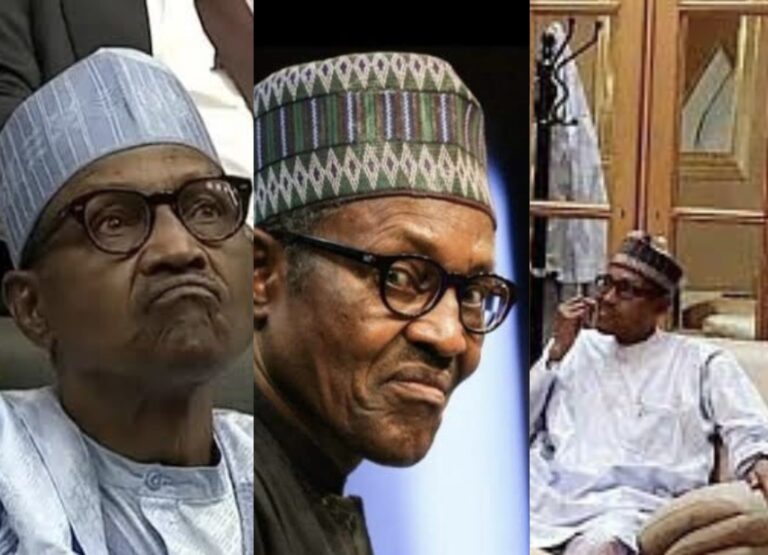
The late Muhammadu Buhari, who passed away on Sunday at 82, left an indelible mark on Nigeria’s political and digital consciousness.

His eight years at the helm were not just about policy pronouncements and economic reforms; they were also a fertile ground for viral moments, intense digital outrage, and sustained, often humorous, online criticism.

As the nation mourns his passing, these are 10 of the most talked-about and controversial Buhari moments that dominated social media discourse and will forever define a significant era in Nigerian public life

1. ‘Lazy Nigerian Youths’ Trend (2018)

In 2018, during a high-profile engagement at the Commonwealth Business Forum in London, then-President Buhari delivered a statement that would reverberate across Nigeria’s digital space for years.

He suggested that many young Nigerians were content to “do nothing” despite growing up in an oil-rich country, implying a sense of entitlement.

Though he didn’t use the exact phrase “lazy Nigerian youths,” that loaded interpretation is precisely how it exploded and trended online.

The backlash was immediate and massive, with #LazyNigerianYouths flooding timelines for weeks, becoming both a hashtag of protest and a symbol of perceived governmental disconnect from the struggles of young Nigerians.

2. The ‘Jubril of Sudan’ Rumour

Following President Buhari’s prolonged medical trip in London in 2017, the rumour mill went into overdrive. Bizarre conspiracy theories primarily propagated online, emerged claiming that he had died and had been secretly replaced by a clone named “Jubril” from Sudan.

Despite its absurdity, the theory gained surprising momentum on social media, becoming a persistent talking point until Buhari himself publicly debunked it in 2018.

Addressing Nigerians in Poland, he stated, with a rare chuckle: “It’s the real me, I assure you.”

Yet, even his direct denial only seemed to fuel more memes, jokes, and wilder speculation.

3. The Twitter Ban (2021)

Perhaps one of the most drastic and globally condemned actions of his presidency was the suspension of Twitter’s operations in Nigeria in June 2021.

The move came swiftly after Twitter deleted one of Buhari’s tweets referencing the civil war, which the platform deemed in violation of its rules against abusive behaviour.

The ban, which lasted seven months, sparked widespread global criticism from human rights organisations and international bodies, who decried it as an infringement on fundamental freedoms.

Domestically, it led to a massive surge in Virtual Private Network usage among Nigerian users, who found alternative ways to access the platform, underscoring the resilience of digital engagement in the face of state censorship.

4. Border Closure Policy (2019–2020)

In August 2019, President Buhari’s administration took the drastic step of unilaterally shutting Nigeria’s land borders, primarily to curb smuggling and stimulate local agricultural production.

While some proponents lauded the move as a necessary step for national self-sufficiency, social media was quickly flooded with a torrent of complaints.

Nigerians vented their frustrations over soaring food inflation, the collapse of cross-border trade, and the worsening economic hardship for countless small businesses and ordinary citizens.

The policy’s perceived failures became a constant target of online lament.

5. #EndSARS and Delayed National Address (2020)

The nationwide #EndSARS protests against police brutality and bad governance in October 2020 represented one of the most significant challenges to Buhari’s authority.

A defining moment of that period was the President’s prolonged silence for days as the protests escalated, culminating in the tragic Lekki Toll Gate shooting.

His eventual national address, when it finally came, was widely criticised for its perceived lack of empathy and failure to directly address the Lekki incident.

The hashtag #WhereIsBuhari trended heavily, reflecting public frustration over his apparent detachment during a critical national crisis.

6. Cashless Policy Chaos (2023)

In the twilight of his administration, Buhari’s government, through the Central Bank of Nigeria, introduced a controversial cashless policy alongside a radical redesign of the naira currency notes.

The implementation of this policy led to severe cash scarcity across the nation, triggering widespread public frustration, economic disruption, and even violent protests in some areas.

Angry Nigerians, unable to access their funds for daily transactions, incessantly vented their fury online and offline, creating another potent wave of criticism that followed his government to its final days.

7. “My Wife Belongs to the Kitchen…” (2016)

In October 2016, during a joint press conference with German Chancellor Angela Merkel in Berlin, President Buhari responded to public criticism from his wife, Aisha, about his administration.

His now-infamous retort quickly went viral globally

“I don’t know which party my wife belongs to, but she belongs to my kitchen, my living room, and the other room.”

The statement sparked immediate and widespread criticism from feminists, human rights advocates, and international observers, drawing global condemnation for its perceived patriarchal and dismissive tone.

It trended heavily with feminist hashtags and became a defining moment in the discourse around gender roles in Nigerian leadership.

8. “I Belong to Everybody and to Nobody” (2015)

This eloquent line, delivered as the opener of his inaugural speech in 2015, earned resounding applause and was initially seen as a powerful commitment to impartiality and national unity.

However, as his tenure unfolded and critics pointed to perceived ethnic or partisan favouritism in appointments and policies, many Nigerians began to use this quote sarcastically online.

It became a punchline, subtly expressing disillusionment with what some saw as a deviation from his initial, inclusive promise.

9. Medical Trips to London

Throughout his two terms, President Buhari’s frequent and often prolonged medical trips to London became a consistent source of national debate and social media commentary.

Hashtags like #LondonIsCalling and #FixOurHospitals regularly trended during his absences, reflecting public frustration with the state of Nigeria’s healthcare system and concerns over the cost and duration of his foreign medical care.

Memes depicting an “absentee president” or a leader out of touch with the country’s realities frequently accompanied these discussions.

10. “Bubu” and Meme Culture

Affectionately, or sometimes derisively, nicknamed “Bubu” by Nigerians online, President Buhari, despite his known detachment from social media, inadvertently became a central and recurring figure in the nation’s vibrant meme culture.

Images and videos of him napping at public events, fumbling speeches, or remaining silent during critical national crises were routinely captured, repurposed, and transformed into viral content.

His stoic expressions, often combined with trending topics, ensured that Buhari, whether by design or accident, was one of the most discussed, and certainly one of the most memeified Nigerian presidents on the internet.

Source : Punch

Click to comment

Leave a Reply

Your email address will not be published. Required fields are marked *

News

New financial markets facility set to open in Abia

Published

on

Spread the love

A forex trading facility is expected to open in Abia State in October, following the 2025 Abia Forex Expo, which organisers said attracted more than 1,500 participants.

The facility is being established by entrepreneur and financial markets personality, Sam Keys, as a platform for financial education, market analysis, trading activities and networking.

According to the organisers, the project followed increased interest in forex trading and other financial market activities among youths and business communities in the state.

The proposed facility will provide a physical location where traders, aspiring investors and other participants can access financial market information, take part in educational activities and interact with others in the sector.

Keys had previously organised the 2025 Abia Forex Expo, which brought together participants interested in forex trading, investment and financial markets.

The new facility is expected to complement such events by providing a permanent location for activities relating to financial market education and trading.

The October opening is expected to attract traders, investors and other individuals interested in learning about the financial markets.


Continue Reading

News

Abia debunks N50,000 akara tax claim

Published

on

Spread the love

Abia State Government has debunked reports that akara sellers and other petty traders in the state are being compelled to pay N50,000 as tax, describing the claim as misinformation.

The government also said it had approved the designation of some historical and natural sites as State Monuments and State Natural Monuments, while declaring Aba a Creative and Innovative City.

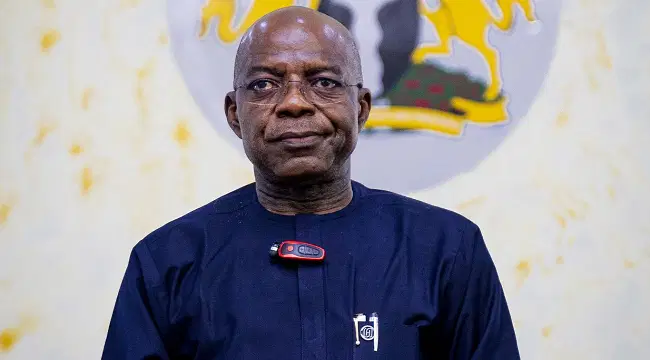
Commissioner for Information, Prince Okey Kanu, disclosed this on Monday while briefing journalists on the outcome of the State Executive Council meeting presided over by Governor Alex Otti.

Kanu said the historical sites approved as State Monuments include the National War Museum, Umuahia; Ojukwu Bunker, Umuahia; and Government College, Umuahia.

Those designated State Natural Monuments are Ibom Waterfall in Arochukwu and Ulochukwu Cave in Alayi, Bende Local Government Area.

According to him, the designations would strengthen the government’s efforts to preserve the state’s cultural and natural heritage, promote tourism and open up new economic opportunities.

“These sites have been elevated to heritage sites that enhance the state’s tourism potential. With this approval, they are primed to attract recognition as UNESCO Heritage Sites,” Kanu said.

He further disclosed that Aba had been designated a Creative and Innovative City in recognition of its longstanding commercial, industrial and creative significance.

The commissioner said the retrofitting of the Ojukwu Bunker and National War Museum had reached about 80 per cent completion and was expected to be concluded before the end of 2026.

He said the projects would improve the preservation of the sites, enhance visitors’ experience and strengthen their tourism potential.

Kanu also disclosed that the Ministry of Arts, Culture and Creative Economy had received approval to develop the Ibom Waterfall Tourism Corridor in Arochukwu.

He said work had commenced, including grading of access roads to the waterfall, with completion expected before the end of the year.

The commissioner added that the state government had commenced the erection of monuments at strategic locations to preserve Abia’s heritage, honour its heroes and heroines and promote the state’s cultural identity.

He cited a monument being dedicated to the heroines of the 1929 Aba Women’s Riot as one of such initiatives, saying it would celebrate their courage, resilience, resistance and leadership.

No N50,000 tax on akara sellers
On the controversy over alleged excessive taxation, Kanu said there had been no fresh increase in tax rates by the Abia State Board of Internal Revenue, noting that most of the rates being circulated were contained in tax laws enacted in 2020 under the previous administration.

He stressed that the Board could not unilaterally increase tax rates without enabling legislation.

“For starters, these rates are not new. Most of the rates are 2020 tax rates that were introduced by the previous government.

“Let me reiterate that the Board of Internal Revenue cannot raise tax rates without the backing of enabling laws. And no such increases have been introduced by the Abia State Government,” he said.

Kanu explained that demand notices issued by the BIR were provided for under the law, urging taxpayers to comply with relevant tax provisions while assuring that legitimate concerns would be addressed by the appropriate officials.

On the specific claim that akara sellers were being made to pay N50,000, he said: “This is pure fallacy. Nothing can be further from the truth. Akara sellers don’t pay tax or levies. They pay daily tolls. And none can pay N50,000.”

The Chairman of the Abia State Board of Internal Revenue, Mr Uche Elekwachi, corroborated the clarification, saying there was no revenue window under the state’s tax laws requiring akara sellers to pay such an amount.

Elekwachi said the Abia Internally Generated Revenue Service Law establishing the applicable framework was enacted in 2020, before the present administration came into office.

“This whole thing has always been in existence. The Abia Internally Generated Revenue Service Law was enacted in 2020 long before this government came onboard, so we need to make that clarification,” he said.

Gratuity: 2011–2025 retirees next.

On outstanding gratuities owed retired workers, Kanu disclosed that the government had completed payments covering 2001 to 2010 and was preparing for the next batch covering 2011 to 2025.

He said the next payments would commence after the completion of ongoing internal verification and other necessary processes.

The commissioner dismissed claims that the government had only commenced gratuity payments because of pressure from the opposition, explaining that the huge financial commitment involved made payment in batches necessary.

“The payments will be in batches. The funds involved are huge for one balloon payment,” he said.

Kanu also clarified reports suggesting that gratuity payments would continue only until 2031, explaining that such reports are incorrect.

He explained that the State Gratuity Committee had recommended the inclusion of gratuity provisions in the state’s 2026–2031 Medium-Term Expenditure Framework and subsequent annual budgets to ensure that gratuity obligations were systematically provided for and prevent the accumulation of fresh arrears.

“That does not translate to payments being terminated in 2031. As the internal processes and verification of beneficiaries of these payments continue, due payments would still be made in batches,” he said.

He added that the government remained committed to clearing the outstanding liabilities and expressed optimism that the process could be completed earlier than anticipated.

“The conclusion of payment of outstanding gratuities may happen earlier than we ever imagined. Let us therefore wait and see how the next batch of payments will unfold,” Kanu said.

The Commissioner for Arts, Culture and Creative Economy, Mr Matthew Ekwuribe, and the Special Adviser to the Governor on Internally Generated Revenue, Dr Emmanuel Okpechi, were also present at the briefing.

Source: Vanguard.

Continue Reading

News

‘I have no objection’ – Obi urges UNN to release his academic records

Published

on

Spread the love

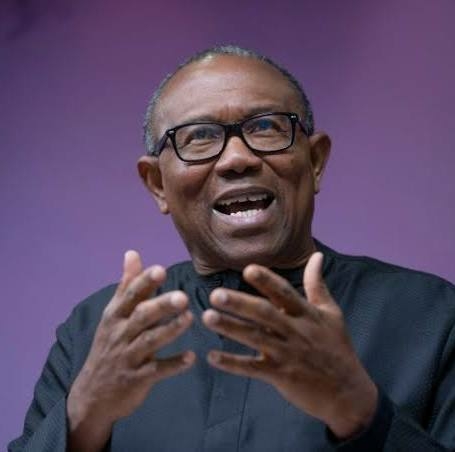
Presidential candidate of the Nigeria Democratic Congress (NDC) Peter Obi has said he has no objection to the release of his academic records amid reports of a legal action seeking certified true copies of his certificates and other educational documents.

Obi stated this in a statement posted on X on Tuesday, saying he had given consent for the University of Nigeria, Nsukka, to make available his academic records and other official documents relating to his admission and studies, subject to applicable laws.

His statement followed reports circulating on social media concerning a legal action by an individual or group seeking certified true copies of his Bachelor of Arts degree in Philosophy and other academic credentials relating to his admission into the university.

He wrote, “I wish to state clearly that I have absolutely no objection to the release of these records.

“I respectfully request that the University of Nigeria, Nsukka, within the limits permitted by law, make available, upon legitimate request, my academic certificates, records, and other official documents relating to my admission and studies at the University. I equally have no objection to other educational institutions, within and outside Nigeria, which I attended, making my academic records available in accordance with applicable laws and procedures.”

Obi said he believed strongly in transparency and accountability, particularly for individuals seeking public office, but stressed that public scrutiny should be fair, lawful and consistently applied to all presidential candidates.

“As a presidential candidate seeking the trust of Nigerians to lead our country, I welcome legitimate public interest in my background, qualifications, and record. I am prepared to subject myself to the level of scrutiny that should reasonably be expected of anyone seeking the highest office in our country,” he said.

Obi said candidates seeking the nation’s highest office should be willing to subject themselves to reasonable scrutiny and demonstrate that they had nothing to conceal from the people they sought to serve.

He subsequently challenged other presidential candidates to make their educational qualifications and relevant records available for public scrutiny.

“Doing so should not be regarded as an inconvenience or an attack. Rather, it is an opportunity to strengthen public confidence, promote accountability, and rebuild the trust of Nigerians in those who seek to govern them,” he said

Obi added that transparency, integrity and accountability should begin with those seeking to lead the country.

“I therefore welcome the scrutiny of my academic background and remain committed to the principle that those who ask Nigerians for their trust must also be willing to earn that trust through openness and accountability,” he added.


Continue Reading

Trending