
Politics
Final constitutional amendment draft ready before year end — Deputy Senate president

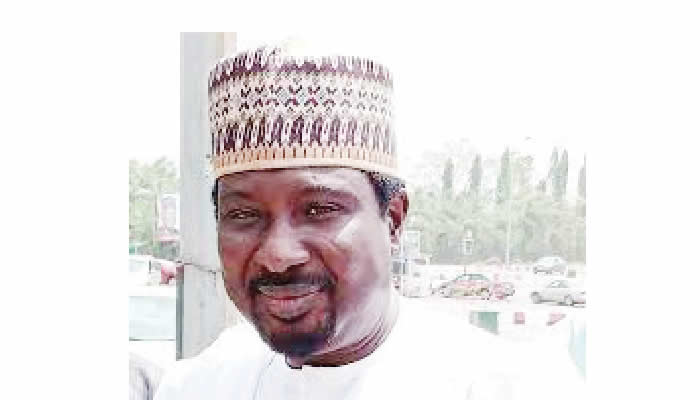
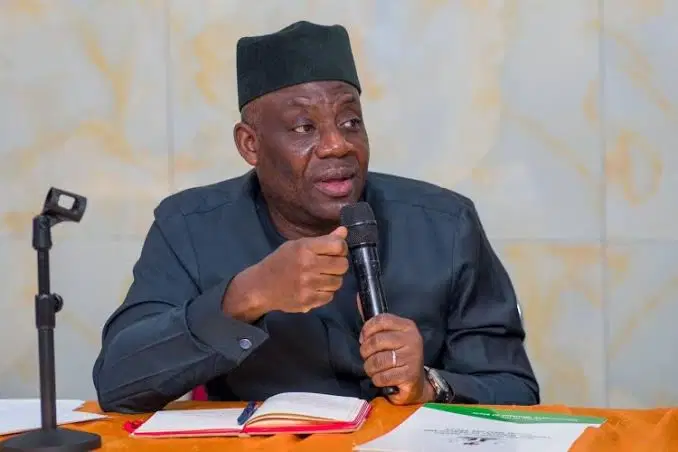
The Deputy Senate President and Chairman Senate Committee on the review of the 1999 constitution, Jibrin Barawu, on Saturday, said that the final draft of the ongoing constitutional amendment would be sent to the state House of Assembly for ratification before the end of the year.
Barawu, represented by the Senate leader, Michael Opeyemi Bamidele, disclosed this while speaking with journalists at the end of the two-day southwest Zonal bublic hearing on 1999 Constitution Amendment held in Lagos.
He disclosed that the dominant requests of the people of the Southwest during the public hearing include state creation, state police, local government creation, judicial reforms, electoral reforms, special seats for women both at the national and state House of assembly, among others.
The Deputy Senate President also stated that the public hearing should not be considered as a jamboree but an integral constitutional requirement to ensure that the people have a say in the preparation of a document that governs them.
He explained that the ongoing constitutional review should also not be taken to be a routine, as something meaningful that will further redefine good governance and strengthen the country’s democracy will definitely come out of the amendment.
Barawu disclosed that, for instance, based on the constitutional amendment as done by the 9th National assembly and the state House of Assembly, there were lot achievements recorded in the area of devolution of powers such that some issues which were hitherto in exclusive list were taken to concurrent list for the state government to oversee.
The Deputy Senate President said that the gains of the past constitutional amendment could also be seen with some electoral reforms that have begun to make Nigerians’ votes count.
Barawu revealed that “The essence of what we have done within these two days is to give Nigerians the chance to participate so that their elected representatives will not sit in Abuja and begin to tamper with the constitution.
“And our founding fathers who wrote the constitution have made it so difficult for anyone to just wake up and begin to tamper with the constitution, that’s why we are going through all these processes.
“And even after the national assembly would have done its job, we still need the support of 2/3 of the state House of Assembly before it could become an amendment.”
He continued, “The whole essence is to ensure that the constitution which is our ground norms is not changed without the popular consensus of Nigerians, that is what we have done, it is not just a jamboree, it is not just a routine and I want to assure you that something meaningful will also come out of this just like it has been in the past.
“We are looking to address lots of issues raised by the youth, the women, the traditional rulers, the professionals, and other stakeholders for good governance and a better Nigeria. We have heard Nigerian very loud and clear, and we are going to Abuja to file our report and conclude this process.
“Part of our timetable is that before the end of the year, a final notification as a proposal will be sent to the State House of Assembly so that we can round up the process without further delay.”
Barawu, however, urged stakeholders and those demanding one constitutional amendment or the order to also carry along the elected representatives so as to be on the same page and not be working at cross purposes.
He thanked the state lawmakers for being on the same page with their counterparts at the national assembly and urged them to also do the due diligence and ensure the success of the constitutional review.
Meanwhile, the Southwest Conference of Speakers of the State Legislature has said that the lawmakers are in support of all the requests coming from the region and also stand on the same page with the national assembly members from the Southwest as far as the ongoing constitutional amendment is concerned.
The lawmakers pledged that they will do all that is within their power to lobby their counterparts from the other five geopolitical zones to get the required two-thirds support of the state House of Assembly to ensure that the request of the Southwest people makes it into the constitution amendment.
The Speaker of Ogun State House of Assembly, Daisi Elemide, who spoke on behalf of his colleagues, explained that “we stand by all that our national assembly members from the Southwest are doing on the amendment of the 1999 constitution, we are on this same page with you.
“We stand by autonomy for the Legislature that is even already in the constitution but the implementation is where we have the problem, and the main challenge here our the governors, we shall continue to engage them to let them see reasons why they should allow the Legislature to enjoy the autonomy as enshrined in the constitution. We also stand by full autonomy for the local government, and we stand in support of the state police, too. We believe that having state police will help a lot to combat the various insecurity challenges that are confronting us.
“We are also of the strong belief that roles for our traditional rulers, which will be enshrined in the constitution, should also make it into this ongoing constitutional amendment. This is what they used to have before it was removed, so giving our traditional rulers constitutional roles is what we shall equally work upon with the support of lawmakers from the other five geopolitical zones.
“On the reserved seats for the women, the House of Assembly in the Southwest is also standing by our women, ours is ‘He for She’ and we shall do all that is within our powers to support their aspirations”.
Making a presentation on behalf of the workers in the Southwest, the Chairperson of Nigeria Labour Congress, Lagos State, Agness Funmi Sesse, warned against the removal of labour issues from the exclusive list to the current list, saying that the country’s workforce will fight this with their last breath.
Sesse said that removing the labour issues from the exclusive list to the concurrent list means that issues of national minimum wage determination, among others, labour matters will now be made under the purview of the state government.
She added that it is a way to further impoverish and enslave the workers, as many states have even refused to implement the new minimum wage passed into law by the federal government last October.
Sesse warned that, “The removal of Labour provision from the exclusive to the concurrent will allow many state governments who are already violating many labour laws, such as proscription of trade unions even when these are in the exclusive list.
“We can then begin to imagine if the labour provisions are now made to be part of the concurrent list. Nigeria workers are, however, prepared to resist this internal colonialism with the last drop of our blood”.
Speaking on behalf of the Nigerian Bar Association, Dr Babatunde Olatunji, SAN, called for the overhaul of the judicial appointment process.
Olatunji said that the new constitution of the country should contain stipulated guidelines that must be strictly followed for the appointment of judges.
He said that the current guidelines, which stated that a lawyer who had spent 10 years after his or her call to bar could be made a judge, are too weak and subject to manipulation once such a lawyer is close to governors and the powers that be.
Olatunji said that if the process for the appointment of judicial officers is not right, the Judiciary will also not be able to perform up to expectations.
There were also presentations for the creation of Oke Ogun State from Oyo with Agunrege as the capital by Dr Bimpe Aderohunmu, creation of New Oyo State from Oyo with Ogbomosho as the capital read by Rear Admiral Jacob Ajani (retd.), among several others from youth, the women and other stakeholders and professionals.

New financial markets facility set to open in Abia

I Won’t Help Politicians Win Elections In Their States – Wike

Abia debunks N50,000 akara tax claim

Two killed, three rescued in Anambra students’ hostel collapse

Obasanjo bombs Atiku: You’re my biggest mistake

UniAbuja Law Student Wins West Africa Speech Contest, Claims $1,000 Prize
-
 Politics8 months ago
INEC Releases Timetable For 2027 Elections
-
 News8 months ago
FG–ASUU Agreement: Professors to get ₦140k monthly allowance - Education Minister
-
 News8 months ago
Abia leaders declare support for Otti’s second term, dismiss opposition.
-

 News8 months ago
2 men machete each other to death over plantain
-
 News8 months ago
Police Inspector shoots colleague dead, injures another
-
 News6 months ago
EASTER: NKWONTA ENJOINS CONSTITUENTS AND NIGERIANS TO IMBIBE CHRIST-LIKE VIRTUES
-

 Entertainment7 months ago
Am Alive, Pete Edochie Declares, debunks Death Rumours
-
 Politics8 months ago
LP crisis: Abure Adamant, rejects reconciliation move