United States House Appropriators and Foreign Affairs leaders convened a rare joint briefing yesterday as part of a broader congressional investigation into what lawmakers and experts describe as escalating and targeted violence against Christians in Nigeria.
The session, led by House Appropriations Vice Chair and National Security Subcommittee Chairman Mario Díaz-Balart, R-Fla., is feeding into a comprehensive report ordered by President Donald Trump on recent massacres of Nigerian Christians and potential policy steps the U.S. could take to pressure Abuja to respond.
Trump directed Congress, led by Reps. Riley Moore, R-W.Va., and Appropriations Chairman Tom Cole, R-Okla., to probe Christian persecution in Nigeria and produce a report for the White House to review. He has floated the idea of taking direct military action against Islamists who kill.
Vicky Hartzler, chair of the U.S. Commission on International Religious Freedom, told lawmakers that “religious freedom [is] under siege,” citing the abduction of more than 300 children and attacks in which “radical Muslims kill entire Christian villages [and] burn churches.”
Rampant violations
She said violations were “rampant,” “violent,” and disproportionately affect Christians who, she argued, were targeted “at a 2.2 to 1 rate”, compared with Muslims.
Hartzler said Nigeria had taken some initial corrective steps, including reassigning about 100,000 police officers from VIP protection details but warned the country was entering a “coordinated and deeply troubling period of escalated violence.”
Targeted sanctions
She recommended targeted sanctions on Nigerian officials “who have demonstrated complicity,” visa restrictions, blocking U.S.-based assets, and conditioning foreign and humanitarian aid on measurable accountability.
She also urged Congress to direct the Government Accountability Office to conduct a review of past U.S. assistance, adding that Abuja should retake villages seized from Christian farming communities, so widows and children could return home.
Dr. Ebenezer Obadare of the Council on Foreign Relations offered the sharpest challenge to the Nigerian government’s claim that the violence was not religiously motivated.
He said the idea Boko Haram and other militant groups target Christians and Muslims equally is a “myth,” arguing the groups “act for one reason and one reason only: religion.”
Any higher Muslim casualty count, he said, reflected geography, not equal targeting.
Obadare described Boko Haram as fundamentally opposed to democracy and said the Nigerian military was “too corrupt and incompetent” to dismantle jihadist networks without strong external pressure.
He urged the U.S. to press the Nigerian government to disband armed groups enforcing Islamic law, confront corruption inside the security forces, and demonstrate genuine intent to curb religious violence.
He added that Washington should insist Nigerian officials respond immediately to early warnings of impending attacks.
Deadliest country
Sean Nelson of Alliance Defending Freedom International added that Nigeria was “the deadliest country in the world for Christians,” claiming more Christians were killed there than in all other countries combined and at a rate “five times” higher than Muslims when adjusted for population.
He said extremists also target Muslims who refuse to embrace their extreme ideology which, he argued, further undercut Abuja’s narrative that the crisis was driven mainly by criminality or local disputes.
With a population of more than 230 million, Nigeria’s vibrant and often turbulent cities and villages are home to people of strikingly diverse backgrounds.
The nation’s roughly 120 million-strong Muslim population dominates the north, while some 90 million Christians are centered in the southern half of the country.
Nelson urged tighter U.S. oversight of assistance to Nigeria, including routing some aid through faith-based organizations to avoid corruption.
Greater transparency
He called for greater transparency in how Abuja handles mass kidnappings and ransom payments, adding that sustained U.S. and international pressure was essential because “without transparency and outside pressure, nothing changes.”
Díaz-Balart criticised the Biden administration for reversing the Trump administration’s designation of Nigeria as a “country of particular concern” in 2021, arguing that the change had had “clearly deadly consequences.”
Lawmakers on the Appropriations, Foreign Affairs and Financial Services committees signalled additional oversight actions in the months ahead as they prepare the Trump-directed report to Congress.
Hartzler noted that Nigeria had recently begun taking several steps that could signal a shift toward confronting the crisis more directly.
She pointed to President Bola Tinubu’s decision to pull about 100,000 police officers from VIP bodyguard assignments and redistribute them across the country, calling it “a promising start after years of neglect.”
She said the move reflected growing recognition inside Nigeria’s political leadership that the violence had reached an intolerable level.
She also highlighted comments last week from Nigeria’s speaker of the House, who acknowledged the country was facing a “coordinated and deeply troubling period of escalated violence.”
Hartzler said that acknowledgment, coupled with a push from the Nigerian House majority leader for more intensive legislative oversight, suggested the government might finally be admitting the scale and severity of the attacks. Even with these developments, Hartzler warned that the measures were far from sufficient.
She emphasised that the Nigerian government must show clear intent to “quell injustice,” act quickly when early warning signs of attacks appear, and commit to transparency and accountability if the recent steps would amount to meaningful progress.
The Nigerian Embassy did not immediately respond to a request for comment.

A forex trading facility is expected to open in Abia State in October, following the 2025 Abia Forex Expo, which organisers said attracted more than 1,500 participants.
The facility is being established by entrepreneur and financial markets personality, Sam Keys, as a platform for financial education, market analysis, trading activities and networking.
According to the organisers, the project followed increased interest in forex trading and other financial market activities among youths and business communities in the state.
The proposed facility will provide a physical location where traders, aspiring investors and other participants can access financial market information, take part in educational activities and interact with others in the sector.
Keys had previously organised the 2025 Abia Forex Expo, which brought together participants interested in forex trading, investment and financial markets.
The new facility is expected to complement such events by providing a permanent location for activities relating to financial market education and trading.
The October opening is expected to attract traders, investors and other individuals interested in learning about the financial markets.
Abia State Government has debunked reports that akara sellers and other petty traders in the state are being compelled to pay N50,000 as tax, describing the claim as misinformation.
The government also said it had approved the designation of some historical and natural sites as State Monuments and State Natural Monuments, while declaring Aba a Creative and Innovative City.
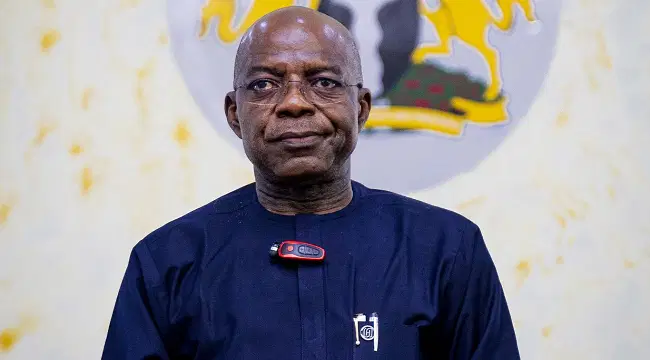
Commissioner for Information, Prince Okey Kanu, disclosed this on Monday while briefing journalists on the outcome of the State Executive Council meeting presided over by Governor Alex Otti.
Kanu said the historical sites approved as State Monuments include the National War Museum, Umuahia; Ojukwu Bunker, Umuahia; and Government College, Umuahia.
Those designated State Natural Monuments are Ibom Waterfall in Arochukwu and Ulochukwu Cave in Alayi, Bende Local Government Area.
According to him, the designations would strengthen the government’s efforts to preserve the state’s cultural and natural heritage, promote tourism and open up new economic opportunities.
“These sites have been elevated to heritage sites that enhance the state’s tourism potential. With this approval, they are primed to attract recognition as UNESCO Heritage Sites,” Kanu said.
He further disclosed that Aba had been designated a Creative and Innovative City in recognition of its longstanding commercial, industrial and creative significance.
The commissioner said the retrofitting of the Ojukwu Bunker and National War Museum had reached about 80 per cent completion and was expected to be concluded before the end of 2026.
He said the projects would improve the preservation of the sites, enhance visitors’ experience and strengthen their tourism potential.
Kanu also disclosed that the Ministry of Arts, Culture and Creative Economy had received approval to develop the Ibom Waterfall Tourism Corridor in Arochukwu.
He said work had commenced, including grading of access roads to the waterfall, with completion expected before the end of the year.
The commissioner added that the state government had commenced the erection of monuments at strategic locations to preserve Abia’s heritage, honour its heroes and heroines and promote the state’s cultural identity.
He cited a monument being dedicated to the heroines of the 1929 Aba Women’s Riot as one of such initiatives, saying it would celebrate their courage, resilience, resistance and leadership.
No N50,000 tax on akara sellers
On the controversy over alleged excessive taxation, Kanu said there had been no fresh increase in tax rates by the Abia State Board of Internal Revenue, noting that most of the rates being circulated were contained in tax laws enacted in 2020 under the previous administration.
He stressed that the Board could not unilaterally increase tax rates without enabling legislation.
“For starters, these rates are not new. Most of the rates are 2020 tax rates that were introduced by the previous government.
“Let me reiterate that the Board of Internal Revenue cannot raise tax rates without the backing of enabling laws. And no such increases have been introduced by the Abia State Government,” he said.
Kanu explained that demand notices issued by the BIR were provided for under the law, urging taxpayers to comply with relevant tax provisions while assuring that legitimate concerns would be addressed by the appropriate officials.
On the specific claim that akara sellers were being made to pay N50,000, he said: “This is pure fallacy. Nothing can be further from the truth. Akara sellers don’t pay tax or levies. They pay daily tolls. And none can pay N50,000.”
The Chairman of the Abia State Board of Internal Revenue, Mr Uche Elekwachi, corroborated the clarification, saying there was no revenue window under the state’s tax laws requiring akara sellers to pay such an amount.
Elekwachi said the Abia Internally Generated Revenue Service Law establishing the applicable framework was enacted in 2020, before the present administration came into office.
“This whole thing has always been in existence. The Abia Internally Generated Revenue Service Law was enacted in 2020 long before this government came onboard, so we need to make that clarification,” he said.
Gratuity: 2011–2025 retirees next.
On outstanding gratuities owed retired workers, Kanu disclosed that the government had completed payments covering 2001 to 2010 and was preparing for the next batch covering 2011 to 2025.
He said the next payments would commence after the completion of ongoing internal verification and other necessary processes.
The commissioner dismissed claims that the government had only commenced gratuity payments because of pressure from the opposition, explaining that the huge financial commitment involved made payment in batches necessary.
“The payments will be in batches. The funds involved are huge for one balloon payment,” he said.
Kanu also clarified reports suggesting that gratuity payments would continue only until 2031, explaining that such reports are incorrect.
He explained that the State Gratuity Committee had recommended the inclusion of gratuity provisions in the state’s 2026–2031 Medium-Term Expenditure Framework and subsequent annual budgets to ensure that gratuity obligations were systematically provided for and prevent the accumulation of fresh arrears.
“That does not translate to payments being terminated in 2031. As the internal processes and verification of beneficiaries of these payments continue, due payments would still be made in batches,” he said.
He added that the government remained committed to clearing the outstanding liabilities and expressed optimism that the process could be completed earlier than anticipated.
“The conclusion of payment of outstanding gratuities may happen earlier than we ever imagined. Let us therefore wait and see how the next batch of payments will unfold,” Kanu said.
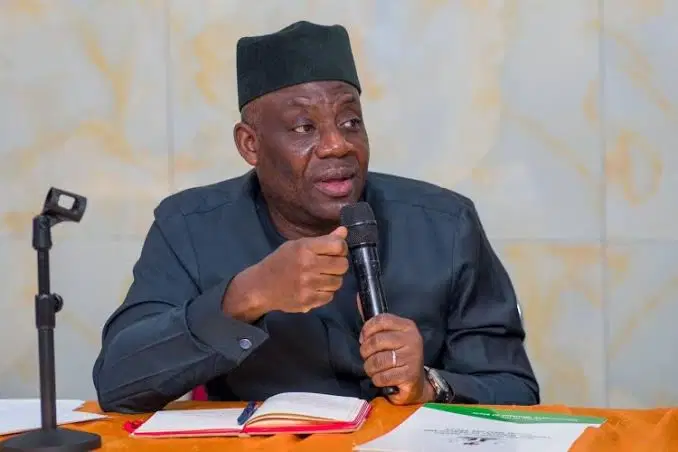
The Commissioner for Arts, Culture and Creative Economy, Mr Matthew Ekwuribe, and the Special Adviser to the Governor on Internally Generated Revenue, Dr Emmanuel Okpechi, were also present at the briefing.
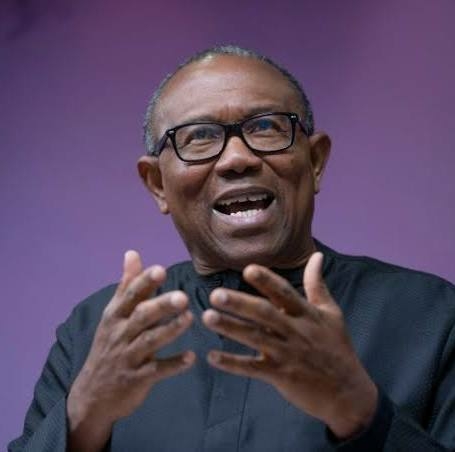
Presidential candidate of the Nigeria Democratic Congress (NDC) Peter Obi has said he has no objection to the release of his academic records amid reports of a legal action seeking certified true copies of his certificates and other educational documents.
Obi stated this in a statement posted on X on Tuesday, saying he had given consent for the University of Nigeria, Nsukka, to make available his academic records and other official documents relating to his admission and studies, subject to applicable laws.
His statement followed reports circulating on social media concerning a legal action by an individual or group seeking certified true copies of his Bachelor of Arts degree in Philosophy and other academic credentials relating to his admission into the university.
He wrote, “I wish to state clearly that I have absolutely no objection to the release of these records.
“I respectfully request that the University of Nigeria, Nsukka, within the limits permitted by law, make available, upon legitimate request, my academic certificates, records, and other official documents relating to my admission and studies at the University. I equally have no objection to other educational institutions, within and outside Nigeria, which I attended, making my academic records available in accordance with applicable laws and procedures.”
Obi said he believed strongly in transparency and accountability, particularly for individuals seeking public office, but stressed that public scrutiny should be fair, lawful and consistently applied to all presidential candidates.
“As a presidential candidate seeking the trust of Nigerians to lead our country, I welcome legitimate public interest in my background, qualifications, and record. I am prepared to subject myself to the level of scrutiny that should reasonably be expected of anyone seeking the highest office in our country,” he said.
Obi said candidates seeking the nation’s highest office should be willing to subject themselves to reasonable scrutiny and demonstrate that they had nothing to conceal from the people they sought to serve.
He subsequently challenged other presidential candidates to make their educational qualifications and relevant records available for public scrutiny.
“Doing so should not be regarded as an inconvenience or an attack. Rather, it is an opportunity to strengthen public confidence, promote accountability, and rebuild the trust of Nigerians in those who seek to govern them,” he said
Obi added that transparency, integrity and accountability should begin with those seeking to lead the country.
“I therefore welcome the scrutiny of my academic background and remain committed to the principle that those who ask Nigerians for their trust must also be willing to earn that trust through openness and accountability,” he added.