
Opinion
Peter Obi Calls Out ECOWAS for Alleged Double Standards in Handling Guinea-Bissau ‘Coup Glitch’

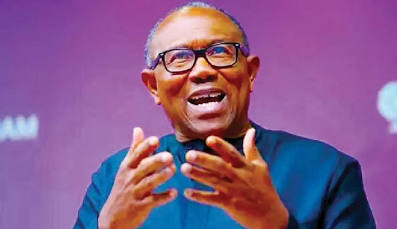
Peter Obi has expressed strong concern over the political situation in Guinea-Bissau, citing comments made by former President Goodluck Jonathan, who served as an election observer in the country.
“I listened closely to Dr. Goodluck Jonathan’s briefing. As a former President who was on ground as an election monitor, he noted that the so-called coup appeared suspicious,” Obi said. He added that Jonathan had described the incident as unusual, pointing out that “it was the president himself who announced the coup and relayed the details to the international community.”
‘ECOWAS was quick on Guinea-Bissau, silent elsewhere’
Obi noted that reports from Guinea-Bissau indicated the election process was peaceful, with only the formal announcement of results pending before events took a strange turn.
“ECOWAS was swift to sanction Guinea-Bissau, but what does ECOWAS do when democracy is subverted — not by soldiers, but by technology?” he asked.
‘Do we condemn only coups with guns?’
The former Anambra governor questioned whether the regional bloc would apply the same standards to countries where election outcomes are disrupted by conveniently timed ‘glitches.’
“Do we only condemn coups that are visible with guns and ignore those executed through deliberate technological failure?” he queried.
Obi warned that both technological manipulation and political interference pose serious threats to electoral integrity. “Whether technical or political, these issues can undermine democracy, stall progress, and deny African citizens their right to freely choose their leaders,” he said.
A call for transparency across West Africa
Obi stressed that democracy can only thrive when transparency, accountability, and the will of the people are upheld.
“By confronting these challenges honestly, we can move towards a New Nigeria and a more stable, democratic West Africa. Our goal must be to ensure that the people’s will prevails and our elections reflect the true desires of our citizens.”
He added that the Guinea-Bissau incident mirrors a broader regional crisis.
“The episodes in Guinea-Bissau highlight two faces of the same problem: one where ballots are overturned by force, and another where ballots are obstructed by convenient technical excuses,” he said.
“In both situations, the citizens lose, democracy is weakened, and the region sinks deeper into instability. The result is the same — the people are denied their mandate.”
IN the Holy Scriptures, the Bible captured an account of a man who was born blind. It is in the book of John, Chapter 9, that the account of this man born blind was recorded in his encounter with our Lord Jesus Christ.
After our Lord Jesus had cleared with his disciples that neither the blind man nor his parents had sinned, “he spat on the ground and made clay of the spittle, and he anointed the eyes of the blind man with clay. And he said unto him, Go, wash in the pool of Siloam. He went his way therefore, and washed, and came seeing.”
“The neighbours therefore, and they which before had seen him that he was blind, said, Is not this he that sat and begged?” Some said, “This is he.” Others said, “He is like him.” But he said, “I am he.” Therefore said they unto him, “How were thine eyes opened?”
He narrated his encounter with our Lord Jesus Christ.
Then, “they brought to the Pharisees him that aforetime was blind. And it was the Sabbath day when Jesus made the clay and opened his eyes.” And again, the Pharisees asked him how his eyes were opened, and he repeated his encounter with our Lord Jesus Christ to them.
Some of the Pharisees accused Jesus of not keeping the Sabbath and said he was not of God, and the Jews never believed that the man was born blind.
Thank God the parents of he who was born blind were still alive, and when they were called and asked, “Is this your son, who ye say was born blind? How then doth he now see?”
His parents answered them and said, “We know that this is our son, and that he was born blind. But by what means he now seeth, we know not; or who hath opened his eyes we know not: he is of age; ask him: he shall speak for himself.” Therefore said his parents, “He is of age; ask him.”
Then called they the man that was blind, and said unto him, “Give God the praise: we know that this man is a sinner.”
The man that was born blind answered and said, “Whether he be a sinner or no, I know not: one thing I know, that, whereas I was blind, now I see.”
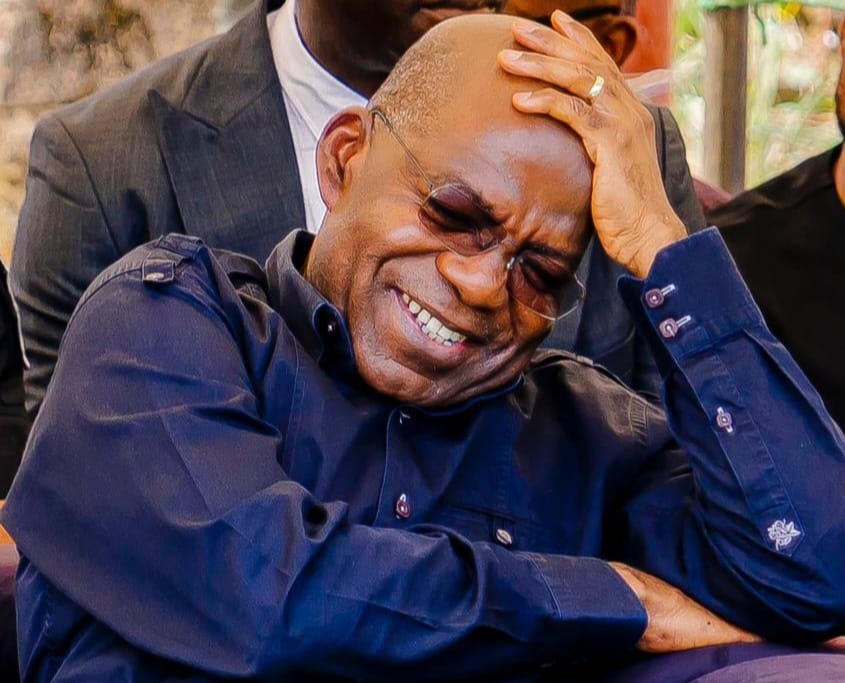
This scripture of the Bible aptly captures the state of Abia since its creation in 1991 and the current administration under Dr. Alex Chioma Otti. Since Governor Otti mounted the saddle, there is no doubt that there is an all-round transformation of the entire sectors of the state.
Only fools doubt proofs, and you can’t contest what you see. Like my people will always say, you can only tell a blind man that there is no oil in the soup, not that of salt. But the case in Abia defeats all, as even the blind in Abia—though they cannot see—but walking along the streets of Abia will definitely know of a truth that there is undoubtedly a transformation in Abia State under Dr. Alex Otti.
It is so surprising that people now ask of the account of Smart Schools and others under Dr. Alex Chioma Otti within two years of his administration, while we obviously know the glaring truth of the comatose state of both our primary, secondary, and tertiary institutions in the state in the past twenty-four years, with unpaid salaries of workers.
Yes, opposition is one of the ingredients of democracy, but the case in Abia is that of emptiness, as the collapse of the PDP into APC in the state has been drowned with the excellent performance of Dr. Otti’s-led administration.
Governor Alex Otti sincerely understands the yearnings of the people, and it is very unfortunate that people in the name of opposition have been so naive and daft to acknowledge the obvious developmental strides of the present administration.
From Aba to Umuahia, down to Ohafia and other parts of the state, the positive developmental impacts speak volumes.
What will you tell residents of Aba, the commercial nerve city of Abia State, against the Otti-led administration? A city that was completely decayed and abandoned for years—so dirty that it was branded the dirtiest city in Nigeria. Commercial activities were almost grounded while investors were fleeing the city in droves.
What will you say about the ever-abandoned Port Harcourt, Ohanku, Obohia, and other numerous roads already done and commissioned by the present administration and many ongoing ones? Aba has today, under Dr. Alex Chioma Otti, turned out to be the cleanest city in the country, with new roads and street lights restoring nightlife and a beehive of business activities. What a transformation!
Enyimba International Hotel, Abia State, inherited from the old Imo State under the government of the late Sam Mbakwe, which had been politicised by previous administrations, is now undergoing speedy reconstruction.
A former commissioner in Abia State under the previous administration, who hails from Ugwunagbo LGA of the state and has decamped to the APC, couldn’t hide his observations last week at Alaoji Flyover after plying through the Port Harcourt road on his way to his village. He stopped and said, “Of a truth, Otti has done well. Just in three minutes we are here—a movement that used to take over an hour due to the bad road.”
Although a few months ago he was in the media questioning the present administration, he couldn’t but acknowledge that Governor Otti has changed the state.
In fact, for Abia people during the last visit of the president, who was represented by the Minister of Works, Sen. Dave Umahi, to commission projects in the state, they were not bothered about who came and who didn’t come; neither did they consider the envious comments from desperate opposition. The people are satisfied and happy with the Governor’s achievements.
Governor Otti’s name represents a phenomenon and an identity of a new Abia.
The love the people show wherever he goes clearly demonstrates the positive impact his administration is making on the lives of the people. Residents of Abia State are seeing infrastructural development never witnessed in the state since its creation in 1991.
How can you explain the joy of the people of Abia North Senatorial Zone, with massive road construction from Umuahia in Abia Central to Ohafia and Arochukwu, defying the old saying that “Onwegi uzo di nso e gi aga Arochukwu,” meaning, “There is no shortcut to Arochukwu.” Today, Governor Otti has dismissed that message, as you can now access the city of Arochukwu with ease as a result of good road construction.
What a story! That the “mami water” River Goddess of Omenuko Bridge saw Governor Alex Otti and disappeared. Today, Omenuko Bridge, which has defied all the previous administrations in the state, has been constructed by Governor Alex Otti. The list of road construction and other developmental works in all sectors of the state is inexhaustible.
Just last week, the Governor flagged off the construction of the 25km Umuahia–Ikot Ekpene and the 13.5km Ariam–Usaka roads, both in Abia Central Senatorial Zone of the state. The road construction momentum is at its peak in all the senatorial zones of the state. Like one will say in all these projects—just come to Abia and see. The people of the state have never seen it so before.
For Barr. Evelyn Nnenna Ekeke, an Abia indigene born in Aba, where her parents live till date, she left Aba in 2016 for further studies in the UK and only returned last week. Their house is located on Ohanku Road in Aba.
She was dumbfounded on entering Ohanku Road by 8 p.m. last Sunday. She couldn’t believe her eyes. She said, “This can’t be Ohanku Road. No, certainly not Aba. Can someone help tell me where we are?”
You can’t blame her. The transformation on that road is massive. Businesses and lives have been restored, and by the time the Governor completes that road to Ohanku village in Ukwa East LGA, three local governments—Aba South, Ugwunagbo, and Ukwa East—would have been connected.
You may not like the person of Dr. Alex Otti. His administration’s style may also not favour you. He may not be “sharing money,” as has been complained in some quarters. He may be governing the state from his bedroom, sitting room, or kitchen. No matter the imperfections, defects, and lapses pinned by the opposition against his administration, one indispensable fact remains: you cannot deny the momentous impact of his developmental strides.
So for Abia indigenes who have suffered many years of neglect, infrastructural decay, and underdevelopment, whatever you say against the present administration of Dr. Alex Otti is immaterial. Whatever allocations the Governor is getting from Abuja does not matter, because they can visibly see proofs to justify the funds. So like the biblical blind man in the Bible—whether Dr. Alex Otti be a sinner or not, Ndi Abia know not—all they can say with the overall transformation currently ongoing across all sectors of the state is:
“Leave Dr. Alex Otti for us till 2031, because whereas we were blind, now we can see.”
By Eric Ugbor.

New financial markets facility set to open in Abia

I Won’t Help Politicians Win Elections In Their States – Wike

Abia debunks N50,000 akara tax claim

Two killed, three rescued in Anambra students’ hostel collapse

Obasanjo bombs Atiku: You’re my biggest mistake

UniAbuja Law Student Wins West Africa Speech Contest, Claims $1,000 Prize
-
 Politics8 months ago
INEC Releases Timetable For 2027 Elections
-
 News8 months ago
FG–ASUU Agreement: Professors to get ₦140k monthly allowance - Education Minister
-
 News8 months ago
Abia leaders declare support for Otti’s second term, dismiss opposition.
-

 News8 months ago
2 men machete each other to death over plantain
-

 News8 months ago
Police Inspector shoots colleague dead, injures another
-
 News6 months ago
EASTER: NKWONTA ENJOINS CONSTITUENTS AND NIGERIANS TO IMBIBE CHRIST-LIKE VIRTUES
-
 Entertainment7 months ago
Am Alive, Pete Edochie Declares, debunks Death Rumours
-
 Politics8 months ago
LP crisis: Abure Adamant, rejects reconciliation move