Connect with us

News

Coup trial: Detained officers’ wives warn against convictions without evidence

Published

on

Spread the love

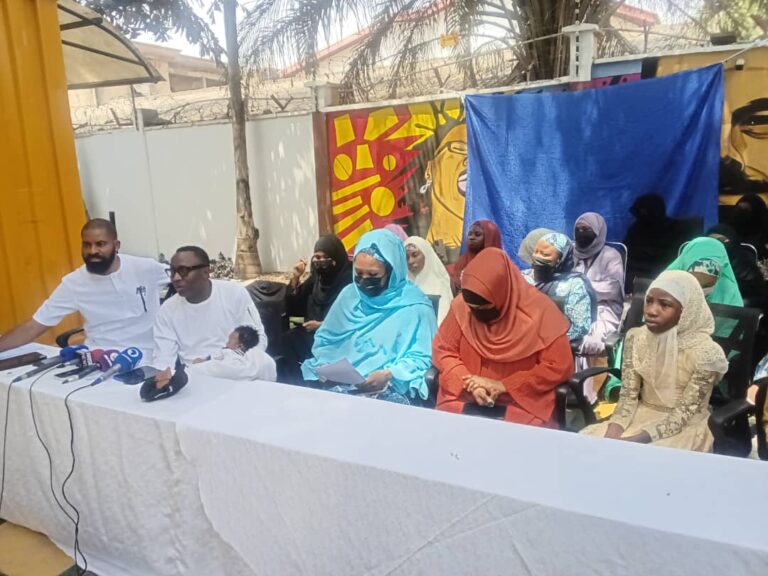
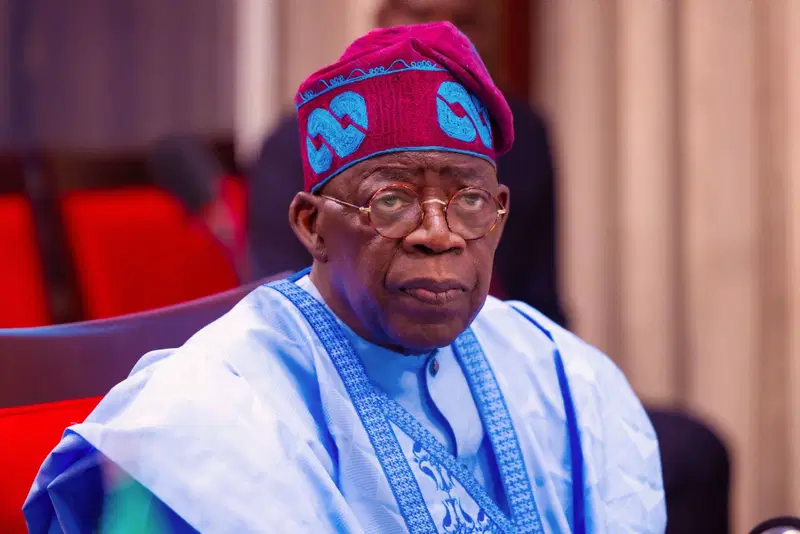
Wives of detained military officers facing alleged coup-related charges have appealed to President Bola Tinubu to ensure fairness and transparency in the ongoing military trial, warning against the conviction of suspects without credible evidence.

The plea was contained in a letter addressed to the President on Friday and titled, “A Humble Appeal for Fairness, Transparency, and Justice in the Ongoing Military Trial.”

The correspondence from spouses of the detained officers was exclusively obtained by our correspondent .

The signatories are Shafa’atu Ali Agbo, Fatima Dauda, Josephine Enemona, Nana Aisha, Zara Abba, Helen Sunday, Khadija Aminu, Aisha Abubakar, Aisha Yusuf, Hauwa’u Aliyu, Firdausi Ibrahim and Zuzu Igbaseimokumo.

In the letter, the women acknowledged Tinubu’s approval for the commencement of the military trial, describing it as “an important step toward accountability, clarity, and the pursuit of justice.”

They, however, expressed fears that the process could be tainted by bias, coercion and institutional prejudice.

“As citizens, we understand the importance of discipline within the armed forces and the sensitive responsibility placed upon the military in safeguarding national security.

“We also recognise that allegations relating to mutiny, coup plotting, or acts capable of undermining military authority are grave matters that must never be treated lightly.

“However, it is precisely because of the seriousness of these allegations that the process through which justice is pursued must itself remain just, transparent, impartial, and free from every appearance of prejudice,” the letter read.

The wives recalled past controversial military trials in Nigeria, saying some later became subjects of “national reflection and regret.”

It added, “From past allegations of ‘phantom coups’ to disputed dismissals and prolonged detentions of officers, many Nigerians have witnessed instances where prosecution appeared, in the eyes of the public, to drift dangerously toward persecution.”

The women also raised concerns over the prolonged detention of the accused officers and allegations of inhumane treatment.

According to them, reports suggesting that confessional statements may have been obtained under coercion had further heightened public anxiety over the integrity of the proceedings.

“The prolonged detention of the accused officers, the reports of inhumane treatment, and concerns that the case relies heavily on statements allegedly obtained under coercion and severe pressure have raised serious questions in the minds of many Nigerians,” the letter added.

They argued that justice must not only be done but must also be seen to be done, stressing that the credibility of the trial would depend on the fairness of the process and the independence of the tribunal.

“No individual should be condemned without credible and independently verifiable evidence.

“No confession extracted through fear, torture, or inhumane treatment should become the foundation upon which lives, careers, and families are destroyed. Justice loses its moral authority the moment it appears predetermined,” they wrote.

The wives urged Tinubu, as Commander-in-Chief, to ensure that the proceedings do not become “another painful chapter” in Nigeria’s history.

“We pray that under your leadership, Nigeria will continue to move toward a future where no citizen fears persecution disguised as prosecution, and where the law remains stronger than suspicion, fear, or institutional pressure,” the letter concluded.

The arrest of the indicted officers was first announced on October 4, 2025, by the then Director of Defence Information, Brig Gen Tukur Gusau, who disclosed that 16 officers were taken into custody for alleged breaches of military regulations and acts of indiscipline.

However, an interim investigation later suggested the existence of a clandestine network of officers allegedly coordinated by a senior Army officer, which had begun preliminary planning for a coup.

According to the report, the alleged plot involved surveillance of key national assets, including the Presidential Villa, Armed Forces Complex, Niger Barracks in Abuja and major international airports, with October 25, 2025, scheduled as the planned date for the operation.

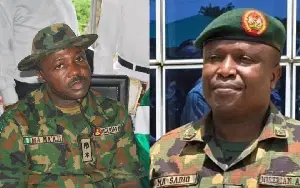
Those reportedly in custody include Brig Gen M. A. Sadiq, Col M. A. Ma’aji, Lt Col S. Bappah, Lt Col A. A. Hayatu, Lt Col P. Dangnap, Lt Col M. Almakura, Maj A. J. Ibrahim, Maj M. M. Jiddah, Maj M. A. Usman, Maj D. Yusuf, Capt I. Bello, Capt A. A. Yusuf, Lt S. S. Felix, Lt Cdr D. B. Abdullahi, Sqn Ldr S. B. Adamu and Maj I. Dauda.

The alleged plot, according to findings, targeted senior government officials, including President Tinubu and Vice President Kashim Shettima.

The appeal comes barely two weeks after a Federal High Court in Abuja admitted as exhibits the extra-judicial statements of six persons standing trial over an alleged plot to overthrow the Tinubu government, as the court commenced a trial-within-trial to determine whether the statements were voluntarily made.

Justice Joyce Abdulmalik admitted the statements and video recordings during proceedings aimed at resolving objections raised by the defendants over the admissibility of the evidence.

The defendants had earlier challenged the statements, alleging that they were obtained through coercion, torture, inducement and in violation of provisions of the Administration of Criminal Justice Act and the Anti-Torture Act.

The Federal Government is prosecuting retired Maj-Gen Mohammed Ibrahim Gana; retired Navy Capt Erasmus Ochegobia Victor; police inspector Ahmed Ibrahim; Presidential Villa electrician Umoru Zekeri; Bukar Kashim Goni; and a Zaria-based Islamic cleric, Sheikh Abdulkadir Sani, on charges bordering on treason, terrorism and conspiracy to stage a coup.

At the previous proceedings, the court played a video recording in which Sani allegedly told investigators that he warned the suspected plotters that the coup plan “would fail” and that members of the group would eventually betray themselves.

Following objections by defence lawyers to the admissibility of the defendants’ statements, Justice Abdulmalik ordered a joint trial-within-trial to determine whether the statements were voluntarily made.

Click to comment

Leave a Reply

Your email address will not be published. Required fields are marked *

News

Nigeria Faces Serious Ebola Importation Risk — NCDC

Published

on

Spread the love

The Nigeria Centre for Disease Control and Prevention (NCDC) has warned that the risk of Ebola Virus Disease (EVD) entering the country is high, following a fresh dynamic risk assessment conducted in response to the expanding outbreak in the Democratic Republic of Congo (DRC) and Uganda.

In a public health advisory released on Sunday, NCDC said the risk assessment was carried out to guide anticipatory and response measures, ensuring the country remains vigilant and prepared.

The assessment showed that the likelihood of Ebola importation is heightened by several factors, including ongoing transmission in neighbouring countries, increased international travel, population movement, and uncertainties regarding the full scale of the outbreak.

NCDC further noted that early detection may be challenging, as Ebola symptoms often overlap with endemic illnesses common in Nigeria such as malaria and Lassa fever raising concern about possible delayed recognition of cases.

The assessment also mapped out high-risk states, border communities, major transport hubs and Points of Entry (PoEs) where surveillance and readiness activities have now been intensified.

“This assessment estimated the risk of Ebola importation into Nigeria as high due to the ongoing transmission in the DRC and Uganda, international travel and population movement, uncertainty regarding the full magnitude of the outbreak, and the potential for delayed recognition because symptoms may overlap with endemic diseases such as malaria and Lassa fever.

“It also identified high-risk states, border communities, major transport hubs, and Points of Entry (PoEs),” the agency explained.

It said these locations represent critical points for timely case detection, isolation and response should an imported case occur.

NCDC assured the public that it has strengthened coordination through the National Incident Management System and placed the National Emergency Operations Centre on alert mode, while urging Nigerians to remain calm and adhere to public health advisories.


Continue Reading

News

Xenophobic attacks: Nigerian lives should not be sacrificed for foreign investors — Oshiomhole

Published

on

Spread the love

The senator representing Edo North, Adams Oshiomhole, has defended his call for the nationalisation of MTN and other South African-owned companies operating in Nigeria, saying the country must prioritise the lives of its citizens over foreign investment.

He made the call on Tuesday during an interview on Arise News, where he reacted to renewed xenophobic attacks against Nigerians in South Africa.

Recall that Oshiomhole, speaking last week on the floor of the Senate, said Nigeria must respond firmly to protect its citizens, stressing reciprocity in international relations.

His words, “I am aware that MTN is quoted, and therefore Nigerian shareholders can hold on, but we take away the South African rights,” he said.

Oshiomhole further proposed that the FG could nationalise affected companies, including financial institutions, and later re-privatise them under Nigerian control.

“And because of the issue… you nationalise, and then you re-privatise it so that Nigerians can take it over, and the profit they are taking out of Nigeria will be retained here. There will be no South African share in it,” he added.

Oshiomhole also claimed that South African authorities only responded meaningfully after diplomatic pressure from Nigeria, though he did not provide evidence for the assertion.

“Thereafter, President Ramaphosa came out clearly to condemn the attack on Black people. He didn’t do that until I attacked his interests,” he said.

He insisted that human life must take priority over economic considerations, arguing that investment should not come at the cost of Nigerian lives.

“If anything leads to the death of Nigeria, what is the value of wealth to the dead? We don’t want investors who invest at the expense of human blood. Even in my poverty, I value my life,” he said.

“Life is more important; we don’t want investors who invest at the expense of human blood. If you need Nigerian blood to service and you don’t care about Nigerian human blood because you want to attract investors, even in my poverty, I value my life.”

The former governor linked his position to what he described as repeated attacks on Nigerians in South Africa, alleging that justice had not been served in previous incidents.

“When a country, for the first time, killed Nigerians, they got away with it. The second time, they killed Nigerians; they got away with it. Third time, they killed Nigerians; they got away with it,” he said.

He added, “Under Buhari, there was an agreement. They broke it. They are killing Nigerians. Nobody is in prison for murder, or extrajudicial murder.

“You are talking about law. Is there no law protecting the life of foreigners who live in your country? Even if they were there illegally, there are legal ways to repatriate them, to deport them,” he said.


Continue Reading

News

UK Exposes Russia’s Network Trafficking Nigerians To Fight In Ukraine

Published

on

Spread the love

The United Kingdom has taken widespread action and imposed sanctions against a shadowy network of traffickers, foreign recruiters and drone suppliers blamed for Moscow’s war in Ukraine and allegedly trafficking vulnerable Nigerians and other nationals to fight in Ukraine.

The UK government on Wednesday said 35 individuals and entities linked to what it described as a “barbaric pipeline” that lures desperate migrants with false promises, only to funnel them into frontline combat or forced labour in Russia’s expanding drone factories have been severely sanctioned.

UK officials noted that recruiters allegedly tied to the Russian have been targeting citizens from countries including Nigeria, Egypt, Iraq and Ivory Coast—offering jobs, education or migration pathways—but ultimately deploying victims to Ukraine under harsh, often deadly conditions.

The notorious Alabuga Start programme, is linked to a sanctioned Russian entity that allegedly channels foreign recruits into drone manufacturing hubs and reports said that in some instances vulnerable Nigerians and nationals of others countries unfortunate to be recruited are sent directly to the battlefield with little or no training and effectively used as “cannon fodder,” according to UK authorities.

“This is exploitation at its most brutal,” UK official Stephen Doughty said, describing the networks as both predatory and integral to sustaining Russia’s war effort. “We are exposing and dismantling the pipelines that traffic vulnerable people and feed illicit components into Putin’s drone factories.”

The sanctions also strike at the technological backbone of Russia’s escalating aerial assaults, a statement from the UK High Commission in Abuja said.

Among those listed is Pavel Nikitin, whose company produces the VT-40—one of the low-cost, mass-produced drones increasingly deployed in attacks across Ukrainian cities. The urgency of the action is underscored by a sharp escalation in drone warfare, the statement added.

In March 2026, Russia reportedly launched more than 200 drones per day—the highest rate since the war with Ukraine began—intensifying strikes on civilian areas and critical infrastructure. Security analysts warn that Moscow’s reliance on cheap, high-volume drone production has reshaped the battlefield and prolonged the conflict.

Nigerian authorities are reportedly disturbed over the alleged role of Polina Alexandrovna Azarnykh, identified as a central figure in coordinating the movement of foreign recruits into Russia before their deployment to Ukraine. British officials also said some of those recruited have already died.

British Deputy High Commissioner in Abuja Gill Lever confirmed that Nigerians have been directly affected, warning that the schemes deliberately prey on economic vulnerability.

“These sanctions shine a light on those exploiting innocent Nigerians to sustain an illegal war,” she said, noting that many victims were misled into believing they were securing legitimate opportunities abroad.

Her comments came about following recent warnings by Nigeria’s Ministry of Foreign Affairs, which had warned Nigerian citizens against suspicious overseas job offers linked to the conflict.


Continue Reading

Trending