Connect with us

News

Ransom Payments Sustaining Nigeria’s Banditry Economy — Nextier

Published

on

Spread the love

A new policy report has warned that Nigeria’s increasing reliance on ransom payments and negotiations with armed groups was fuelling a lucrative “ransom economy,” accelerating state fragility and transforming insecurity into a self-sustaining criminal industry.

The report, ‘The Ransom Economy: Nigeria’s Paradox of Wealth and State Fragility’, published by Nextier’s Security, Peace and Development (SPD) programme, argued that government engagement with so-called “bandits” has moved beyond short-term crisis management to become a defining feature of governance in large parts of the country.

The report was authored by Olive Aniunoh, a senior legal, policy and research analyst at Nextier, and Nneli Chinecherem Maryjames, a policy and research intern focusing on security, peace and development.

According to the authors, kidnapping for ransom in Nigeria has evolved from opportunistic crime into an organised economic system with clear pricing structures, specialised roles, and local supply chains. Victims’ ransoms are calibrated to perceived ability to pay, with students from elite schools commanding higher sums, while farmers and low-income earners may be released for smaller amounts or goods in kind.

“Each successful ransom payment signals that kidnapping is profitable and low-risk,” the report states, describing negotiations as “advertising” that reinforces the viability of the crime. It estimates that with average ransoms in the millions of naira and hundreds of kidnappings monthly, the industry generates billions of naira annually, much of which circulates through local economies.

To reverse what it describes as a “feedback loop of state erosion,” the report calls for a decisive shift in policy. Key recommendations include formally criminalising ransom payments, disrupting the financial infrastructure that supports kidnapping, integrating civilian services with security operations, reforming security spending, and investing in professional, intelligence-led policing.

“Negotiation has been framed as pragmatism, but it accelerates state failure. Sovereignty cannot be negotiated. Continued accommodation with criminal groups risks normalising a system where authority, security, and citizenship themselves are subject to barter,” the report stated.

Also, it is sharply critical of official distinctions between “terrorists” and “bandits,” arguing that semantic differences mask the same outcome: money changing hands and armed groups gaining legitimacy.

By negotiating, the state effectively recognises criminal groups as interlocutors, weakening its monopoly on violence and its claim to sovereignty, the authors contend.

“In areas where citizens must pay for their safety, security is no longer a right of citizenship but a commodity,” the report notes. It warns that large parts of the North West and North Central regions are effectively ungoverned, with armed groups acting as de facto authorities that tax communities, regulate access to farmland, and sometimes provide rough justice.

Beyond the immediate security impact, the report highlights the emergence of a broader criminal economy that employs thousands of young men, for whom banditry offers income and status amid widespread unemployment.

This economic embeddedness, it argues, makes purely military responses ineffective, as suppressed groups are likely to reconstitute without alternative livelihoods.

The authors also point to the political economy of insecurity, suggesting that persistent violence can serve elite interests by justifying emergency powers, obscuring governance failures, and generating revenue through opaque security spending.

Allegations of diverted security votes, procurement fraud, and political manipulation of armed groups, while contested, are described as recurring features of Nigeria’s security landscape.

As state capacity weakens, communities are increasingly turning to non-state security arrangements, says the report which also cites examples across the country, including the Eastern Security Network in the South East, Amotekun in the South West, and private security actors in the South South, as evidence of citizens building parallel systems of protection.


Click to comment

Leave a Reply

Your email address will not be published. Required fields are marked *

News

Police, Lawyer Trade Tackles Over Killing Of Peace Moses By Hit-And-Run Convoy

Published

on

Spread the love

The Rivers State Police Command has declared that the tragic death of a 26-year-old lady, Peace Moses, an indigene of Akwa Ibom State, was not reported in any of its divisions or units across the state.

Peace was knocked down last Monday evening by a convoy of about 15 fast-moving vehicles around Omega Junction along Ada-George Road in Port Harcourt.

She was returning from an evening service at her church, Love Channel Christian Centre, also located along Ada-George Road, when the tragic incident occurred.

Last Thursday, a candlelight procession was organised in her honour by her friends and neighbours.

Speaking with our correspondent  in Port Harcourt yesterday, Police Public Relations Officer (PPRO) in the state, Grace Iringe-Koko, a Chief Superintendent of Police (CSP), wondered why neighbours could not report the incident to the Police.

Iringe-Koko stated that even the Divisional Police Officer (DPO) in charge of the Rumuepirikom Police Division was unaware of the tragic incident.

“Probably they didn’t report any such incident to the Police Station because the DPO in charge of that area is asking me where and when the incident occurred.

See, if they don’t report cases to the Police, how would the Police know? We are not magicians. I just spoke with the DPO, and she said she is not aware of anything like that.

“Somebody needs to report or anyhow, information needs to get through so that we too will get it,” she said.

But reacting to the claim by the Police, a human rights lawyer, Courage Nsirimovu, said that, with or without a report on the tragic incident, the Police are duty-bound to investigate the matter.

Nsirimovu said: “The duty of the Nigerian police is to secure lives and properties, and where a life has been lost in such grievous circumstances, the police have a duty to investigate the matter on the basis of their mandate and the public need to prevent such a menace to human life.

“The Police have a duty to investigate the matter, with or without a petition.”

Continue Reading

News

Nigerians may seek third term for Tinubu – Oluwo

Published

on

Spread the love

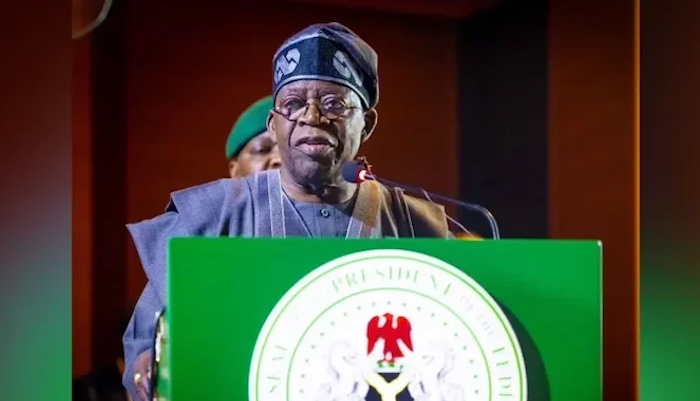
The Oluwo of Iwo, Oba Abdulrosheed Akanbi, on Sunday said many Nigerians might seek a constitutional amendment to allow President Bola Tinubu to remain in office beyond two terms.

The monarch, in a congratulatory message by his spokesperson, Ibrahim Alli, to celebrate Tinubu’s 74th birthday, described the President as a decisive leader who has laid a renewed foundation of hope for the country.

“Many Nigerians may beg for a constitutional review for Tinubu to spend more than two terms in office. He is a leader who knows what he is doing,” he said.

Oluwo said the President had distinguished himself through what he described as a firm campaign against illegalities that had stalled the country’s economic growth.

He added that the President’s administrative prowess had driven notable gains, citing improvements in the naira, a rise in foreign reserves from about $1bn to between $49.5bn and $50.45bn as of late February/March 2026, and strengthened economic indices.

The monarch attributed the gains to structural reforms, including exchange rate unification, increased oil output and higher foreign investment inflows.

Oluwo also commended Tinubu for granting local government autonomy, increasing allocations to states, expanding road infrastructure and improving palliative distribution at the grassroots.

According to him, past leaders attempted similar economic reforms but were overwhelmed by public and political pressure.

He said only a capable leader could implement tough but necessary decisions to reposition the economy.

‎Oluwo added that the President’s policies had begun to impact the standard of living, noting that the next phase would be stability.

‎He said, “You are not yet a capable leader until you make decisions and stand by them. Many past presidents attempted to remove obstacles to economic prosperity but were overrun by public outcries. Tinubu has demonstrated uncommon leadership through reforms.

‎“Nigeria’s foreign reserves have increased to over $49.5bn from about $1bn. Local government autonomy is taking effect, states earn more, and road projects, including Lagos-Calabar Coastal Road and Sokoto-Badagry, are ongoing.”


Continue Reading

News

EFCC marks Malami’s Abuja property for forfeiture

Published

on

Spread the love

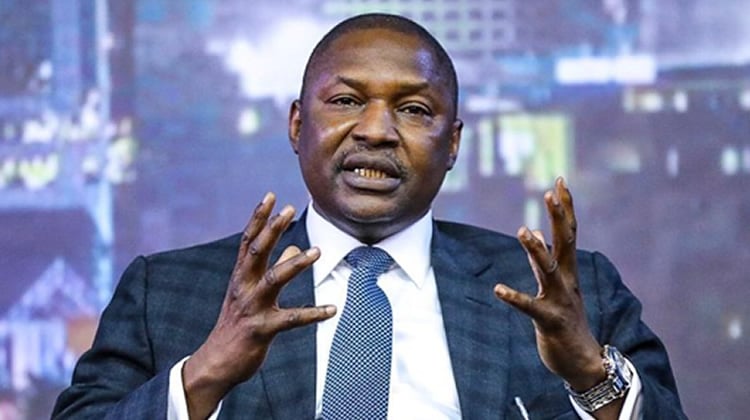
The Economic and Financial Crimes Commission has marked an Abuja property linked to former Attorney-General of the Federation, Abubakar Malami (SAN), saying the action followed a valid interim forfeiture order granted by a court.

The commission’s spokesman, Dele Oyewale, stated this in an interview with our correspondent on Monday, noting that the action was a normal law enforcement procedure.

Oyewale said the marking of the property was meant to notify members of the public about its status following a forfeiture order.

The statement followed a viral video of altercations between the former minister and operatives of the EFCC, which generated reactions online.

“There is nothing illegal in the matter. The attachment or marking of property that is on a forfeiture order is a normal law enforcement action when the court has granted an interim forfeiture,” Oyewale said.

He explained that once a forfeiture order is issued, the agency has the right to attach or mark the property to caution the public.

“What I mean by attachment of property is the normal marking of the property to caution members of the public that the property so marked is a forfeited property, whether in interim or final forfeiture.

“So when there is a forfeiture order by the court, the enforcement agency can go ahead and make markings,” he added.

The EFCC spokesman also dismissed claims that operatives raided the property, insisting that the commission only carried out enforcement of a court order.

“The commission did not go there to raid anywhere. We are not involved in any such act. So there is nothing illegal about what we have done,” Oyewale said.

In a two-minute video obtained by our correspondent, which earlier went viral, Malami was seen questioning the operatives over the legality of the action and demanding to see the court order authorising the marking of his house.

The former minister argued that the order presented was not specific to his property and claimed the matter was still pending in court.

He accused the commission of attempting to embarrass him, saying, “Where is your court order? The order here is not specific. It didn’t give you a clear directive to come and mark my property… You want to move nationwide to embarrass me? Go ahead, we will meet in court.”

An EFCC operative in the video maintained that once a property is under forfeiture, the commission has the right to mark it.

The development came a few hours after former Vice President Atiku Abubakar led a delegation on a solidarity visit to Malami.

Atiku, who recently returned from Umrah in Saudi Arabia, also called on authorities to release former Kaduna State Governor Nasir El-Rufai and other detainees.

He said no one should be held for holding a different political ideology from the government.

In a post on his X (formerly Twitter) handle, he said, “Following my return to the country on Saturday night from Umrah (lesser Hajj), I led a delegation on a solidarity visit to the former Minister of Justice and Attorney General of the Federation, Abubakar Malami, SAN.

“I wish to serve notice to the authorities detaining former Governor of Kaduna State, Mallam Nasir El-Rufai, @elrufai, and all other political detainees to release them henceforth.

“No one should be detained simply because they do not share the same ideology or political platform with the government of the day. -AA”

Speaking on the clampdown on Malami’s properties, Atiku declared it as clear evidence of alleged state-sponsored intimidation and abuse of power by the President Bola Tinubu administration.

In a statement through his media office on Monday, Atiku alleged that Tinubu was actively dismantling democracy and pushing Nigeria toward full-blown authoritarian rule, with dangerous implications for the entire West African subregion.

Atiku characterised the action by the EFCC as unlawful, driven by vendetta, and politically motivated.

“This is not governance. This is intimidation. This is a regime weaponising state power to silence dissent,” Atiku declared.

He claimed that under Tinubu, Nigeria was undergoing a rapid deterioration of democratic norms, with state institutions increasingly deployed as tools for political persecution.

“What we are seeing is the naked abuse of power—security agencies deployed not for national security, but for settling political scores. This is how democracies die.

“Let it be said clearly: this government is terrified of competition. That is why it is resorting to brute force—harassing, intimidating, and attempting to break opposition leaders into submission,” he stated.

He further alleged that the sustained targeting of figures like El-Rufai and Malami is part of a broader strategy to coerce them into abandoning opposition politics and falling in line with the ruling APC.

“This is political extortion at the highest level—join us or be destroyed. That is the message being sent,” he said.

The statement continued, “When opposition is criminalised, and dissent is punished, elections become a mere formality. If Tinubu wants to run unopposed, then let INEC stop wasting public funds on a sham election.

“We have seen this script before. It ended in national disgrace. What is happening now is a dangerous replay—one that Nigerians must resist.

“Governors and political leaders are being railroaded into the APC under threat of persecution. This is not politics—it is state capture.”In January, a Federal High Court in Abuja ordered the interim forfeiture of 57 properties suspected to be proceeds of unlawful activities allegedly linked to Malami and two of his sons, Abdulaziz Malami and Abiru Rahman Malami.

The court also directed the EFCC to publish the interim forfeiture order in a national daily, inviting any individual or organisation with an interest in the assets to appear before it within 14 days to show cause why the properties should not be finally forfeited to the Federal Government.

In February, Malami filed an application challenging the interim forfeiture of the properties linked to him.

The EFCC had also arraigned Malami, his wife and son over allegations bordering on money laundering amounting to N8,713,923,759.49.

On July 2, 2025, Malami announced his defection to the African Democratic Congress.

He was appointed as AGF in 2015 by the late President Muhammadu Buhari and was in the administration until its end in 2023.

Continue Reading

Trending