Connect with us

Opinion

Anambra Guber Elections: How Mudslinging Revived The Opposition

Published

on

Spread the love

The ongoing gubernatorial election campaigns in Anambra State have taken an unfortunate turn, with the opposition resorting to mudslinging and name-calling in a bid to gain traction. This development has raised eyebrows among observers, who note that the opposition’s inability to articulate coherent ideas and propagate a compelling narrative has left them struggling to connect with the electorates.

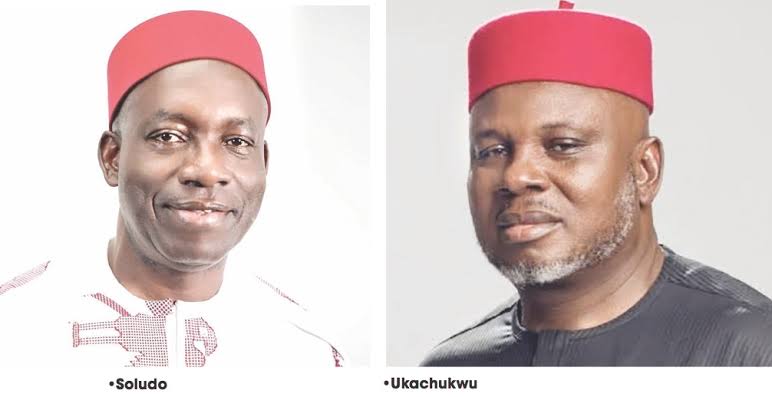
Governor Chukwuma Soludo, on the other hand, has defined his campaign trajectory with programs outlined in “The Peoples Manifesto” and the projects he has set before the people of Anambra in three years. The incumbent governor’s popularity and endorsement by the electorates are evident in the lack of traction gained by the opposition’s campaigns. Despite this, the opposition has failed to present a convincing counter-narrative, instead opting for negative campaigns and personal attacks.

The opposition’s strategy of mudslinging has not only degenerated the campaign into a cesspool of insults and accusations but has also failed to resonate with the people. The electorates are anxious and worried about the stark lack of alternative narratives, and the campaigns have been unable to generate sustained issues-based discourse. The All Progressives Congress (APC) candidate, Evangelist Nicholas Ukachukwu, who claims to be the main opposition, has touted “we are taking Anambra to the centre,” but this slogan has not translated to tangible support on the ground.

The recent loss of by-elections by the opposition in Anambra South Senatorial District and Onitsha North 1 State Constituency has further exposed their weakness. The opposition’s sudden interest in responding to Governor Soludo’s comments on their academic qualifications has given them a platform to throw tantrums, but this approach is unlikely to sway the electorates.

Discerning Ndi Anambra have condemned the negative political brick-bat and called for restraint from both the incumbent and the opposition. While some may argue that this development has brought issues to the front burner, it is essential to recognize that mudslinging and negative campaigns are not a sustainable strategy for winning elections. Instead, the opposition should focus on articulating alternative ideas and programs that resonate with the people.

The opposition’s failure to present a coherent narrative and their reliance on mudslinging have underscored their ineptitude. Governor Soludo’s popularity and endorsement by the electorates make it unlikely for the opposition to hijack the election through written results or any other means. The people of Anambra have spoken through their silence, and it is time for the opposition to redirect their efforts towards issues-based discussions on the campaign trail.

To stem the current tide of mudslinging, the opposition is advised to focus on articulating alternative ideas and programs that resonate with the people. The campaigns should shift from negative rhetoric to issues-based discourse.The electorates should demand more from their leaders and hold them accountable for their actions. In the same vein, the media should play a more active role in promoting issues-based campaigns and holding politicians accountable for their words and actions.
It is expected that when these simple steps are taken by the political gladiators, Ndi Anambra can be assured of a more informed and engaging electoral process that prioritizes substantive issues over mudslinging and personal attacks.

Udoye, a public Affairs Analyst writes from Nkpor.

Click to comment

Leave a Reply

Your email address will not be published. Required fields are marked *

Opinion

OPEN LETTER TO ABIA APC CHAIRMAN

Published

on

Spread the love

*THIS IS NOT THE TIME FOR COMMUNIQUÉS AND DEMANDS FOR APOLOGIES; IT IS TIME TO FIX THE PARTY.*

An Open Letter to Hon. Chijioke Chukwu, State Chairman, and Members of the State Working Committee of the All Progressives Congress (APC), Abia State

Dear Hon. Chijioke Chukwu and Members of the State Working Committee,

It is profoundly disconcerting, and indeed politically indefensible, that at a moment when the All Progressives Congress (APC) in Abia State is drifting perilously towards internal disintegration, the leadership appears disproportionately preoccupied with communiqués, administrative posturing, and demands for apologies, rather than confronting the structural maladies eroding the party from within. The house is gradually falling apart, yet those entrusted with holding it together seem more concerned about identifying who caused the cracks than repairing the foundation. The increasingly pervasive politics of personal ambition, sectional interest, exclusion, and the pernicious doctrine that “if it is not mine, nobody else should have it” is steadily supplanting the collective interest of the party. Factionalisation is becoming normalised, internal distrust is deepening, and the struggle for supremacy has become so consuming that the party risks defeating itself before confronting its political adversaries.

APC in Abia South is in turmoil, while Abia North is hardly any different. The contest over who is the authentic leader and who controls the machinery of the party has degenerated into a debilitating struggle for political dominion, more fierce than the USA-Iran war over the Strait of Hormuz. Instead of constructing a broad-based coalition capable of confronting the opposition, the party is expending its political capital on internal vendettas and avoidable confrontations. And one will ask: who exactly should apologise, and for what offence? Is it Senator Orji Uzor Kalu, a major political actor who contributed significantly to the establishment and growth of APC in Abia State, who should apologise after being progressively marginalised within a political structure he helped build, and whose influence as a major stakeholder was diminished? Or is it Hon. Chief Chris Nkwonta, who committed considerable resources, time, influence, and political capital to building the party in Ukwa Federal Constituency, who should apologise after emerging victorious in his primary election and subsequently becoming entangled in avoidable political and legal controversies due to the carelessness of the party leadership? When those who have invested substantially in building a political institution begin to feel alienated by its custodians, the prudent response is not indignation; it is introspection.

The leadership must therefore abandon the convenient fiction that APC Abia State is in perfect health. The party’s political visibility, grassroots confidence, internal cohesion, and organisational credibility are being steadily eroded, while opposition forces are exploiting the vacuum and expanding their influence in territories previously considered favourable to APC, including Ukwa East and West, and other Local Government Areas. If an election were conducted in Abia State today, would APC be confident of winning in Abia South? If the answer is uncertain, then this is not the time for political cosmetics, communiqués, intimidation, or attempts to silence uncomfortable voices. A senior stakeholder publicly articulated grievances that many others whisper privately, yet the instinctive response was to demand an apology rather than interrogate the substance of the matter. No communiqué and demand for an apology can reconcile factions or rebuild a collapsed structure, and no administrative pronouncement can manufacture grassroots loyalty where trust has been squandered.

Chairman, Sir, leadership is not the art of suppressing dissent; it is the discipline of managing disagreement without destroying the institution. Leadership is the protection of the party from institutional decay, not demanding an apology where speaking the truth in honesty is required. If there are legitimate grievances, confront them. If factions exist, reconcile them. If structures have become dysfunctional, reform them. If members have lost confidence, earn it back through transparency, fairness, and inclusiveness. The leadership must understand that authority without legitimacy is merely administrative control, not political leadership. APC Abia State does not need a leadership obsessed with proving that it is right; it needs a leadership courageous enough to acknowledge when the party is wrong and determined enough to correct it.

The 2027 elections are approaching with a political clock that does not recognise internal quarrels, wounded egos, or factional calculations. Every day consumed by needless power struggles is a strategic advantage surrendered to the opposition. Every stakeholder alienated is a bridge dismantled; every influential member driven away is a campaign asset forfeited; and every grassroots supporter disillusioned is a vote potentially surrendered before the campaign even begins. The APC cannot credibly aspire to govern Abia by first governing itself through exclusion, intimidation, factionalism, and perpetual suspicion. The party belongs neither to an individual nor to a faction, senatorial zone, political family, or cabal of office holders. It belongs to its members. Those entrusted with its leadership therefore have a responsibility greater than writing communiqués and demanding apologies; they must preserve the institution itself.

The moment has therefore arrived for the State Chairman and the entire State Working Committee to rise above political ego, personal ambition, and factional arithmetic and undertake the arduous task of institutional reconstruction. Convene the stakeholders. Engage the aggrieved. Reconcile the factions. Restore internal democracy. Enforce discipline without discrimination. Respect those who built the party. Rebuild the grassroots structures. And, above all, restore to ordinary members the confidence that they belong to a political organisation in which loyalty is not rewarded with marginalisation and dissent is not punished with intimidation. History will ultimately judge this leadership not by the number of communiqués it issued, but by whether it preserved or squandered the political capital entrusted to it. This is not the hour for political cosmetics, manufactured outrage, or the endless search for who should apologise. It is the hour for courage, reconciliation, restructuring, and renewal. Fix the party before the party becomes impossible to fix. APC Abia State still has time to avert political catastrophe, but that window is closing rapidly.

Yours faithfully,

*Comr O. P. Ifeanyichukwu*

A Concerned Member of the All Progressives Congress (APC), Abia State.

Continue Reading

Opinion

GOV. NWIFURU AND THE MEDICAL PRINCIPLE OF COMPLETE DOSE

Published

on

Spread the love


BY KELECHI MBAM ESQ.

Medical experts will always advice a patients on the dangers of not completing the full dose of their medication. They always advice patients to ensure that they exhaust the dosage of their medication in order to ensure a healthy and complete cure of their illness. They would warn that taking medications halfway may be dangerous as it may lead to the development of anti- bodies which may retard the process of healing. Therefore, a patient who is sick is expected to patiently and judiciously take his or her medications to it’s complete dose as prescribed by his or her doctor. By this, time is not of essence but the effect of completing the medication becomes the focus. If one is sick, what matters is his or her recovery. This definitely follows medical process and diligence to prescriptions.

Above scenario aptly captures the systematic approach of Governor Francis Nwifuru’s administration in Ebonyi state. Governor Nwifuru like medical experts prescribed appropriate medication that will comprehensively and permanently cure the socio-economic and infrastructural ailment bedeviling the state as contained in a classical and globally accepted document called ” The Ebonyi People’s Charter Of Needs “.

The Governor outlined areas of attention to wit: Education, infrastructural Development, Human Empowerment, Justice System, Health Care Delivery, Water Supply, Agricultural revolution, Security, etc.

The philosophy of the ” Charter Of Needs” centers on the Government- People participation in decision making because the Governor aligns himself with the global definition of Democracy to the effect that it is the Government of the People by the people and for the people.

Since 2023, Governor Nwifuru has meticulously used his administrative microscope to actually detect the socio-economic virus that had hindered the development of the state and had subsequently sent them to further Laboratory examination giving way for proper diagnosis. Having obtained the results, the Governor had since administered appropriate administrative medication in the various sectors of the Ebonyi State economy.

In the Education sector, it is no longer a news that Ebonyi State which hitherto was classified as one of the educationally disadvantaged states now ranks top on the sector. Governor Nwifuru has taken a bold step through his Foreign and Local Post Graduate Scholarship Programme. Today, it is interesting and heart cheering to note that through the programme, over 300 Ebonyi Graduates have benefited from the Post Graduate Scholarship both in foreign and local Universities.

While this is on, primary, secondary and tertiary institutions are also receiving adequate attention to ensure quality education in Ebonyi state. In his wisdom, the Governor prescribed adequate administrative restructuring of the state Ministry of Education to engender more effective supervision and convenience. Hence, the demerging of the tertiary education sector from the Primary and secondary sector resulting to two ministries of Tertiary and that of Primary and Secondary Education.

The Governor also established two specialised universities of ICT which matriculated her pioneer students this year as well also the University of aeronautics. These efforts did not exclude various education reform policies of the governor geared towards ensuring quality delivery in the sector.

In the Health Sector, Governor Nwifuru has also made a bold mark including the procurement of Ultra Modern Medical Equipments for the 13 General Hospitals in Ebonyi state. The idea behind the General Hospitals which was started during the Elechi regime is to provide quality health care delivery closer to rural dwellers such that only extreme cases can be referred to the tertiary Health Institutions. The General Hospitals which are expected to provide both primary and secondary health care delivery also feature Doctors Quarters. In a bid to ensure prompt Doctors response and easy connection between the General Hospitals and Ministry Of Health, the Governor provided brand new vehicles for the Doctors in the 13 General Hospitals. The Nwifuru administration has also ensured effective participation of the state in all the global health programmes such as periodic vaccination and inoculations. That is not all, the recovery of the state Tertiary Hospital which was hitherto merged with the Alex Ekwueme Federal Teaching Hospital is also a bold step in ensuring total health care delivery in the state. There is also the robust and progressive primary health care delivery through the Health centres scattered across various communities of the state. To complement the efforts of the governor in this regard, the wife of the governor Mrs Mary- Maudline Uzoamaka Nwifuru through the instrumentality of her pet project; The BERWO Foundation is leaving an unmatchable foot print. Since she launched the BERWO Foundation in November 2023, the Foundation has carried out several programme in the health sector. Some of which are; repair and rehabilitation of over 200 fistula patients in partnership with National Obstratics And Fistula Center, Abakaliki, enrollment of 10,000 pregnant women in the Ebonyi State Health Insurance Scheme, Enrollment of over 400 Sickle Cell Warriors in the Ebonyi State Health Insurance Scheme, periodic defrayment of hospital bills of indigent patient and many more.

In the area of human empowerment, Governor Nwifuru’s administration has shown a tremendous stance. One thing about human development is that it is multi-faceted. There is a multi- dimensional approach to it. For instance, the Governor’s scholarship program as mentioned above is unarguably a step towards empowering the people of the state. When you provide quality Education, you have empowered the people and this the Governor has done. When you provide quality health care, you have empowered the people and this the Governor has done and still doing. When you create enabling environment for business to thrive, you have empowered the people and this the Governor has done. No wonder in one of his public outings, the Governor frowned at the collection of market tolls from local petty traders and warned vehemently that such should desist. That cheering news rained a thunderous applause as market women danced in happiness and joy.

Nwifuru’s administration has also re-organized the state Board of Internal Revenue to ensure that only taxable taxes are collected in order to ensure that investors and business men in Ebonyi enjoy quality ease of doing business.

The Governor has also supported over 200 Ebonyi Youths who are engaged in Petty trading with Grants of Two Million Naira each.

The aggressive and ongoing infrastructural development across the state is overwhelming and worth of commendation. The idea behind this aggressive turnaround is to place Ebonyi state capital at the desired height; turning the once local town into a mega city. Projects like the Vanco Tunnel, Over 500 Units Housing Estates nearing completion, the rural roads and many more are all testimonies of greatness of the emerging giant city.

It is worthy of note that other sectors such as Agriculture, Security and Peace etc. are also receiving the desired attention.

The strength of Governor Nwifuru’s administration lies in the meticulous manner which has undoubtedly created quality signature in all his projects.

Although, the believers and Opinion holders of “rush- rush syndrome” have salivated to see the ongoing projects standing, they are reminded that, like Medical Experts would advice, to ensure total cure of all ailments, a patient must take complete dose of his or her medication. Nwifuru is judiciously, painstakingly, meticulously and progressively doing that so that by the time the complete dose of medication is taken, the socio- economic and infrastructural illness hunting us as a star will be totally cured. If we take half dose in a bid to rush and claim we are healed, such half dose according to medical expert may develop “anti bodies”. So if our haste develop socio- economic and political “anti bodies”, that would be worse for the state.

Kelechi Mbam Esq.
A legal Practitioner and Public Affairs Analyst writes from Abakaliki.

Continue Reading

Opinion

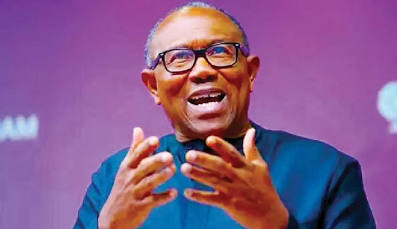
Peter Obi Calls Out ECOWAS for Alleged Double Standards in Handling Guinea-Bissau ‘Coup Glitch’
Published

on

Spread the love

Peter Obi has expressed strong concern over the political situation in Guinea-Bissau, citing comments made by former President Goodluck Jonathan, who served as an election observer in the country.

“I listened closely to Dr. Goodluck Jonathan’s briefing. As a former President who was on ground as an election monitor, he noted that the so-called coup appeared suspicious,” Obi said. He added that Jonathan had described the incident as unusual, pointing out that “it was the president himself who announced the coup and relayed the details to the international community.”

‘ECOWAS was quick on Guinea-Bissau, silent elsewhere’

Obi noted that reports from Guinea-Bissau indicated the election process was peaceful, with only the formal announcement of results pending before events took a strange turn.

“ECOWAS was swift to sanction Guinea-Bissau, but what does ECOWAS do when democracy is subverted — not by soldiers, but by technology?” he asked.

‘Do we condemn only coups with guns?’

The former Anambra governor questioned whether the regional bloc would apply the same standards to countries where election outcomes are disrupted by conveniently timed ‘glitches.’

“Do we only condemn coups that are visible with guns and ignore those executed through deliberate technological failure?” he queried.

Obi warned that both technological manipulation and political interference pose serious threats to electoral integrity. “Whether technical or political, these issues can undermine democracy, stall progress, and deny African citizens their right to freely choose their leaders,” he said.

A call for transparency across West Africa

Obi stressed that democracy can only thrive when transparency, accountability, and the will of the people are upheld.

“By confronting these challenges honestly, we can move towards a New Nigeria and a more stable, democratic West Africa. Our goal must be to ensure that the people’s will prevails and our elections reflect the true desires of our citizens.”

He added that the Guinea-Bissau incident mirrors a broader regional crisis.

“The episodes in Guinea-Bissau highlight two faces of the same problem: one where ballots are overturned by force, and another where ballots are obstructed by convenient technical excuses,” he said.

“In both situations, the citizens lose, democracy is weakened, and the region sinks deeper into instability. The result is the same — the people are denied their mandate.”


Continue Reading

Trending