Connect with us

World

Ceasefire talks collapse as Israel plans expanded military operation in Gaza

Published

on

Spread the love
Demonstrators gather before a bonfire during an anti-government protest calling for action to secure the release of Israeli hostages held captive in the Gaza Strip by Palestinian militants since the 2023 October 7 attacks, outside the Israeli Defence Ministry headquarters in Tel Aviv on August 2, 2025. (Photo by Jack GUEZ / AFP)

Israel’s Prime Minister Benjamin Netanyahu prepared Tuesday to unveil an updated Gaza war plan designed to destroy Hamas and secure the release of dozens of hostages, with Israeli media reporting he would order the total occupation of the Palestinian territory.

Netanyahu was expected to meet security chiefs in Jerusalem to issue new orders, even as Israel’s diplomats convened a UN Security Council meeting in New York to highlight the plight of Israelis held in Gaza.

The timing of the security meeting has not been officially confirmed. Netanyahu said Monday that it would be “in the coming days”.

Israeli broadcaster Channel 12 said Netanyahu would meet the army chief of staff and the defence and army ministers. Unnamed senior officials told Israeli media he intends to order the re-occupation of Gaza.

“Netanyahu wants the Israeli army to conquer the entire Gaza Strip,” said a report on public broadcaster Kan.

“Several cabinet members who spoke with the prime minister confirmed that he has decided to extend the fight to areas where hostages might be held.”

The private daily Maariv declared: “The die is cast. We’re en route to the total conquest of Gaza.”

While the reconquest plan has not been officially confirmed, it has already drawn an angry response from the Palestinian Authority and Gaza’s Hamas-run government, which insisted it will not shift its position on ceasefire talks.

“We want to reach an agreement that ends the war. The ball is now in the hands of Israel and the Americans, who support Israeli positions and delay the conclusion of an agreement,” senior Hamas official Husam Badran told broadcaster Al Jazeera.

– Desperate families –

After 22 months of combat sparked by the October 7, 2023, cross-border attacks by Hamas that killed 1,219 people and saw hundreds kidnapped, the Israeli army has devastated large parts of the Palestinian territory.

More than 60,933 Palestinians have been killed, according to figures from Hamas-run Gaza’s health ministry, and humanitarian agencies have warned that the territory’s 2.4 million people are slipping into a catastrophic famine.

But Netanyahu is under pressure on several fronts.

Domestically, the desperate and vocal families of the 49 remaining hostages are demanding a ceasefire to bring their loved ones home.

Around the world, humanitarians are pushing for a truce to allow food to the starving, and several European capitals have announced plans to recognise Palestinian statehood, despite fierce US and Israeli opposition.

Meanwhile, Netanyahu’s far-right allies in his ruling coalition want to seize the opportunity of the war to reoccupy Gaza and tighten control of the occupied West Bank.

Foreign Minister Gideon Saar was in New York, where Israel’s US ally was helping organise a Security Council meeting to focus world attention on the fate of the hostages rather than the looming famine — which Israeli spokespeople insist is an exaggerated threat.

The defence ministry civil affairs agency for the Palestinian territories, COGAT, said Tuesday that Israel will partially reopen private sector trade with Gaza to reduce its reliance on UN and aid agency convoys and international military airdrops.

“As part of formulating the mechanism, a limited number of local merchants were approved by the defence establishment, subject to several criteria and strict security screening,” COGAT said.

Israel has been fighting Palestinian militant group Hamas in Gaza for 22 months and imposed a total blockade on March 2, partially lifted in May to allow a US-backed private agency to open food distribution centres.

Aid convoys and airdrops by Arab and European militaries resumed last month, as UN-mandated expert reports warned famine was unfolding in the war-torn territory.

The COGAT statement said private sector deliveries would be paid for by monitored bank transfers and be subject to inspections by the Israeli military before entering Gaza, “to prevent the involvement of the Hamas terrorist organisation.”

– Staple foods –

Permitted goods under the new mechanism will include food staples, fruit, vegetables, baby formula, and hygiene products, COGAT said.

On Monday. Netanyahu insisted Israel’s war goals remained “the defeat of the enemy, the release of our hostages and the promise that Gaza will no longer pose a threat to Israel”.

His statement came after hundreds of retired Israeli security chiefs wrote to US President Donald Trump to urge him to convince Netanyahu to end the war, arguing that Israel has already scored a military victory and should seek to negotiate the hostages’ release

The families of the hostages are also horrified by talk of escalation, accusing the government of putting their relatives in renewed danger, even as Palestinian groups Hamas and Islamic Jihad release propaganda videos showing emaciated captives.
Click to comment

Leave a Reply

Your email address will not be published. Required fields are marked *

World

Massive protests against Trump across US on ‘No Kings’ day

Published

on

Spread the love

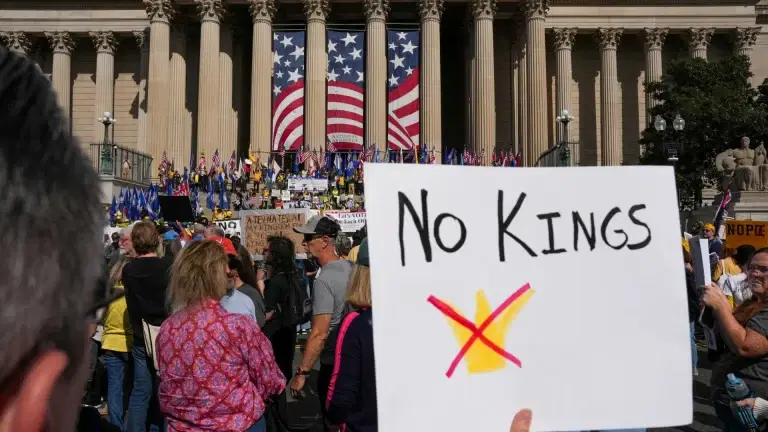
Huge crowds of protesters rallied across the United States on Saturday against President Donald Trump, venting their fury over what they see as his authoritarian style of governing, his hardline immigration policies and the war with Iran.

Organizers said “at least 8 million people gathered today at more than 3,300 events across all 50 states,” from big cities and small towns. US authorities provided no national crowd estimate.

It was the third time in less than a year that Americans have taken to the streets as part of a grassroots movement called “No Kings,” the most vocal and visual conduit for opposition to Trump since he began his second term in January 2025.

In New York, America’s most populous city, tens of thousands of demonstrators rallied, including Oscar-winning actor Robert De Niro, a frequent Trump critic, who called the president “an existential threat to our freedoms and security.”

Protests unfolded from Atlanta to San Diego, with Alaskans joining the mix later in the day.

“No country can govern without the consent of the people,” 36-year-old military veteran Marc McCaughey told AFP in Atlanta, where thousands turned out.

“We’re out here because we feel that the Constitution is under threat in a multitude of different ways. Things aren’t normal. They aren’t okay.”

In the Michigan town of West Bloomfield, near Detroit, people braved below-freezing temperatures to protest.

And in the US capital Washington, thousands of marchers — some carrying banners that blared “Trump Must Go Now!” and “Fight Fascism” — flocked to the National Mall.

“He keeps lying and lying and lying and lying, and no one says anything. So it’s a terrible situation we’re in,” 67-year-old retiree Robert Pavosevich told AFP.

Trump himself was in Florida for the weekend.

The anti-Trump mood has spilled beyond US borders, with rallies Saturday in European cities including Amsterdam, Madrid and Rome, where 20,000 people marched under a heavy police presence.

– ‘Dragged us deeper into war’ –

The first “No Kings” nationwide protest day came last June on Trump’s 79th birthday and coincided with a military parade he organized in Washington. Several million people turned out, from New York to San Francisco.

The second such protest, in October, drew an estimated seven million protesters, according to organizers, who said Saturday’s events saw one million more participants and 600 additional demonstrations.

Just as Trump is worshipped by many in his “Make America Great Again” movement, he is disliked with equal passion on the other side of America’s wide political chasm.

Trump’s approval rating has sunk below 40 percent and midterm elections loom in November, with his Republican Party at risk of losing control of both chambers of Congress.

Foes bemoan his penchant for ruling by executive decree, his use of the Justice Department to prosecute opponents, his apparent obsession with fossil fuels and climate change denial — and his taste for flexing US military power after campaigning as a man of peace.

“Since the last time we marched, this administration has dragged us deeper into war,” said Naveed Shah of Common Defense, a veterans’ association connected to the “No Kings” movement.

“At home, we’ve watched citizens killed in the streets by militarized forces. We’ve seen families torn apart and immigrant communities targeted. All of it done in the name of one man trying to rule like a king.”

– Springsteen in Minnesota –

While organizers said rallies were staged across the country, from major cities to suburbs and rural areas — and even in the Alaskan town of Kotzebue, above the Arctic circle — a key focus point was the northern state of Minnesota.

This winter, the twin cities of Minneapolis and St. Paul became ground zero for the national debate over Trump’s violent immigration crackdown.

Leftist US politician Bernie Sanders addressed the Minnesota rally, telling the crowd: “We will never accept a president who is a pathological liar, a kleptocrat and a narcissist who is undermining the Constitution of the United States and the rule of law every day.”

Legendary rocker Bruce Springsteen, a fierce critic of the president, performed his song “Streets of Minneapolis” in St. Paul, the capital of the state, where tens of thousands gathered.

Springsteen wrote and recorded the protest ballad in just 24 hours in memory of Renee Good and Alex Pretti, two US citizens shot dead by federal agents during January protests against Trump’s immigration crackdown.

“Their bravery, their sacrifice and their names will not be forgotten,” Springsteen said before breaking into song.

Continue Reading

World

Iraq must not be drawn into ‘escalation’ – Macron

Published

on

Spread the love

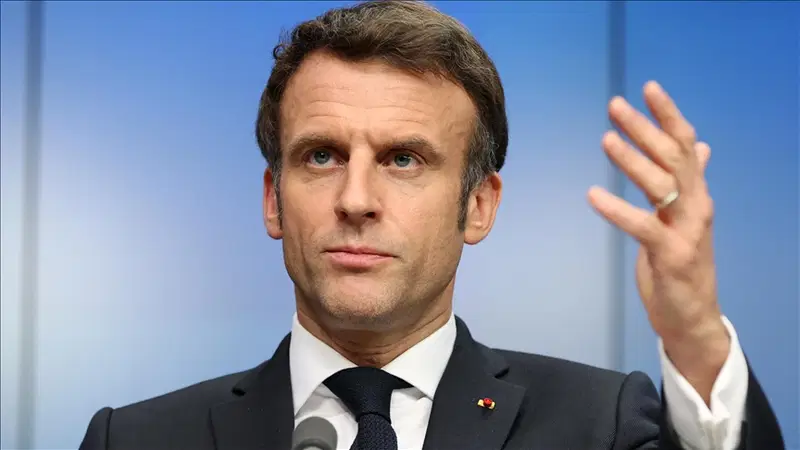
Every effort must be made to avoid Iraq being sucked up into an escalation of the Middle East war, French President Emmanuel Macron said Saturday after speaking with the head of the country’s autonomous Kurdistan region.

Macron posted his message on X after a deadly strike in northern Iraq against the former paramilitary group the Popular Mobilisation Forces (PMF).

“Everything must be done to avoid Iraq being drawn into the current escalation,” he said.

The PMF — now part of Iraq’s army but which includes some pro-Iran factions — said three of its fighters were killed in what it described as a US-Israeli attack.

Macron said he had told the Iraqi Kurdistan region’s President Nechirvan Barzani that he also viewed as “unacceptable” a drone attack against his official residence earlier Saturday.

“This very worrying development adds to a rise in attacks against Iraqi institutions, like those that left six eshmergas dead this week,” he said, referring to members of Kurdistan’s armed forces who were killed in an Iranian missile strike Tuesday.

Iran’s government fears armed Kurdish groups in northern Iraq could be sent in through its own Kurdish region, which is in the west, on the border with Iraq.

Continue Reading

World

Iran Unlikely To Back Down As Trump’s Deadline On Hormuz Nears

Published

on

Spread the love

With just over 24 hours left on the ultimatum issued by former US President Donald Trump, tensions are rising over whether Iran will comply with demands to reopen the Strait of Hormuz to tanker traffic.

Trump has warned that failure to do so could trigger US strikes on Iranian power plants, marking a significant escalation in the crisis.

Hassan Ahmadian, an associate professor of West Asian Studies at the University of Tehran, described the situation as a turning point, noting that Iran’s current posture stems from pressures following recent conflict.

He said the Strait of Hormuz had remained open for global shipments until tensions intensified, adding that Iran now views control of the waterway as its most important source of leverage against the United States.

According to Ahmadian, there are no clear indications that Tehran is prepared to back down, suggesting that Iranian authorities are unlikely to capitulate under pressure.

Trump, however, appears to be relying on the threat of targeting civilian infrastructure to force a shift in Iran’s position.

But Iranian officials have already signalled a possible response, warning of wider retaliatory strikes across the region, including in Israel, if such attacks are carried out.

The standoff raises fears of a broader regional conflict, as both sides maintain hardline positions with little sign of de-escalation

Continue Reading

Trending