
News
INEC says yet to receive budgeted funds for 2027 general elections

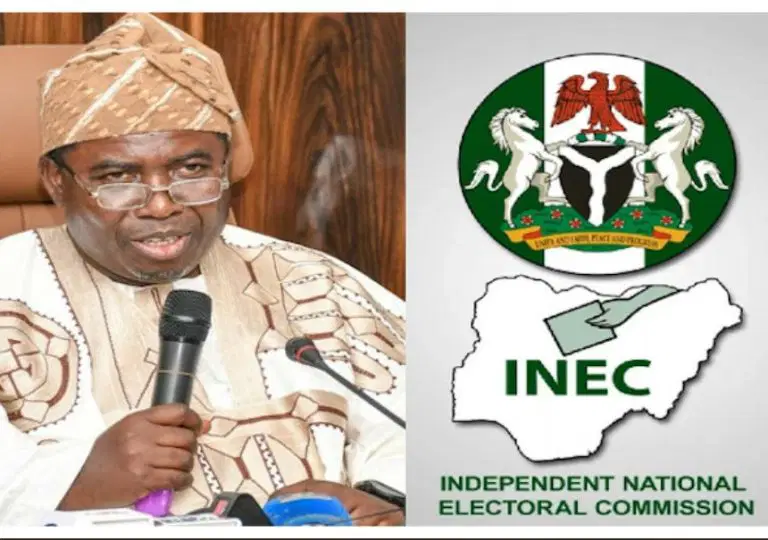
The Independent National Electoral Commission (INEC) says it is yet to receive budgetary allocations for the conduct of the 2027 general elections.
The INEC National Commissioner in charge of Voter Education and Publicity, Malam Mohammed Haruna, disclosed this on Thursday in Abuja.
The “fireside chat”, which brought together political parties, civil society organisations (CSOs), and INEC officials, focused on the just-concluded Ekiti governorship election and INEC’s preparations for the 2027 general elections.
Haruna said although the commission was still awaiting the release of the funds, preparations for the conduct of successful 2027 elections were ongoing.
INEC had proposed a total budget of N873.78 billion for the 2027 general elections, with substantial allocations dedicated to election operations, technology and capital expenditure.
The national commissioner explained that the development was still within the time limit as per the Electoral Act, 2026, which provides that election funds due to the commission for any general election shall be released “not later than six months before the next general election”.
He, however, said that the commission was already making arrangements for the procurement of new election materials, including the Bimodal Voter Accreditation System (BVAS) and other machines that were damaged, lost or unrecovered during previous elections.
“Our director of ICT just returned from China regarding procurement because not all the BVAS devices used during the last general elections were recovered. Orders need to be placed, and these things take time,” he said.
Haruna also disclosed that the commission was planning to conduct mock presidential election exercises to test-run its technology deployment.
This, according to him, is part of efforts to avoid a repeat of the technical glitches that affected the INEC Result Viewing (IReV) portal during the 2023 presidential election.
Responding to concerns over the high cost of conducting elections in Nigeria, Haruna advised citizens to look beyond the total figure and consider the realities of election administration, noting that the cost of elections in Nigeria remained relatively low when compared to other nations.
“This N800 billion plus sounds humongous, but when you calculate the average cost per voter, it is about six dollars, which is reasonable for a country such as Nigeria.
“People forget that virtually everything we use is imported. The BVAS devices and a lot of other election materials are imported. Exchange rate fluctuations also affect these costs,” he said.
On conflicting court judgments and orders, Haruna said that the trend remained a major challenge to the commission’s operations.
The Independent National Electoral Commission (INEC) says it is yet to receive budgetary allocations for the conduct of the 2027 general elections.
The INEC National Commissioner in charge of Voter Education and Publicity, Malam Mohammed Haruna, disclosed this on Thursday in Abuja.
Haruna spoke at a cross-sectorial interactive session organised by the Peering Advocacy and Advancement Centre in Africa (PAACA) in partnership with Legis360.
The “fireside chat”, which brought together political parties, civil society organisations (CSOs), and INEC officials, focused on the just-concluded Ekiti governorship election and INEC’s preparations for the 2027 general elections.
Haruna said although the commission was still awaiting the release of the funds, preparations for the conduct of successful 2027 elections were ongoing.
INEC had proposed a total budget of N873.78 billion for the 2027 general elections, with substantial allocations dedicated to election operations, technology and capital expenditure.
The national commissioner explained that the development was still within the time limit as per the Electoral Act, 2026, which provides that election funds due to the commission for any general election shall be released “not later than six months before the next general election”.
He, however, said that the commission was already making arrangements for the procurement of new election materials, including the Bimodal Voter Accreditation System (BVAS) and other machines that were damaged, lost or unrecovered during previous elections.
“Our director of ICT just returned from China regarding procurement because not all the BVAS devices used during the last general elections were recovered. Orders need to be placed, and these things take time,” he said.
Haruna also disclosed that the commission was planning to conduct mock presidential election exercises to test-run its technology deployment.
This, according to him, is part of efforts to avoid a repeat of the technical glitches that affected the INEC Result Viewing (IReV) portal during the 2023 presidential election.
Responding to concerns over the high cost of conducting elections in Nigeria, Haruna advised citizens to look beyond the total figure and consider the realities of election administration, noting that the cost of elections in Nigeria remained relatively low when compared to other nations.
“This N800 billion plus sounds humongous, but when you calculate the average cost per voter, it is about six dollars, which is reasonable for a country such as Nigeria.
“People forget that virtually everything we use is imported. The BVAS devices and a lot of other election materials are imported. Exchange rate fluctuations also affect these costs,” he said.
On conflicting court judgments and orders, Haruna said that the trend remained a major challenge to the commission’s operations.
He cited how last-minute court orders, received between 24 and 48 hours before the Ekiti governorship election, disrupted administrative workflows and the production of election result sheets.
“When a court gives a last-minute injunction to include parties like the National Democratic Congress (NDC) and the African Democratic Congress (ADC), we are forced to reconfigure the software and update physical materials instantly.
“This leaves very little room to test the systems extensively, though we still manage to achieve substantial compliance with the rules,” Haruna said.
He, however, said that the commission was taking steps to engage relevant judicial authorities on the issue, noting that a similar approach was adopted by the immediate past leadership of the commission under Prof. Mahmood Yakubu ahead of the 2023 general elections.
Addressing recent concerns over a viral report of a data breach, the national commissioner assured Nigerians that INEC maintains strict data protection and internal accountability protocols.
He disclosed that an electoral officer who intentionally leaked sensitive data as part of a personal vendetta against a political actor had been suspended.
According to him, the matter has been reported to the Nigeria Data Protection Commission (NDPC) while waiting for the police and the Department of State Services (DSS) to finalise criminal investigations.
Reviewing the Ekiti governorship election, Haruna described INEC’s field logistics and technology performance as highly successful, noting that the BVAS machines performed optimally with a 98 per cent successful accreditation rate.
He said while there were minor technical hitches, particularly with the biometric capture of elderly voters due to ageing physical features, INEC’s technical support teams resolved them promptly.
He, however, lamented that vote buying remained a worrisome trend, noting that voters were observed openly waiting in lines for financial inducements from politicians before casting their ballots.
Speaking in an interview with newsmen, the executive director of PAACA, Mr Ezenwa Nwagwu, called on the federal government and key political stakeholders to ensure early release of funds to INEC.
Nwagwu warned that delaying election funds forces a dangerous, emergency “fire brigade” approach to national planning.
“Whenever you create an emergency situation, corruption is very close behind.
“When things are not done when they should be done, people resort to bypassing rules. That is a situation politicians like to exploit to diminish the credibility of the process,” Nwagwu said.
He explained that early financial disbursements were critical because INEC faced tight international procurement timelines.
He noted that the commission urgently needed to replace essential hardware, including BVAS devices damaged by flooding in Edo during previous election cycles.
Nwagwu urged CSOs and the public to keep the spotlight on political actors who orchestrate systemic bottlenecks, rather than blaming the electoral umpire alone when logistical shortfalls occur.
“Everybody should be interested in creating an enabling environment for INEC to discharge its responsibility effectively.
“Once you short-circuit that ability by arm-twisting them in terms of resources, we hold INEC to the fire whenever there is a shortfall, but we don’t go near the politicians who stage-managed the challenges,” he said.
On conflicting court judgments, Nwagwu said the issue could be addressed by all stakeholders, including citizens and not just the judiciary.
He argued that conflicting orders would not arise if citizens desisted from taking frivolous matters to court, knowing that some of them are unnecessary.
“We can emulate the American system that resolves certain things administratively without going to court. But here, everything goes to court, even up to the Supreme Court,” he said.
Nwagwu noted that the conversation was aimed at reviewing the aftermath of the Ekiti election to identify successes, challenges and areas requiring improvement ahead of 2027.
Other stakeholders at the meeting called on INEC to institutionalise long-term training modules for ad hoc staff, particularly members of the National Youth Service Corps. (NAN)
Business
Crestline Assets Realty and Veritas Homes Announce Exclusive Teniola Towers Open House in Banana Island

The invitation-only event will bring prospective property buyers, investors and distinguished guests together for a private site inspection and cocktail experience in Ikoyi, Lagos.
LAGOS, NIGERIA — Crestline Assets Realty, in partnership with Veritas Homes, is set to host an exclusive site inspection and open house cocktail event at Teniola Towers, located at 106 Close, Banana Island, Ikoyi, Lagos.
Designed as a private experience for high-net-worth individuals, prospective property buyers and real estate investors, the event will offer invited guests an opportunity to experience the development firsthand, explore its residential offering and engage with representatives of the two real estate brands.
Scheduled for Thursday, between 11:00 a.m. and 2:00 p.m., the gathering will combine property inspection with an intimate cocktail experience, creating an opportunity for meaningful conversations around luxury living, property ownership and real estate investment.
The event is being positioned as an invitation to the “1% of the 1%” — a deliberate emphasis on an audience seeking premium property experiences and access to exclusive real estate opportunities.
Teniola Towers provides the setting for the event, with its distinctive contemporary architecture, landscaped surroundings and striking multi-level residential design. The inspection will allow guests to appreciate the development beyond photographs and promotional materials, offering a closer look at the property and its environment.
For Crestline Assets Realty, whose brand philosophy is captured in the tagline “Dream it. Live it.”, the collaboration reflects its focus on connecting clients with property opportunities that align with their aspirations and investment interests.
The partnership with Veritas Homes also provides an opportunity to bring prospective buyers closer to the property through direct engagement, guided inspection and conversations with the team.
Beyond the physical inspection, the cocktail session is expected to provide an informal networking environment for guests, industry participants and prospective investors.
As interest in premium residential property continues to shape conversations around Lagos real estate, experiences that allow buyers to engage directly with developments and their representatives remain an important part of the property discovery process.
The Teniola Towers event represents an opportunity for invited guests to explore the development, ask questions and consider its place within their residential or investment plans.
Event Details
- Event: Exclusive Site Inspection and Open House Cocktail
- Property: Teniola Towers
- Location: 106 Close, Banana Island, Ikoyi, Lagos
- Day: Thursday & Friday
- Time: 11:00 a.m. – 2:00 p.m.
- Hosts: Crestline Assets Realty and Veritas Homes
For invitations and enquiries:
08140345682 | 08039678200
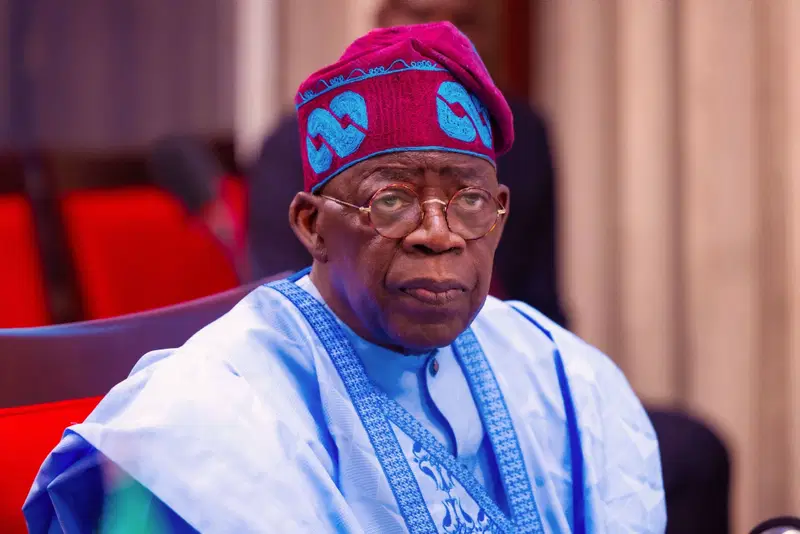
Nigeria has demanded at least two permanent seats for Africa on the UN Security Council, with veto powers for as long as the privilege exists.
Vice-President Kashim Shettima made the demand while delivering President Bola Tinubu’s national statement at the 81st UN General Assembly in New York.
He also demanded five non-permanent seats for Africa, in line with the continent’s longstanding common position on reforming the Security Council.
Shettima said the Council’s present configuration no longer reflected contemporary geopolitical realities and weakened the legitimacy of global decision-making.
“The world of 2026 cannot remain captive to the distribution of power in 1945,” he said.
He said Africa could no longer remain outside permanent membership while issues concerning the continent continued to occupy substantial attention of the Council.
According to him, Nigeria’s position is consistent with the Ezulwini Consensus and Sirte Declaration, adopted as the Common African Position.
Under the position, Africa seeks at least two permanent seats with all existing privileges, alongside five non-permanent seats on the Council.
The African Union reaffirmed the demand in May, saying Africa’s exclusion from permanent representation constituted a historical imbalance requiring correction.
Shettima argued that institutions claiming authority to act for humanity must adequately reflect the people on whose behalf decisions are taken.
He linked Security Council reform to efforts to restore confidence in multilateralism amid widening geopolitical divisions.
The Vice-President also reaffirmed Nigeria’s commitment to the UN Charter and international cooperation.
He said Nigeria supported an international system where diplomacy takes precedence over coercion and international law guides relations among states.
Shettima recalled Nigeria’s contributions to international and regional peace operations in Liberia, Sierra Leone, Darfur, Mali and The Gambia.
He said Nigeria also continues to work through ECOWAS, the African Union and Gulf of Guinea mechanisms.
According to him, these efforts cover mediation, counter-terrorism, democratic governance and maritime security.
Shettima said persistent conflicts across different regions underscored the need to return to dialogue, collective responsibility and peaceful settlement of disputes.
He identified the conflict in Sudan and other theatres as requiring urgent diplomacy because of their humanitarian, economic and geopolitical consequences.
The Vice-President also warned against a global environment where propaganda blurred distinctions between victims and aggressors and complicated accountability.
He maintained that an inclusive and effective UN remained indispensable to global peace and sustainable development
Nigeria’s demand comes amid renewed calls by African leaders for reforms to an institution whose permanent membership remains unchanged since its creation.
The Security Council has five permanent members: China, France, Russia, the UK and the US, each possessing veto power.
Africa currently has no permanent representative on the Council..
The African Union’s preferred reform model provides for at least two permanent African seats, including veto privileges while existing members retain them.
The reform model also seeks five non-permanent seats for Africa.
Shettima said Nigeria remained committed to a multilateral order capable of responding more credibly to 21st-century realities.
According to him, differences among nations must not obscure their common humanity or responsibility to preserve peace for future generations. (NAN)

A forex trading facility is expected to open in Abia State in October, following the 2025 Abia Forex Expo, which organisers said attracted more than 1,500 participants.
The facility is being established by entrepreneur and financial markets personality, Sam Keys, as a platform for financial education, market analysis, trading activities and networking.
According to the organisers, the project followed increased interest in forex trading and other financial market activities among youths and business communities in the state.
The proposed facility will provide a physical location where traders, aspiring investors and other participants can access financial market information, take part in educational activities and interact with others in the sector.
Keys had previously organised the 2025 Abia Forex Expo, which brought together participants interested in forex trading, investment and financial markets.
The new facility is expected to complement such events by providing a permanent location for activities relating to financial market education and trading.
The October opening is expected to attract traders, investors and other individuals interested in learning about the financial markets.

Crestline Assets Realty and Veritas Homes Announce Exclusive Teniola Towers Open House in Banana Island

Obi urges issue-based campaigns

Tinubu Is Disconnected From Nigerians – APM
Anyone who rigs election under me will go to jail — Obi

Nigeria demands two permanent UN seats, veto powers for Africa

Lawmakers Asks National Assembly To Reconvene Over Tinubu’s Absence
-
 Politics10 months ago
INEC Releases Timetable For 2027 Elections
-
 News10 months ago
FG–ASUU Agreement: Professors to get ₦140k monthly allowance - Education Minister
-
 News10 months ago
Abia leaders declare support for Otti’s second term, dismiss opposition.
-
 News8 months ago
EASTER: NKWONTA ENJOINS CONSTITUENTS AND NIGERIANS TO IMBIBE CHRIST-LIKE VIRTUES
-
 News10 months ago
Police Inspector shoots colleague dead, injures another
-

 News10 months ago
2 men machete each other to death over plantain
-

 Entertainment9 months ago
Am Alive, Pete Edochie Declares, debunks Death Rumours
-
 News1 year ago
Determined TO Create Employment, Abia govt set to buy back moribund Aba star paper mill