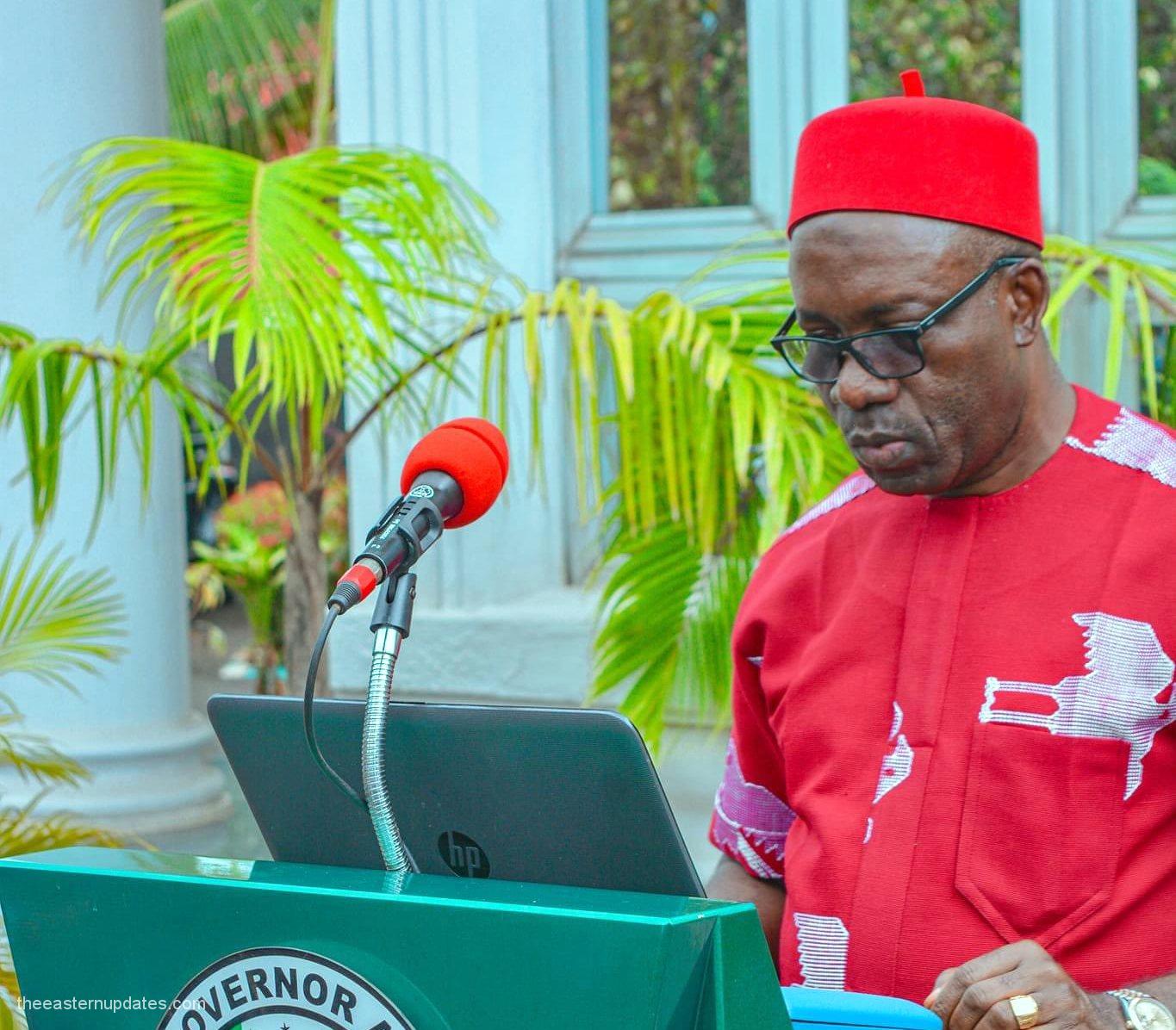
By Ivan Chiagoziem Professor Charles Chukwuma Soludo’s agelong avowal to make Dubai-Taiwan of Anambra State has elicited various interpretations; each probably informed more by the degree of the bearer’s political or other fraternal affiliations with Soludo, than their clear comprehension of the conviction underpinning the visionary assertion. Until and unless one subjects oneself to a close study of the realities of micro economies of startup nations and sub-nationals vis-à-vis the impactful indices of macro economy across the globe, Soludo’s statement will merely sound fabulous but most unrealisable. How would anyone conversant with Nigeria’s situation hazard thinking up Dubai-Taiwan in a state the economy of which is scandalously subdued, as much as the country’s, by different shades of corruption, criminality and insecurity? Yet, Professor Soludo remains upbeat talking about Anambra Dubai-Taiwan: a big dream he contrived long before the opportunity of walking it dawned with his inauguration as Anambra State governor on the 17th of March, 2022.
Professor Soludo’s vast exposure to development economics (in the academia and empirical realms) and his characteristic zeal to lift his homeland up from squalour economy to civilised structural plains give impetus to the depth of his vision and the height of his resolve for its actualization. It should however be known that Soludo’s “Anambra Dubai-Taiwan” is only a metaphor for an infrastructural development and value reappraisal that satisfy the yearnings of decent humans for a good life. Since states are distinct geopolitical entities which, though enjoying neither political nor economic independence from the nations of their domicile, reserve allowable dose of individualities that could define the modes and spate of their engagements and growth as sub-nationals, Soludo proffers a domestication of the possibilities in civilised polities to suit the context of Nigeria’s political space. So, since the All Progressives Grand Alliance, APGA, whose platform he holds has hindered reach to the national patrimony and the influences needed for his state’s growth, and since he finds the policies of the national ruling party persuasive, he readily solicits a working understanding with the All Progressives Congress’ presidency for the good Anambra State. This principle of “for the greatest sustainable good of Anambra State” is seen to prevail in Governor Soludo’s acts in the state’s governance.
Thus far, the commensurate distractions dotting the march to the target have only succeeded in proving Soludo’s surefootedness in its pursuit. His words and actions from the day of his inauguration till date have shown a situational deviation from an off-the-cuff approach to governance to intentionality in walking a strategically laid-out master plan for futuristic legacy attainments. For instance, Soludo speaks to the existential essence of the environment, and goes head-on confronting obvious signposts of environmental degradation in the state, turning erstwhile urban slums and environmentally degraded localities model liveable communities endowed with good roads, solar-powered lit streets, well-appointed government health centres, hospitals and functional schools. Soludo’s insistence that the environment should be pampered in the interest of humanity is enforced by the Operation Clean and Healthy Anambra (OSHA Brigade), a monitoring and enforcement agency of government which ensures compliance with healthy environmental ethics like desilting of drainages and other environmental concerns. He established serviceable refuse dump sites and sustainable logistics for effective refuse collection, evacuation and management.
Not supportive of a ragtag approach to governance, the Soludo administration has laid out institutional guides in terms of policies that instruct the ways and means of delivering time-factored measurable goals in all the sectors of government interests. For instance, because the government considers education as the bedrock of sustainable growth, it rolls out policies like free primary and secondary education; he employs qualified teachers and adopts other measures with futuristic bent like tweaking the school curriculum for maximum effect of foundational education on pupils’ and students’ capacity for self-reliant post academic economic ventures. Soludo adopts the same bold step in engaging road infrastructures by paving rather ambitious roads that go beyond attending to today’s traffic demands to responding to the anticipated traffic needs of a more populated and more advanced Anambra economy; innovative roads that meet the unfolding development tides that his administration is facilitating. Professor Chukwuma Soludo’s approach to Anambra State governance demonstrates the difference between power for its sake and power for tangible and intangible legacy attainments – dedication to definite vision and mission. So when Soludo yields to his resolve to free Anambra State from commonplace economy to a positively recognizable global brand by embarking on groundbreaking ventures and by domesticating his amazingly globalised thought projections, he speaks to an evolving Anambra Dubai-Taiwan.
But for the features of democratic practice that necessitate leadership selection at given intervals and encourage diverse interests in who rules, one would have unrestrainedly vouchsafed Soludo the compliments of an unchallenged second term of four years, given his brilliant vision and the success he has made bringing it about in his first term that is running out. As the November 8, 2025 Anambra State governorship election closes in, the Anambra electorates, cognizant of Governor Soludo’s impressive stewardship, increasingly reaffirm their faith in his vision to recreate the state thereby making it a preferred destination for all those seeking a good life and are capable of adding value to the state’s sociocultural and economic ethos. As the Chairman of “Anambra Vision 2070” which (before his ascendance as governor) ruminated over the future of the state and came up with a blueprint on the project, Professor Chukwuma Charles Soludo adequately fits the bill for effectively founding the tenets of that document and more. Ndi-Anambra have a date with history, come the gubernatorial poll, and they are determined to resoundingly recharge Mr. Governor’s mandate to further his foundational institution of a model state in Anambra.
Chiagoziem, a sociopolitical analyst, writes from Abuja
Medical experts will always advice a patients on the dangers of not completing the full dose of their medication. They always advice patients to ensure that they exhaust the dosage of their medication in order to ensure a healthy and complete cure of their illness. They would warn that taking medications halfway may be dangerous as it may lead to the development of anti- bodies which may retard the process of healing. Therefore, a patient who is sick is expected to patiently and judiciously take his or her medications to it’s complete dose as prescribed by his or her doctor. By this, time is not of essence but the effect of completing the medication becomes the focus. If one is sick, what matters is his or her recovery. This definitely follows medical process and diligence to prescriptions.
Above scenario aptly captures the systematic approach of Governor Francis Nwifuru’s administration in Ebonyi state. Governor Nwifuru like medical experts prescribed appropriate medication that will comprehensively and permanently cure the socio-economic and infrastructural ailment bedeviling the state as contained in a classical and globally accepted document called ” The Ebonyi People’s Charter Of Needs “.
The Governor outlined areas of attention to wit: Education, infrastructural Development, Human Empowerment, Justice System, Health Care Delivery, Water Supply, Agricultural revolution, Security, etc.
The philosophy of the ” Charter Of Needs” centers on the Government- People participation in decision making because the Governor aligns himself with the global definition of Democracy to the effect that it is the Government of the People by the people and for the people.
Since 2023, Governor Nwifuru has meticulously used his administrative microscope to actually detect the socio-economic virus that had hindered the development of the state and had subsequently sent them to further Laboratory examination giving way for proper diagnosis. Having obtained the results, the Governor had since administered appropriate administrative medication in the various sectors of the Ebonyi State economy.
In the Education sector, it is no longer a news that Ebonyi State which hitherto was classified as one of the educationally disadvantaged states now ranks top on the sector. Governor Nwifuru has taken a bold step through his Foreign and Local Post Graduate Scholarship Programme. Today, it is interesting and heart cheering to note that through the programme, over 300 Ebonyi Graduates have benefited from the Post Graduate Scholarship both in foreign and local Universities.
While this is on, primary, secondary and tertiary institutions are also receiving adequate attention to ensure quality education in Ebonyi state. In his wisdom, the Governor prescribed adequate administrative restructuring of the state Ministry of Education to engender more effective supervision and convenience. Hence, the demerging of the tertiary education sector from the Primary and secondary sector resulting to two ministries of Tertiary and that of Primary and Secondary Education.
The Governor also established two specialised universities of ICT which matriculated her pioneer students this year as well also the University of aeronautics. These efforts did not exclude various education reform policies of the governor geared towards ensuring quality delivery in the sector.
In the Health Sector, Governor Nwifuru has also made a bold mark including the procurement of Ultra Modern Medical Equipments for the 13 General Hospitals in Ebonyi state. The idea behind the General Hospitals which was started during the Elechi regime is to provide quality health care delivery closer to rural dwellers such that only extreme cases can be referred to the tertiary Health Institutions. The General Hospitals which are expected to provide both primary and secondary health care delivery also feature Doctors Quarters. In a bid to ensure prompt Doctors response and easy connection between the General Hospitals and Ministry Of Health, the Governor provided brand new vehicles for the Doctors in the 13 General Hospitals. The Nwifuru administration has also ensured effective participation of the state in all the global health programmes such as periodic vaccination and inoculations. That is not all, the recovery of the state Tertiary Hospital which was hitherto merged with the Alex Ekwueme Federal Teaching Hospital is also a bold step in ensuring total health care delivery in the state. There is also the robust and progressive primary health care delivery through the Health centres scattered across various communities of the state. To complement the efforts of the governor in this regard, the wife of the governor Mrs Mary- Maudline Uzoamaka Nwifuru through the instrumentality of her pet project; The BERWO Foundation is leaving an unmatchable foot print. Since she launched the BERWO Foundation in November 2023, the Foundation has carried out several programme in the health sector. Some of which are; repair and rehabilitation of over 200 fistula patients in partnership with National Obstratics And Fistula Center, Abakaliki, enrollment of 10,000 pregnant women in the Ebonyi State Health Insurance Scheme, Enrollment of over 400 Sickle Cell Warriors in the Ebonyi State Health Insurance Scheme, periodic defrayment of hospital bills of indigent patient and many more.
In the area of human empowerment, Governor Nwifuru’s administration has shown a tremendous stance. One thing about human development is that it is multi-faceted. There is a multi- dimensional approach to it. For instance, the Governor’s scholarship program as mentioned above is unarguably a step towards empowering the people of the state. When you provide quality Education, you have empowered the people and this the Governor has done. When you provide quality health care, you have empowered the people and this the Governor has done and still doing. When you create enabling environment for business to thrive, you have empowered the people and this the Governor has done. No wonder in one of his public outings, the Governor frowned at the collection of market tolls from local petty traders and warned vehemently that such should desist. That cheering news rained a thunderous applause as market women danced in happiness and joy.
Nwifuru’s administration has also re-organized the state Board of Internal Revenue to ensure that only taxable taxes are collected in order to ensure that investors and business men in Ebonyi enjoy quality ease of doing business.
The Governor has also supported over 200 Ebonyi Youths who are engaged in Petty trading with Grants of Two Million Naira each.
The aggressive and ongoing infrastructural development across the state is overwhelming and worth of commendation. The idea behind this aggressive turnaround is to place Ebonyi state capital at the desired height; turning the once local town into a mega city. Projects like the Vanco Tunnel, Over 500 Units Housing Estates nearing completion, the rural roads and many more are all testimonies of greatness of the emerging giant city.
It is worthy of note that other sectors such as Agriculture, Security and Peace etc. are also receiving the desired attention.
The strength of Governor Nwifuru’s administration lies in the meticulous manner which has undoubtedly created quality signature in all his projects.
Although, the believers and Opinion holders of “rush- rush syndrome” have salivated to see the ongoing projects standing, they are reminded that, like Medical Experts would advice, to ensure total cure of all ailments, a patient must take complete dose of his or her medication. Nwifuru is judiciously, painstakingly, meticulously and progressively doing that so that by the time the complete dose of medication is taken, the socio- economic and infrastructural illness hunting us as a star will be totally cured. If we take half dose in a bid to rush and claim we are healed, such half dose according to medical expert may develop “anti bodies”. So if our haste develop socio- economic and political “anti bodies”, that would be worse for the state.
Kelechi Mbam Esq.
A legal Practitioner and Public Affairs Analyst writes from Abakaliki.
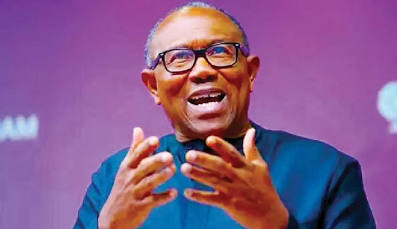
Peter Obi has expressed strong concern over the political situation in Guinea-Bissau, citing comments made by former President Goodluck Jonathan, who served as an election observer in the country.
“I listened closely to Dr. Goodluck Jonathan’s briefing. As a former President who was on ground as an election monitor, he noted that the so-called coup appeared suspicious,” Obi said. He added that Jonathan had described the incident as unusual, pointing out that “it was the president himself who announced the coup and relayed the details to the international community.”
‘ECOWAS was quick on Guinea-Bissau, silent elsewhere’
Obi noted that reports from Guinea-Bissau indicated the election process was peaceful, with only the formal announcement of results pending before events took a strange turn.
“ECOWAS was swift to sanction Guinea-Bissau, but what does ECOWAS do when democracy is subverted — not by soldiers, but by technology?” he asked.
‘Do we condemn only coups with guns?’
The former Anambra governor questioned whether the regional bloc would apply the same standards to countries where election outcomes are disrupted by conveniently timed ‘glitches.’
“Do we only condemn coups that are visible with guns and ignore those executed through deliberate technological failure?” he queried.
Obi warned that both technological manipulation and political interference pose serious threats to electoral integrity. “Whether technical or political, these issues can undermine democracy, stall progress, and deny African citizens their right to freely choose their leaders,” he said.
A call for transparency across West Africa
Obi stressed that democracy can only thrive when transparency, accountability, and the will of the people are upheld.
“By confronting these challenges honestly, we can move towards a New Nigeria and a more stable, democratic West Africa. Our goal must be to ensure that the people’s will prevails and our elections reflect the true desires of our citizens.”
He added that the Guinea-Bissau incident mirrors a broader regional crisis.
“The episodes in Guinea-Bissau highlight two faces of the same problem: one where ballots are overturned by force, and another where ballots are obstructed by convenient technical excuses,” he said.
“In both situations, the citizens lose, democracy is weakened, and the region sinks deeper into instability. The result is the same — the people are denied their mandate.”
IN the Holy Scriptures, the Bible captured an account of a man who was born blind. It is in the book of John, Chapter 9, that the account of this man born blind was recorded in his encounter with our Lord Jesus Christ.
After our Lord Jesus had cleared with his disciples that neither the blind man nor his parents had sinned, “he spat on the ground and made clay of the spittle, and he anointed the eyes of the blind man with clay. And he said unto him, Go, wash in the pool of Siloam. He went his way therefore, and washed, and came seeing.”
“The neighbours therefore, and they which before had seen him that he was blind, said, Is not this he that sat and begged?” Some said, “This is he.” Others said, “He is like him.” But he said, “I am he.” Therefore said they unto him, “How were thine eyes opened?”
He narrated his encounter with our Lord Jesus Christ.
Then, “they brought to the Pharisees him that aforetime was blind. And it was the Sabbath day when Jesus made the clay and opened his eyes.” And again, the Pharisees asked him how his eyes were opened, and he repeated his encounter with our Lord Jesus Christ to them.
Some of the Pharisees accused Jesus of not keeping the Sabbath and said he was not of God, and the Jews never believed that the man was born blind.
Thank God the parents of he who was born blind were still alive, and when they were called and asked, “Is this your son, who ye say was born blind? How then doth he now see?”
His parents answered them and said, “We know that this is our son, and that he was born blind. But by what means he now seeth, we know not; or who hath opened his eyes we know not: he is of age; ask him: he shall speak for himself.” Therefore said his parents, “He is of age; ask him.”
Then called they the man that was blind, and said unto him, “Give God the praise: we know that this man is a sinner.”
The man that was born blind answered and said, “Whether he be a sinner or no, I know not: one thing I know, that, whereas I was blind, now I see.”
This scripture of the Bible aptly captures the state of Abia since its creation in 1991 and the current administration under Dr. Alex Chioma Otti. Since Governor Otti mounted the saddle, there is no doubt that there is an all-round transformation of the entire sectors of the state.
Only fools doubt proofs, and you can’t contest what you see. Like my people will always say, you can only tell a blind man that there is no oil in the soup, not that of salt. But the case in Abia defeats all, as even the blind in Abia—though they cannot see—but walking along the streets of Abia will definitely know of a truth that there is undoubtedly a transformation in Abia State under Dr. Alex Otti.
It is so surprising that people now ask of the account of Smart Schools and others under Dr. Alex Chioma Otti within two years of his administration, while we obviously know the glaring truth of the comatose state of both our primary, secondary, and tertiary institutions in the state in the past twenty-four years, with unpaid salaries of workers.
Yes, opposition is one of the ingredients of democracy, but the case in Abia is that of emptiness, as the collapse of the PDP into APC in the state has been drowned with the excellent performance of Dr. Otti’s-led administration.
Governor Alex Otti sincerely understands the yearnings of the people, and it is very unfortunate that people in the name of opposition have been so naive and daft to acknowledge the obvious developmental strides of the present administration.
From Aba to Umuahia, down to Ohafia and other parts of the state, the positive developmental impacts speak volumes.
What will you tell residents of Aba, the commercial nerve city of Abia State, against the Otti-led administration? A city that was completely decayed and abandoned for years—so dirty that it was branded the dirtiest city in Nigeria. Commercial activities were almost grounded while investors were fleeing the city in droves.
What will you say about the ever-abandoned Port Harcourt, Ohanku, Obohia, and other numerous roads already done and commissioned by the present administration and many ongoing ones? Aba has today, under Dr. Alex Chioma Otti, turned out to be the cleanest city in the country, with new roads and street lights restoring nightlife and a beehive of business activities. What a transformation!
Enyimba International Hotel, Abia State, inherited from the old Imo State under the government of the late Sam Mbakwe, which had been politicised by previous administrations, is now undergoing speedy reconstruction.
A former commissioner in Abia State under the previous administration, who hails from Ugwunagbo LGA of the state and has decamped to the APC, couldn’t hide his observations last week at Alaoji Flyover after plying through the Port Harcourt road on his way to his village. He stopped and said, “Of a truth, Otti has done well. Just in three minutes we are here—a movement that used to take over an hour due to the bad road.”
Although a few months ago he was in the media questioning the present administration, he couldn’t but acknowledge that Governor Otti has changed the state.
In fact, for Abia people during the last visit of the president, who was represented by the Minister of Works, Sen. Dave Umahi, to commission projects in the state, they were not bothered about who came and who didn’t come; neither did they consider the envious comments from desperate opposition. The people are satisfied and happy with the Governor’s achievements.
Governor Otti’s name represents a phenomenon and an identity of a new Abia. The love the people show wherever he goes clearly demonstrates the positive impact his administration is making on the lives of the people. Residents of Abia State are seeing infrastructural development never witnessed in the state since its creation in 1991.
How can you explain the joy of the people of Abia North Senatorial Zone, with massive road construction from Umuahia in Abia Central to Ohafia and Arochukwu, defying the old saying that “Onwegi uzo di nso e gi aga Arochukwu,” meaning, “There is no shortcut to Arochukwu.” Today, Governor Otti has dismissed that message, as you can now access the city of Arochukwu with ease as a result of good road construction.
What a story! That the “mami water” River Goddess of Omenuko Bridge saw Governor Alex Otti and disappeared. Today, Omenuko Bridge, which has defied all the previous administrations in the state, has been constructed by Governor Alex Otti. The list of road construction and other developmental works in all sectors of the state is inexhaustible.
Just last week, the Governor flagged off the construction of the 25km Umuahia–Ikot Ekpene and the 13.5km Ariam–Usaka roads, both in Abia Central Senatorial Zone of the state. The road construction momentum is at its peak in all the senatorial zones of the state. Like one will say in all these projects—just come to Abia and see. The people of the state have never seen it so before.
For Barr. Evelyn Nnenna Ekeke, an Abia indigene born in Aba, where her parents live till date, she left Aba in 2016 for further studies in the UK and only returned last week. Their house is located on Ohanku Road in Aba. She was dumbfounded on entering Ohanku Road by 8 p.m. last Sunday. She couldn’t believe her eyes. She said, “This can’t be Ohanku Road. No, certainly not Aba. Can someone help tell me where we are?”
You can’t blame her. The transformation on that road is massive. Businesses and lives have been restored, and by the time the Governor completes that road to Ohanku village in Ukwa East LGA, three local governments—Aba South, Ugwunagbo, and Ukwa East—would have been connected.
You may not like the person of Dr. Alex Otti. His administration’s style may also not favour you. He may not be “sharing money,” as has been complained in some quarters. He may be governing the state from his bedroom, sitting room, or kitchen. No matter the imperfections, defects, and lapses pinned by the opposition against his administration, one indispensable fact remains: you cannot deny the momentous impact of his developmental strides.
So for Abia indigenes who have suffered many years of neglect, infrastructural decay, and underdevelopment, whatever you say against the present administration of Dr. Alex Otti is immaterial. Whatever allocations the Governor is getting from Abuja does not matter, because they can visibly see proofs to justify the funds. So like the biblical blind man in the Bible—whether Dr. Alex Otti be a sinner or not, Ndi Abia know not—all they can say with the overall transformation currently ongoing across all sectors of the state is:
“Leave Dr. Alex Otti for us till 2031, because whereas we were blind, now we can see.”